Landmark: Larabanga Mosque
City: Damongo
Country: Ghana
Continent: Africa
Larabanga Mosque, Damongo, Ghana, Africa
The Larabanga Ancient Mosque is a historic 15th-century place of worship located in the village of Larabanga in the Savannah Region. It is widely recognized as the oldest mosque in Ghana and one of the oldest in West Africa, often referred to as the "Mecca of West Africa."
Visual Characteristics
The building is a prime example of Sudanese-style mud-brick architecture, characterized by its stark white-washed exterior and protruding horizontal timber beams. It features two tall pyramidal towers-one for the mihrab toward Mecca and one serving as a minaret-buttressed by thick, conical earthen pillars. The structure is built using a "wattle and daub" technique, with sun-dried mud bricks reinforced by a wooden internal frame.
Location & Access Logistics
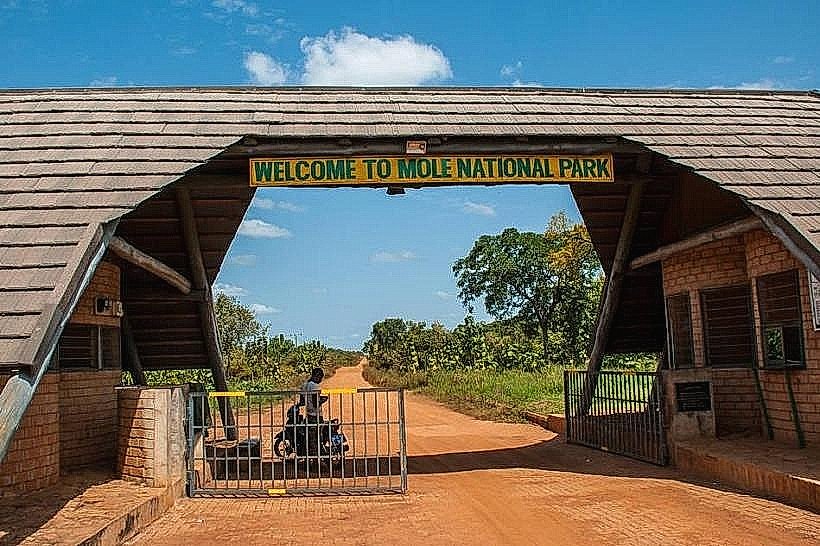
The mosque is situated in the village of Larabanga along the Fufulso-Sawla Road (N12), approximately 10km west of the Mole National Park entrance. From Damongo, the drive takes 15 to 20 minutes by private vehicle or taxi. Public "tro-tros" running the Sawla route pass directly through the village. A small dirt parking area is available adjacent to the visitor center, where entry fees are collected.
Historical & Ecological Origin
Construction is traditionally dated to 1421. According to oral tradition, an Islamic trader named Ayuba had a dream while sleeping near a "Mystic Stone" that instructed him to build a mosque; upon waking, the foundations were already in place. The building has undergone several restorations, most notably in 1970 and 2002, using indigenous materials like mud, wood, and shea butter to preserve its structural integrity.
Key Highlights & Activities
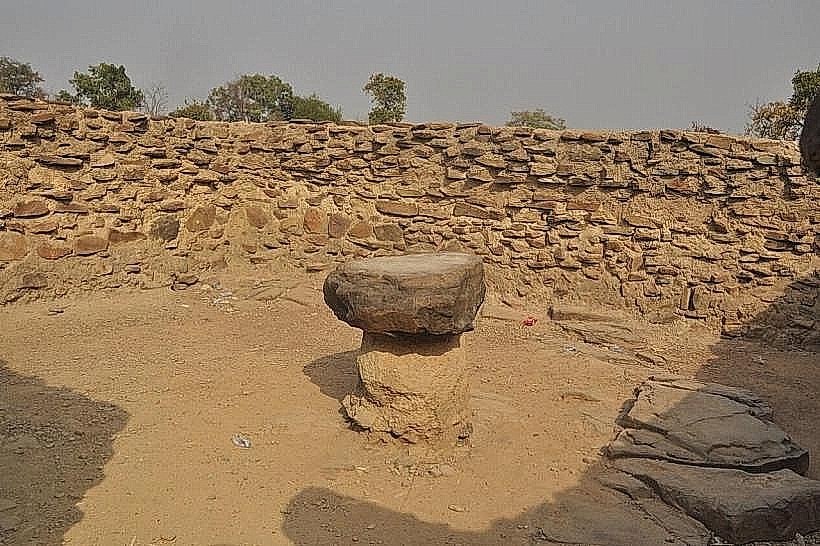
Guided tours of the exterior are mandatory and are led by local community guides who explain the history and architectural nuances of the site. Observation of the ancient Quran, which is believed to have been delivered to the village imam from the sky in the 17th century, is a central highlight. Visitors may also view the "Mystic Stone," located nearby, which is central to the site's founding legend.
Infrastructure & Amenities
The visitor center at the entrance provides basic seating and a ticketing window. Public restrooms are available within the village for a small fee. Shade is minimal around the mosque itself, though some trees are present in the surrounding courtyard. Cell phone signal (4G) is reliable. Small shops in the immediate vicinity sell local crafts, bottled water, and snacks.
Best Time to Visit
The site is accessible year-round, though the dry season (November to April) is preferred to avoid rain during the outdoor guided tour. Photography is best in the early morning or late afternoon when the low sun emphasizes the geometric shadows cast by the timber beams against the white walls. Non-Muslims are strictly prohibited from entering the interior of the mosque, so visits are focused on the exterior architecture.
Facts & Legends
Local legend claims that the "Mystic Stone" could not be moved; during the construction of the Sawla-Damongo road, contractors reportedly tried to displace the stone multiple times, only for it to return to its original position each morning. A verified oddity is the presence of an ancient Baobab tree next to the mosque, under which the founder, Ayuba, is said to be buried.
Nearby Landmarks
Mole National Park Entrance: 6.5km East
Mystic Stone: 0.1km West
Mognori Eco-Village: 18km Northeast
Damongo Town Center: 14km East
Zaina Lodge: 8.5km East