Landmark: Nakore Mosque
City: Wa
Country: Ghana
Continent: Africa
Nakore Mosque, Wa, Ghana, Africa
Nakore Mosque is a historic Islamic place of worship located in the village of Nakore, situated in the Wa Municipal District of the Upper West Region, Ghana. The site is positioned approximately 6 kilometers west of the city of Wa.
Visual Characteristics
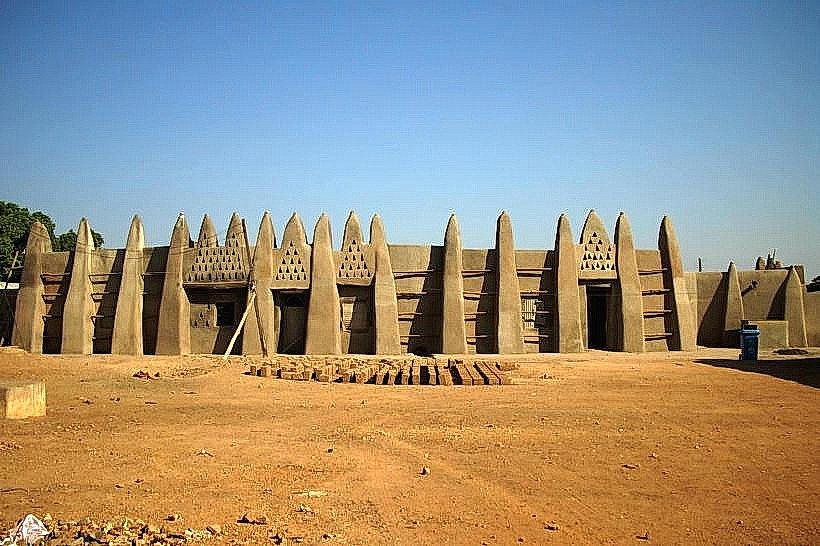
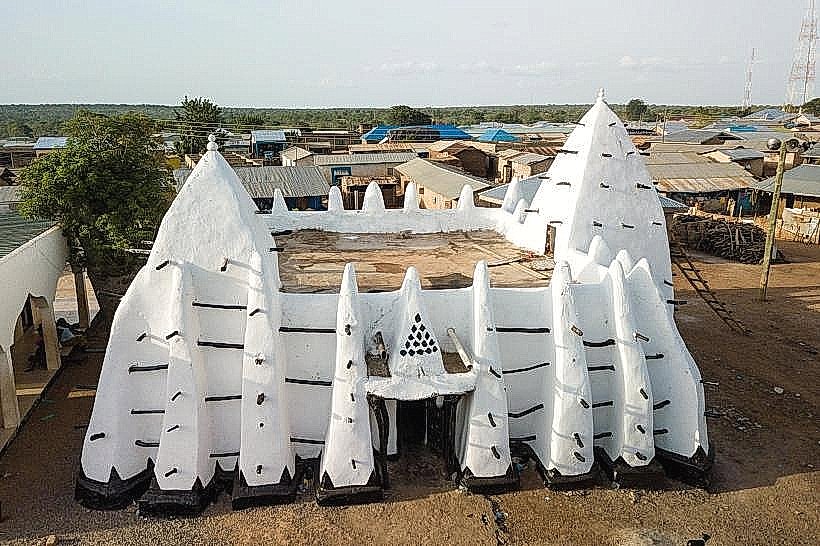
The mosque is a primary example of Sudano-Sahelian architecture, characterized by load-bearing mud-brick walls and a white-washed earthen plaster finish. The structure features a series of characteristic external buttresses topped with conical pinnacles that extend above the flat roofline. Horizontal timber struts, known as toron, protrude from the facade, serving both as structural reinforcement and as permanent scaffolding for periodic replastering.
Location & Access Logistics
Access is via the unpaved road heading west from the Wa central business district toward the village of Nakore. The site is reachable via local motorized tricycles (Pragyia) or private taxis from the Wa Naa’s Palace area, with a transit time of approximately 15 minutes. A small, unpaved open space adjacent to the mosque serves as the primary parking area for visitors.
Historical & Ecological Origin
The mosque was constructed in the early 17th century by Mande-speaking traders and clerics who migrated along the trans-Saharan trade routes. It was built using indigenous materials, including local clay, husks, and cow dung, to create thick walls that provide natural insulation against the high temperatures of the Guinea Savanna.
Key Highlights & Activities
Guided tours of the mosque’s exterior are conducted by local caretakers, who explain the architectural and spiritual significance of the buttresses and pinnacles. Non-Muslim visitors are generally restricted to the exterior areas, though access to the interior may be granted by the resident Imam outside of prayer times. The site serves as a central point for daily communal prayers and Islamic educational activities for the local community.
Infrastructure & Amenities
The facility remains an active religious site with no modern commercial infrastructure. There are no public restrooms or food vendors on-site; visitors typically utilize services in nearby Wa. Shade is provided by the mosque's perimeter walls and a few nearby neem trees. Cellular signal (4G) is stable due to the proximity to the Wa municipal telecommunications towers.
Best Time to Visit
Photography is optimal during the early morning hours (07:30–09:30) when the low sun highlights the vertical textures of the buttresses and the white-washed surfaces. The dry season (November to March) is the best time for visits to ensure the earthen structure is in its most pristine, recently plastered state and that the access roads are easily traversable.
Facts & Legends
A verified historical oddity is the use of the "shea butter" byproduct in the final layer of the exterior plaster, which acts as a natural sealant to protect the mud structure from heavy seasonal rains. Local lore suggests the mosque was built on a site chosen for its spiritual purity, and it remains one of the few surviving examples of original ancient mud mosques in the Upper West Region.
Nearby Landmarks
Wa Naa’s Palace: 6.2km East
Wa Central Mosque: 6.5km East
Upper West Regional Museum: 7.1km East
Wa Airport: 9.5km Northeast