Landmark: Nymphenburg Palace
City: Munich
Country: Germany
Continent: Europe
Nymphenburg Palace, Munich, Germany, Europe
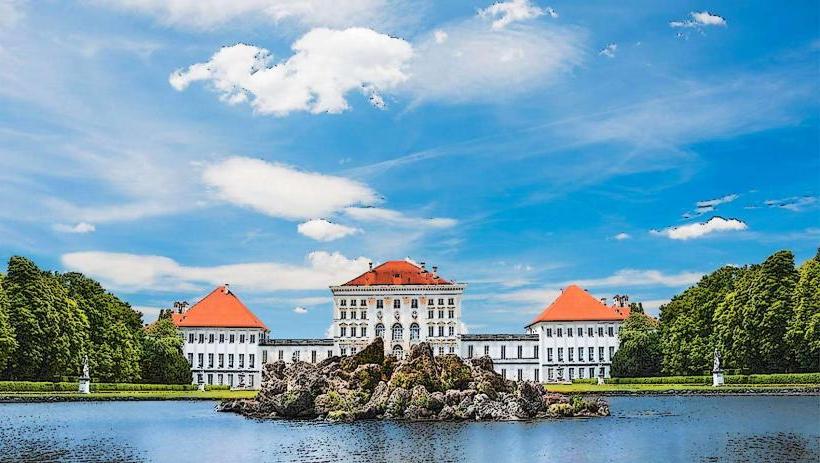
The Nymphenburg Palace (Schloss Nymphenburg) is a Baroque palace complex located in the western district of Neuhausen-Nymphenburg in Munich. It served as the primary summer residence for the House of Wittelsbach and remains one of the largest royal palaces in Europe.
Visual Characteristics
The central pavilion is a five-story cubic block constructed of limestone and brick, connected by galleries to two-story side pavilions that extend into a massive 632-meter-wide facade. The interior features the "Steinerner Saal" (Stone Hall), a grand three-story ballroom decorated with Rococo frescoes and gilded stucco. The exterior is defined by a 200-hectare park with a formal Baroque parterre, a large central canal, and several smaller forest pavilions (Parkburgen).
Location & Access Logistics
The palace is located at Schloß Nymphenburg 1, 80638 Munich. It is accessible via Tram line 17 or Bus lines 51 and 151 at the Schloss Nymphenburg stop. Public parking is available in a dedicated lot at the main entrance (Nördliches Schlossrondell). Pedestrian access from the tram stop to the main palace gates is approximately 500 meters along the palace canal.
Historical & Ecological Origin
Commissioned by Elector Ferdinand Maria and Henriette Adelaide of Savoy to celebrate the birth of their heir, construction of the central pavilion began in 1664 under architect Agostino Barelli. The palace was significantly expanded over the next 150 years by architects Enrico Zuccalli and Joseph Effner. The surrounding park was initially a small Italian garden, later transformed into a sprawling English-style landscape park by Friedrich Ludwig von Sckell in the early 19th century.
Key Highlights & Activities
Visitors can view the "Gallery of Beauties," a collection of 36 portraits of Munich women commissioned by King Ludwig I. The complex also houses the Marstallmuseum (Museum of Royal Carriages) and the Museum of Nymphenburg Porcelain. Within the park, specific destinations include the Amalienburg hunting lodge, the Badenburg (the first heated indoor pool of the modern era), and the Pagodenburg teahouse.
Infrastructure & Amenities
The facility includes a central ticket office, a museum shop, and public restrooms in the entry courtyard and within the palace wings. The Schlosscafé im Palmenhaus provides food services within a historic greenhouse. While the main parterre and ground floors are wheelchair accessible, some park pavilions and upper palace floors require navigating stairs. 5G signal is consistent throughout the palace grounds and formal gardens.
Best Time to Visit
The best time for photography of the palace facade and the canal is in the late afternoon when the sun is positioned to the west. The park is most visually prominent in late spring (May) when the flowers are in bloom and autumn (October) for the foliage. To avoid the highest visitor density, arrive at opening time (9:00 AM).
Facts & Legends
King Ludwig II of Bavaria was born in this palace on August 25, 1845, in the room now known as the "Birth Room." A local tip is that during winter months, the palace canal frequently freezes over and is used by locals for traditional Bavarian curling (Eisstockschießen) and ice skating.
Nearby Landmarks
Munich Botanical Garden – 0.4km Northwest
Hirschgarten (Beer Garden and Park) – 1.2km Southeast
Museum of Man and Nature – 0.1km North
Nymphenburg Porcelain Manufactory – 0.2km North
Blutenburg Castle – 3.2km West