Landmark: Portland Japanese Garden
City: Portland
Country: USA Oregon
Continent: North America
Portland Japanese Garden, Portland, USA Oregon, North America
The Portland Japanese Garden is a 12-acre horticultural site located within Washington Park in Portland, Oregon, USA. It is recognized as one of the most authentic Japanese gardens outside of Japan.
Visual Characteristics
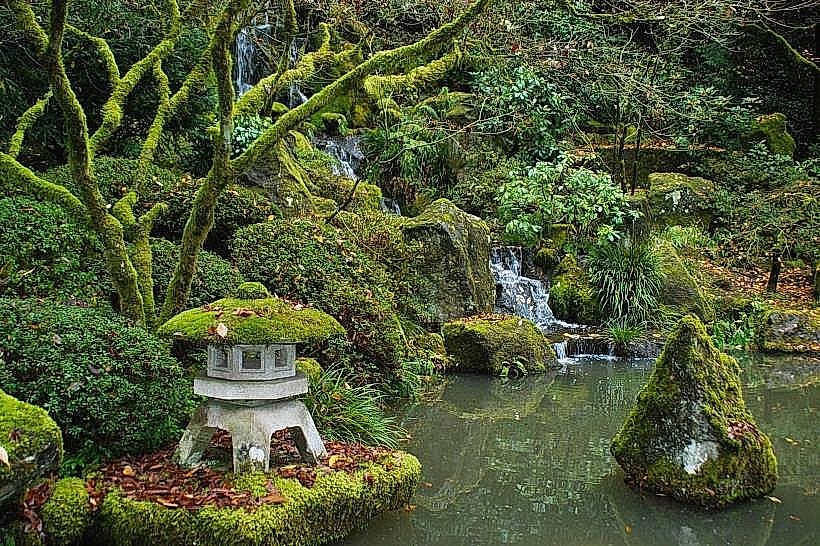
The garden comprises five distinct garden styles: the Strolling Pond Garden, the Sand and Stone Garden, the Tea Garden, the Natural Garden, and the Flat Garden. It features meticulously pruned trees, including Japanese maples and pines, moss-covered rocks, water features such as ponds and streams, and traditional Japanese structures like pagodas and tea houses. The color palette is dominated by greens, browns, and the seasonal hues of foliage.
Location & Access Logistics
The garden is situated at 611 SW Kingston Ave, Portland, OR 97205. It is approximately 3 miles west of downtown Portland. Access is via SW Washington Park Road. Parking is available at the Washington Park Free Parking Garage, located near the Oregon Zoo and Hoyt Arboretum. The TriMet bus line 63 stops at the Washington Park Max Station, with a shuttle service operating seasonally to the garden entrance. Walking from the Max station is approximately 1 mile.
Historical & Ecological Origin
The Portland Japanese Garden was conceived in 1958 and opened in 1967. It was designed by Professor Takuma Tono of Kyoto University. The site was formerly part of Washington Park. The garden's ecological design emphasizes native and adapted plant species, arranged to create a serene and naturalistic landscape.
Key Highlights & Activities
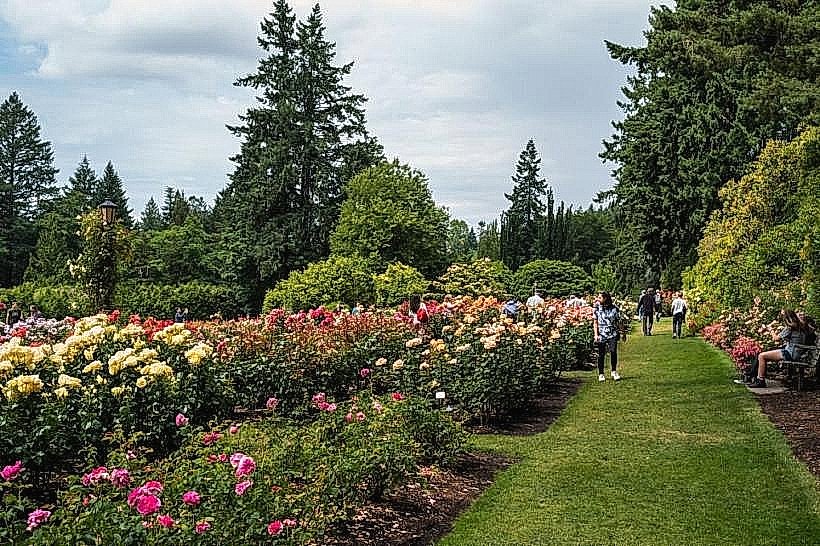
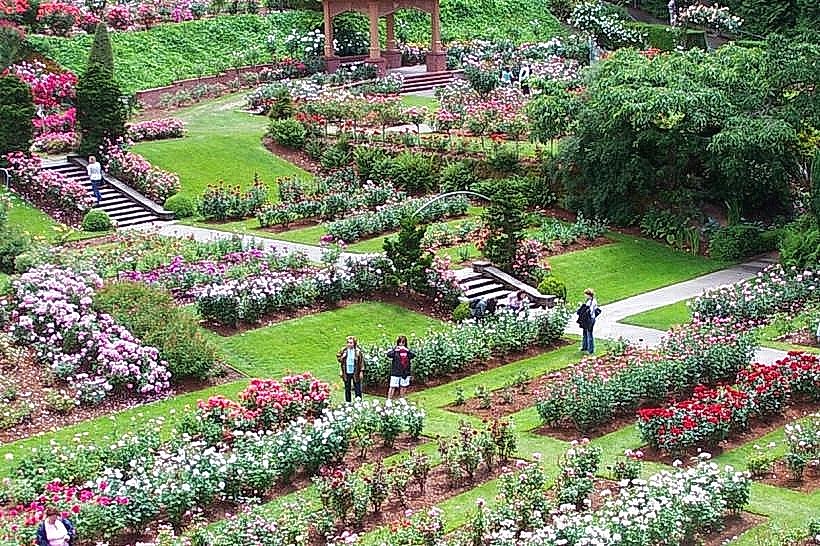
Visitors can explore the five distinct garden areas, observe the koi in the Strolling Pond Garden, and experience a traditional Japanese tea ceremony in the Umami Cafe (reservations recommended). The International Rose Test Garden is adjacent to the Japanese Garden. Guided tours are available daily.
Infrastructure & Amenities
Restrooms are available at the Cultural Village and the Pavilion. Shaded areas are provided by trees and covered structures. Cell phone signal (4G/5G) is generally available. Food and beverages are sold at the Umami Cafe within the garden. Additional dining options are available at the Oregon Zoo and within Washington Park.
Best Time to Visit
For optimal lighting for photography, early morning or late afternoon is recommended. The garden is most visually striking during spring (for cherry blossoms and azaleas) and autumn (for fall foliage). The garden is open year-round, with specific hours varying by season.
Facts & Legends
A significant artifact within the garden is the Kashinoki, a 100-year-old Japanese maple tree, which was donated by the city of Kyoto, Japan, as a symbol of friendship. The garden's design intentionally avoids straight lines, reflecting a philosophical approach to nature.
Nearby Landmarks
- International Rose Test Garden (0.1km North)
- Oregon Zoo (1.2km Southwest)
- Hoyt Arboretum (1.5km West)
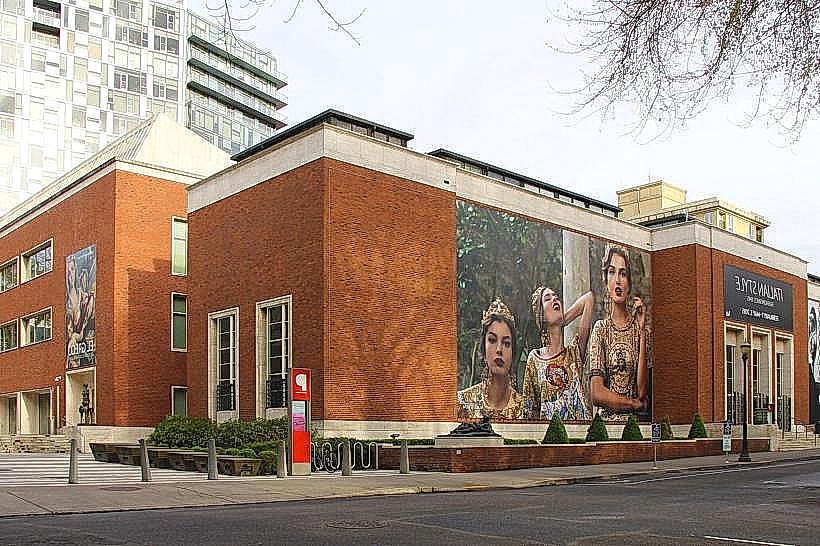
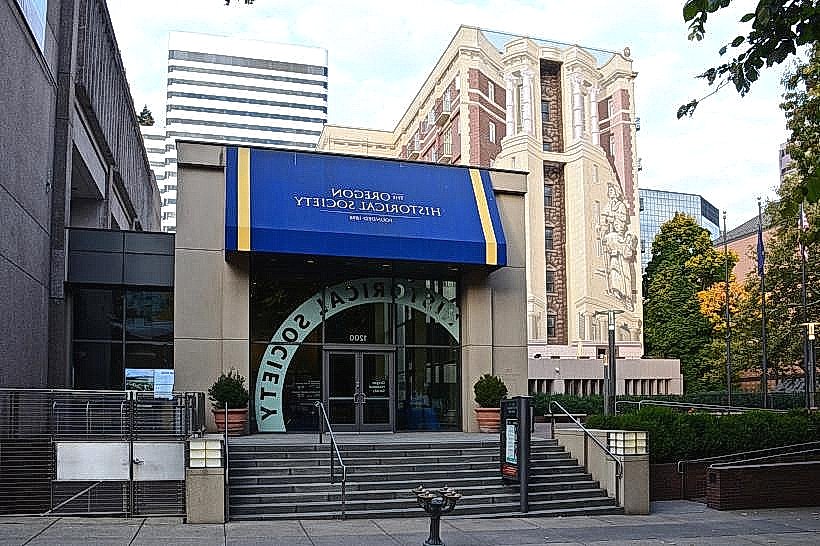
- Oregon Historical Society Museum (3.5km Southeast)
- Powell's City of Books (3.8km Southeast)