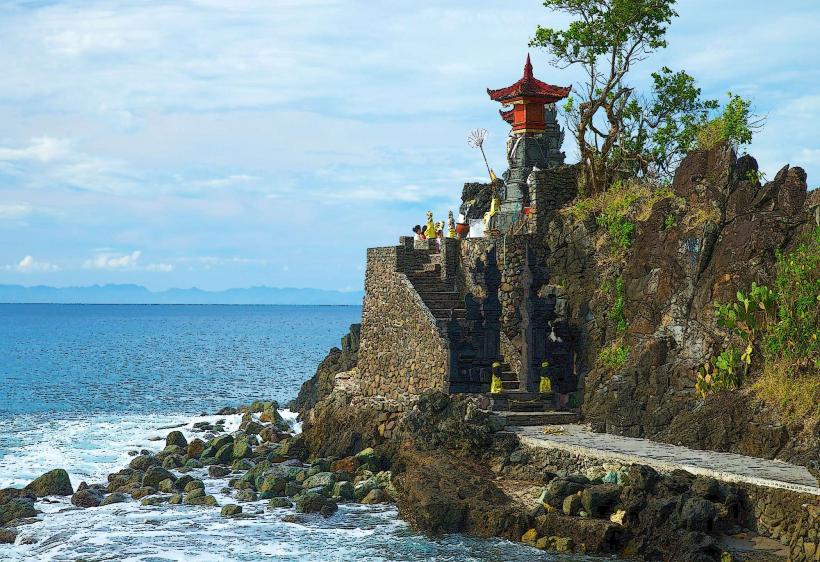
Landmark: Pura Batu Bolong
City: Lombok
Country: Indonesia
Continent: Asia
Pura Batu Bolong, Lombok, Indonesia, Asia
Pura Batu Bolong is a Hindu sea temple situated on the southwestern coast of Lombok, Indonesia.
This temple is characterized by its location on a large, dark volcanic rock formation that extends into the ocean, featuring a distinctive hole or archway through which waves often pass.
Visual Characteristics
The temple structure is composed of coral stone and volcanic rock. The main shrine is a modest, open-air pavilion. The defining feature is the large, dark, naturally formed rock archway at the base of the temple, worn smooth by the sea. The surrounding area consists of dark volcanic sand and scrub vegetation.
Location & Access Logistics
Pura Batu Bolong is located approximately 3 kilometers west of the city center of Mataram, Lombok. Access is via Jalan Raya Senggigi. Parking is available on the roadside adjacent to the temple site. Public transport options are limited; local taxis or ride-sharing services are the most direct means of arrival from Mataram or Senggigi.
Historical & Ecological Origin
The exact construction date of Pura Batu Bolong is not precisely documented, but it is considered a traditional Balinese-Hindu temple, likely established in the late 19th or early 20th century. The rock formation itself is a result of volcanic activity and subsequent coastal erosion.
Key Highlights & Activities
Visitors can observe the temple structure and the natural rock formation. Photography is a primary activity, especially during sunrise and sunset. Observing the waves interact with the rock archway is a notable experience. The site is also used for local religious ceremonies.
Infrastructure & Amenities
Basic amenities are minimal. There are no dedicated restrooms or shade structures at the immediate temple site. Cell phone signal (4G) is generally available. Food vendors are typically found along the main road leading to the temple, rather than directly at the site.
Best Time to Visit
For photography, the hours around sunrise (approximately 06:00-07:00) and sunset (approximately 17:30-18:30) offer optimal lighting conditions. The dry season, from April to September, generally provides clearer skies and calmer seas. High tide can increase wave activity around the rock formation.
Facts & Legends
Local lore suggests that the hole in the rock was created by a powerful spirit or a mythical creature. It is also believed to be a place where prayers for protection and safe passage at sea are particularly potent.
Nearby Landmarks
- Pura Meru (1.5km East)
- Museum Negeri Nusa Tenggara Barat (2km East)
- Taman Mayura (2.2km East)
- Senggigi Beach (4km North)