Landmark: Shewula Mountain Camp
City: Siteki
Country: Eswatini
Continent: Africa
Shewula Mountain Camp, Siteki, Eswatini, Africa
Shewula Mountain Camp is an eco-tourism facility and community-owned nature reserve situated along the northern ridge of the Lubombo Mountains in northeastern Eswatini. Operating as the first community-developed eco-tourism initiative in the country, the camp provides an integrated cultural and wilderness platform managed directly by the local Shewula community.
Visual Characteristics
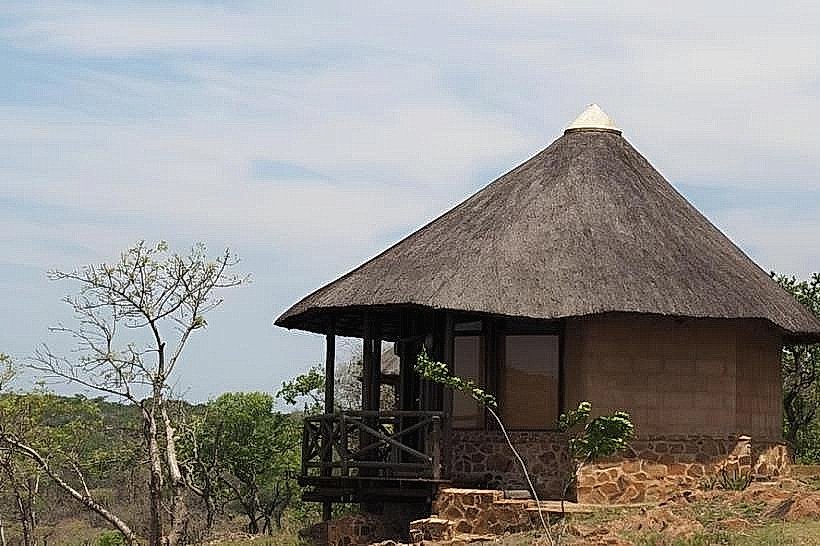
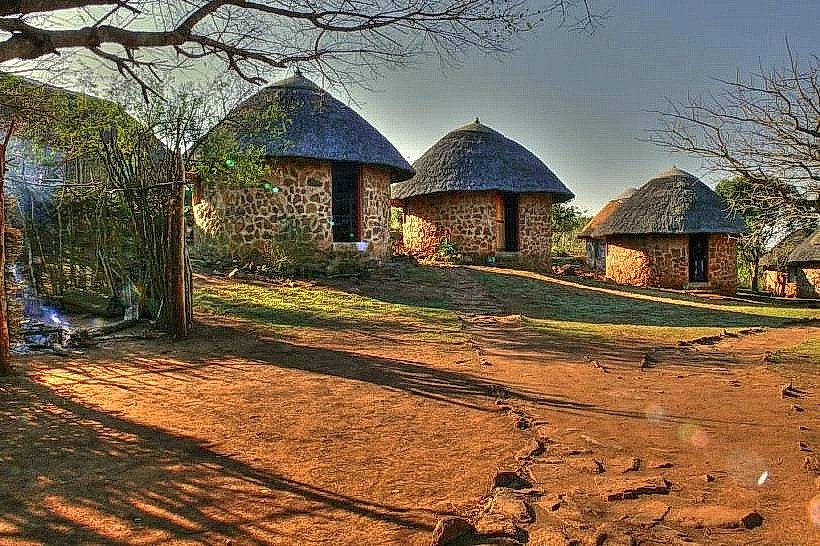
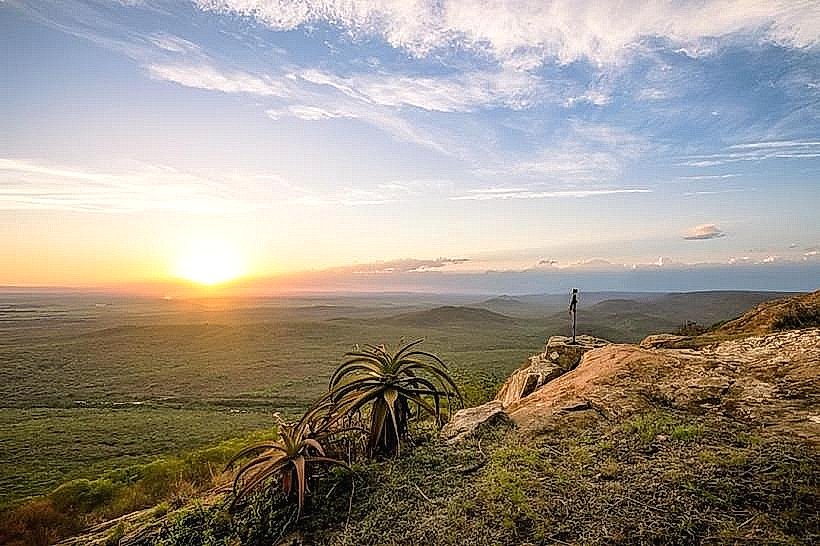
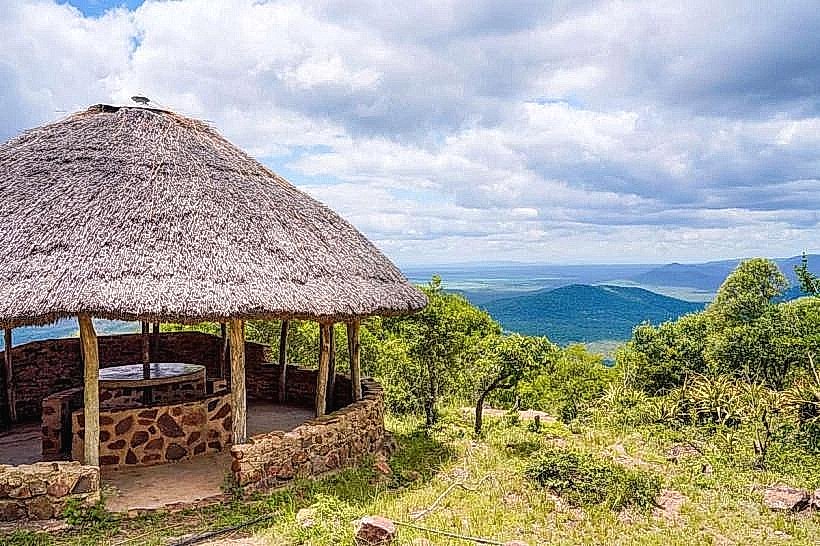
The camp is constructed on an exposed mountain plateau at an elevation of roughly 500 meters, modeled after the layout of a traditional Swazi homestead. The structures consist of stone and thatch rondavels (round huts) alongside open timber-frame dining shelters. The surrounding landscape is characterized by dry mountain bushveld, ironwood forest gorges, and low-lying acacia savannahs. From the western edge of the camp, the terrain drops steeply down the Lubombo escarpment, offering uninhibited, wide-angle views extending across the Mbuluzi River gorge and the Lowveld plains.
Location & Access Logistics
The camp is located within the Shewula Nature Reserve, approximately 20 kilometers southwest of the Lomahasha border post with Mozambique and roughly 45 kilometers northeast of Siteki. Access involves driving along the paved MR3 highway toward the Lomahasha/Namaacha border, turning off onto an unpaved, gravel community road that winds up the mountain escarpment. While reachable in standard two-wheel-drive vehicles during dry weather, a high-clearance or four-wheel-drive vehicle is recommended due to rough stone surfaces and rutted dirt tracks. Public transport users can catch a local bus or kombi from Simunye or Lomahasha, disembarking at the Shewula turn-off to arrange local transport up the ridge. Unpaved parking is available directly within the camp enclosure.
Historical & Ecological Origin
Shewula Mountain Camp was established in 1999 under Chief Mbandzamane Sifundza as a pioneer community conservation initiative. The local population set aside 2,650 hectares of ancestral mountain land to form the Shewula Nature Reserve, aiming to protect the threatened ironwood forest ecosystem from agricultural clearing. The camp was constructed with donor assistance to generate sustainable economic opportunities, directly funding local schools, clean water projects, and orphan care while establishing a protected ecological corridor within the broader Lubombo Conservancy.
Key Highlights & Activities
Taking guided cultural walks through the surrounding Shewula Village to visit local homesteads, agricultural fields, and traditional sangomas (healers) forms a primary activity. Visitors can hike along managed trails down the Lubombo escarpment into the Shewula Nature Reserve to explore ancient ironwood forests and swim in the Mbuluzi River pools. Bird-watching is highly productive along the cliff edges and riverine gorges, offering sightings of rare species like the Narina trogon and the African broadbill.
Infrastructure & Amenities
The camp relies on off-grid infrastructure, utilizing gas-powered refrigerators, gas geysers for hot water, and solar or paraffin lanterns for lighting. Facilities include basic stone rondavels, a shared ablution block with flush toilets and hot showers, a communal self-catering kitchen, and a shaded outdoor dining platform. Cellular network signals from domestic providers are accessible along the exposed mountain ridge, though data speeds vary. Meals can be catered on-site by community cooks using locally sourced ingredients if booked in advance.
Best Time to Visit
The camp is open year-round, with the dry winter season from May to September offering the most comfortable conditions, characterized by clear atmospheric visibility, warm days, and cool nights free from high humidity. The early morning hours between 06:00 and 08:30 provide optimal conditions for bird-watching and landscape photography across the Lowveld basin. Visiting during the summer rainy season (November to March) brings lush green scenery, though afternoon heat can be intense and heavy rainstorms can make the gravel access road slick.
Facts & Legends
A distinctive cultural aspect of Shewula is its historical reputation as a stronghold for traditional rainmaking rituals and herbal medicine practitioners, with local oral history asserting that early Swazi kings regularly consulted the spiritual elders of the Lubombo ridge during periods of severe drought. A verified economic reality of the camp is that 100% of its operational profits are funneled directly into a community trust fund, making it one of the most structurally successful models of community-based natural resource management in Southern Africa.
Nearby Landmarks
Mbuluzi Game Reserve: 8.5km Southwest
Simunye Country Club: 14.0km West
Mlawula Nature Reserve: 15.0km South
Lomahasha Border Post: 20.0km Northeast
Hlane Royal National Park: 28.0km Southwest