Landmark: Sillustani Burial Towers
City: Puno
Country: Peru
Continent: South America
Sillustani Burial Towers, Puno, Peru, South America
Sillustani is a pre-Hispanic burial ground featuring cylindrical towers, known as chullpas, located on the shores of Lake Umayo near Puno, Peru.
These structures served as tombs for nobility of the Inca and earlier cultures.
Visual Characteristics
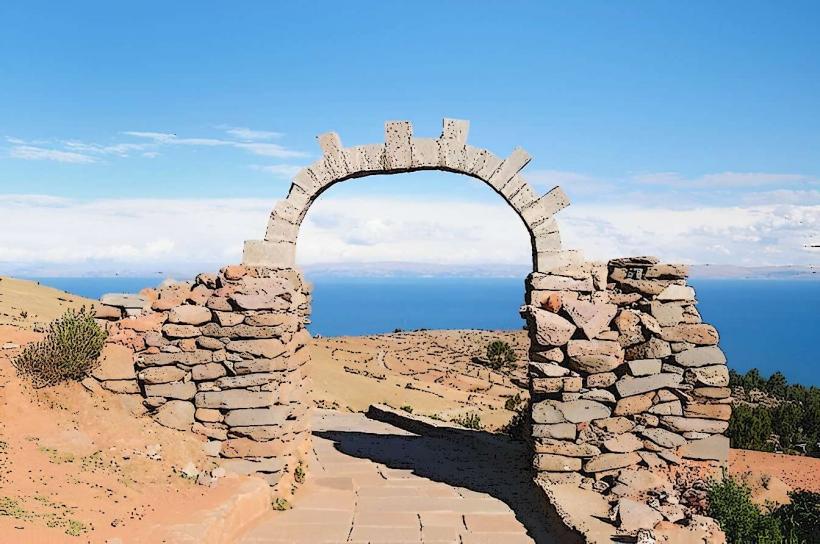
The chullpas are constructed from stone blocks, some of which are finely cut and fitted, while others are rougher. They vary in height, with the tallest reaching approximately 12 meters. The stone is predominantly a reddish-brown granite. The towers are cylindrical, tapering slightly towards the top, and often feature a small, rectangular doorway at the base. The surrounding landscape consists of rolling hills and the expansive, blue waters of Lake Umayo.
Location & Access Logistics
Sillustani is situated approximately 34 kilometers north of Puno. Access is primarily via the Carretera Puno-Juliaca (PE-34A) and then a turn onto a secondary unpaved road. The journey from Puno typically takes 45-60 minutes by private vehicle or taxi. Public transport directly to Sillustani is limited; shared taxis or organized tours are the most common methods. Parking is available at the site entrance.
Historical & Ecological Origin
The chullpas at Sillustani were built by the Colla people, who inhabited the region prior to the Inca conquest, with some construction continuing during the Inca period. The earliest structures date back to the 12th century AD. The site's purpose was funerary, intended to house the remains of important individuals and their possessions. The geological formation of the area is characterized by volcanic rock and sedimentary deposits.
Key Highlights & Activities
Exploration of the chullpa structures is the primary activity. Visitors can observe the varying construction techniques and architectural styles. Walking the perimeter of the site offers views of Lake Umayo. Photography of the towers against the lake backdrop is common. Limited interpretive signage is present.
Infrastructure & Amenities
Basic restroom facilities are available at the site entrance. There are no permanent food vendors on-site, though occasional local vendors may be present. Shade is minimal, provided mainly by the chullpa structures themselves. Cell phone signal (4G/5G) is generally weak to non-existent within the immediate vicinity of the ruins.
Best Time to Visit
The best time of day for photography is generally mid-morning or late afternoon when the sun angle creates shadows that highlight the stone textures and architectural details. The dry season, from May to October, offers the most stable weather conditions with clear skies. There are no tide-dependent activities at this location.
Facts & Legends
One notable chullpa, known as the "Chullpa del Lagarto" (Lizard Chullpa), features a carved lizard at its apex, believed by some to represent a territorial marker or a symbol of the afterlife. Local folklore suggests that the chullpas were built by giants or ancient beings due to their imposing size and construction.
Nearby Landmarks
- Laguna Umayo (0.2km West)
- Pukara (25km North)
- City of Puno (34km South)
- Lake Titicaca (35km South)
- Uros Floating Islands (38km South)