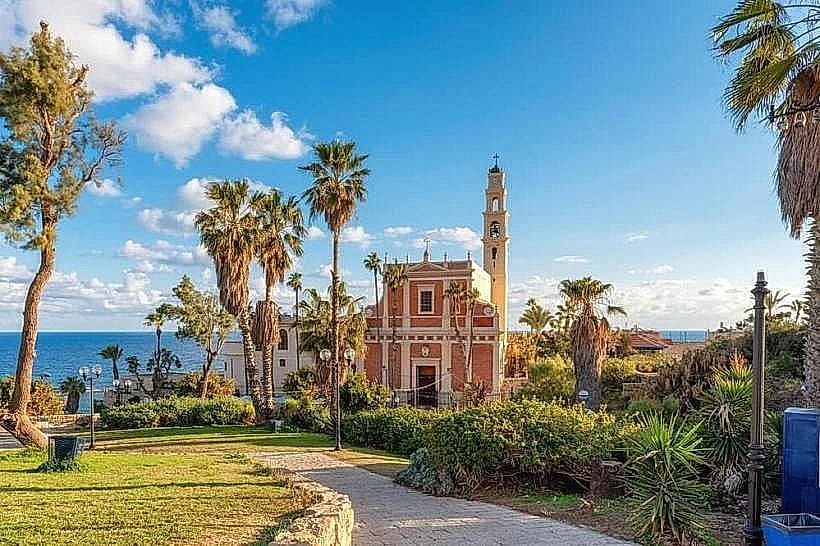
Landmark: St. Peter's Church
City: Jaffa
Country: Israel
Continent: Asia
St. Peter's Church, Jaffa, Israel, Asia
St. Peter's Church is a prominent Franciscan Catholic landmark situated on the highest point of the Old Jaffa hill. Completed in 1894, the current structure was built atop the ruins of a 13th-century Crusader fortress and serves as a primary religious site for the local and visiting Catholic community.
Visual Characteristics
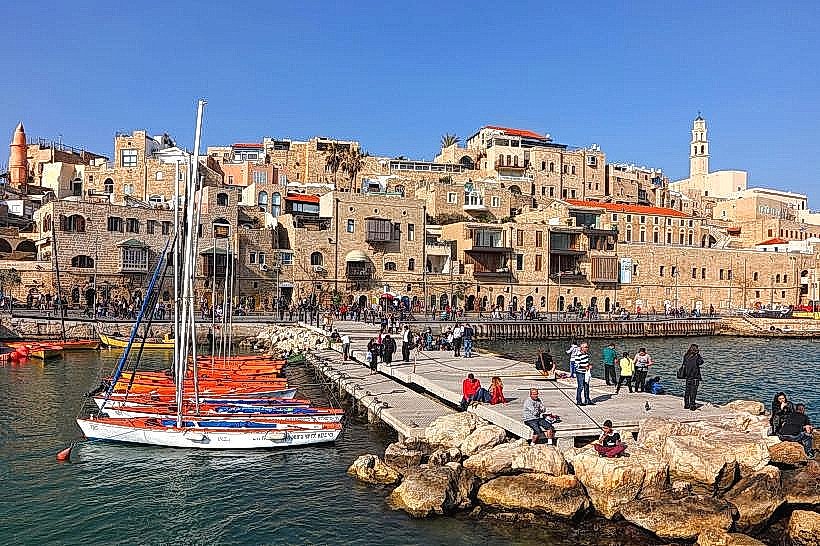
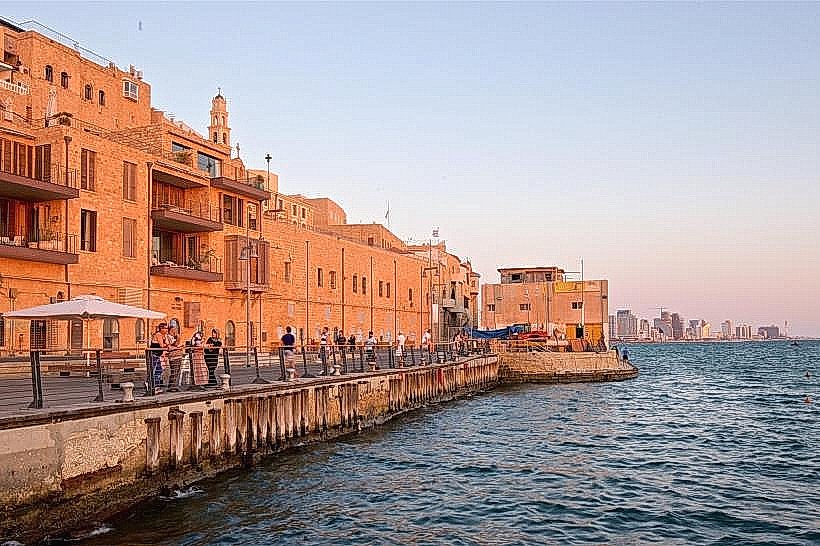
The church is distinguished by its vibrant reddish-pink brick facade and a tall, slender bell tower that serves as a nautical landmark for ships approaching the coast. Its architecture follows a Latin Cross design with a grand interior featuring high vaulted ceilings, marble walls, and detailed wood carvings. The stained-glass windows, created by German artist Franz Xaver Zettler, depict significant biblical events and the life of Saint Peter.
Location & Access Logistics
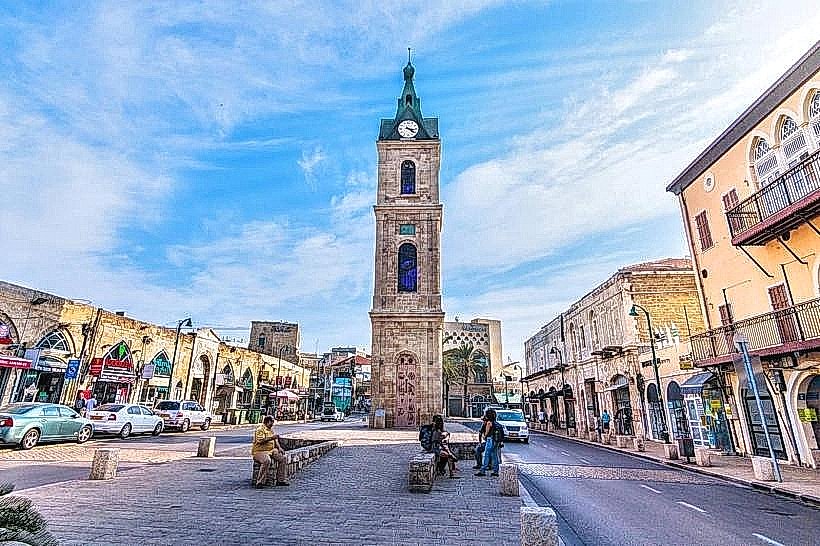
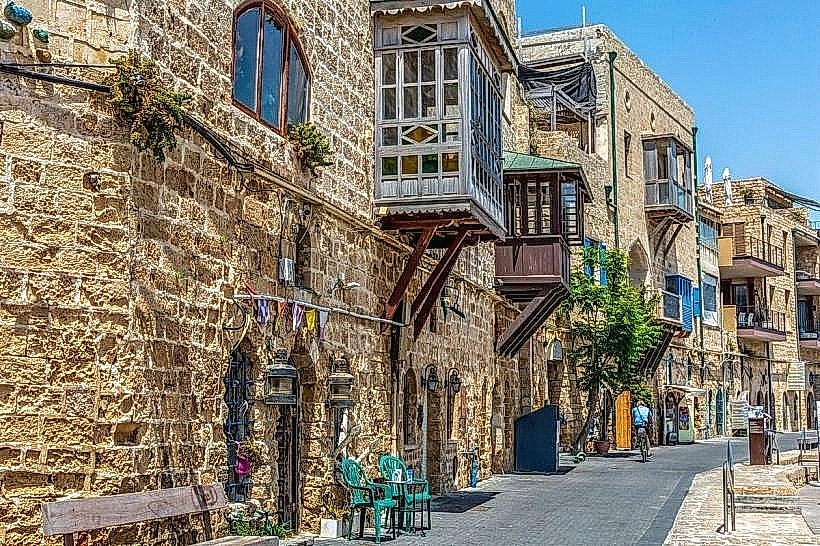
Located at 1 Mifratz Shlomo Promenade, the church anchors the central plaza of the Old City. It is approximately 2.8km south of central Tel Aviv. Access is via the winding stone pedestrian alleys of Jaffa or the coastal road. Public transport users can take bus lines 10 or 18 to the Jaffa Clock Tower followed by a 400-meter walk uphill. While there is no parking at the church entrance, the large paid lots at Jaffa Port are situated directly below the hill.
Historical & Ecological Origin
The site is historically significant as the traditional location where Saint Peter is said to have stayed with Simon the Tanner and raised Tabitha from the dead. The building's orientation is unique; unlike most churches that face East, St. Peter's faces West toward the sea and Rome, symbolizing its connection to the Papacy. The structure is built on a natural Kurkar (aeolianite) ridge, providing a commanding view of the Mediterranean coastline.
Key Highlights & Activities
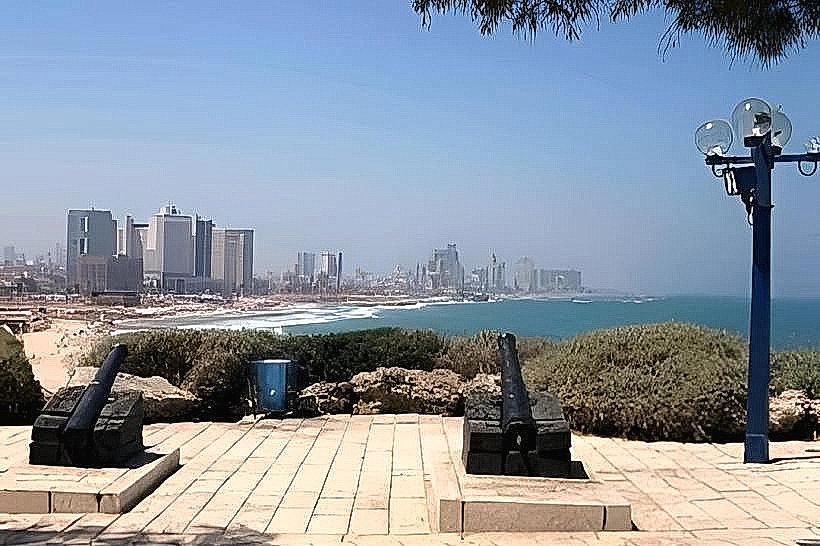
Visitors can attend mass services held in multiple languages, including English, Spanish, and Polish. The church's courtyard contains a statue of Saint Peter, and the interior apse features a large painting of the Vision of the Great Sheet. The exterior plaza is a major viewpoint for observing the Tel Aviv shoreline and is a frequent gathering point for walking tours exploring the Casbah’s art galleries and boutiques.
Infrastructure & Amenities
The church is an active place of worship with public visiting hours between 08:00–11:45 and 15:00–17:00 on weekdays. 5G cellular coverage is strong in the surrounding plaza. While the interior is climate-controlled, the outdoor areas are exposed to the coastal wind and sun. Public restrooms and water fountains are available in the adjacent municipal garden (Abrasha Park). The site is accessible to pedestrians, though the historic stone ramps involve moderate inclines.
Best Time to Visit
Late afternoon is the optimal time for photography, as the setting sun illuminates the reddish exterior and provides high-contrast lighting of the bell tower. Sunday mornings offer the chance to witness the local liturgy, though tourist access to the main sanctuary may be restricted during services. The plaza in front of the church is a primary location for viewing the city lights of Tel Aviv after dark.
Facts & Legends
A verified historical detail is that the church once housed Napoleon Bonaparte during his 1799 campaign in the Levant, as the site was used as a hospital for his plague-stricken soldiers. A local legend claims that the basement of the church contains secret tunnels connecting the fortress directly to the Jaffa Port, used by knights and monks to bypass the city walls during ancient sieges.
Nearby Landmarks
Abrasha Park - 0.05km East
Jaffa Port - 0.2km West (Downhill)
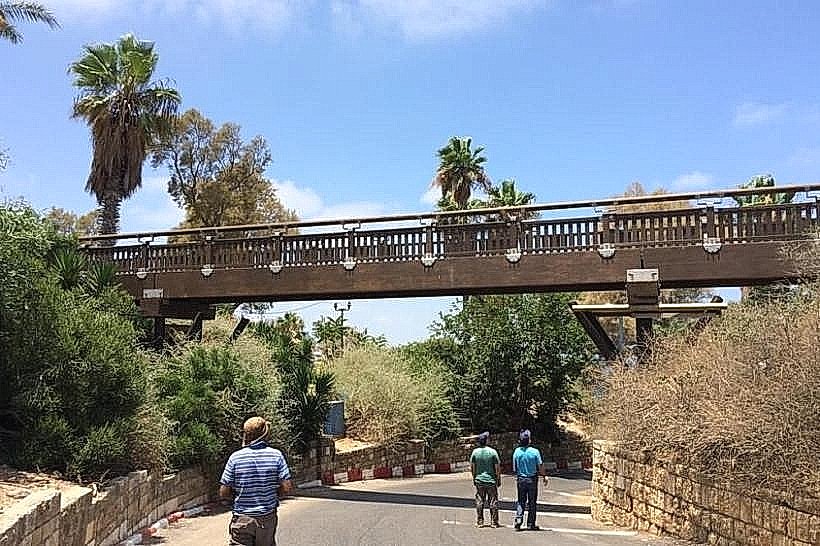
Wishing Bridge - 0.1km East
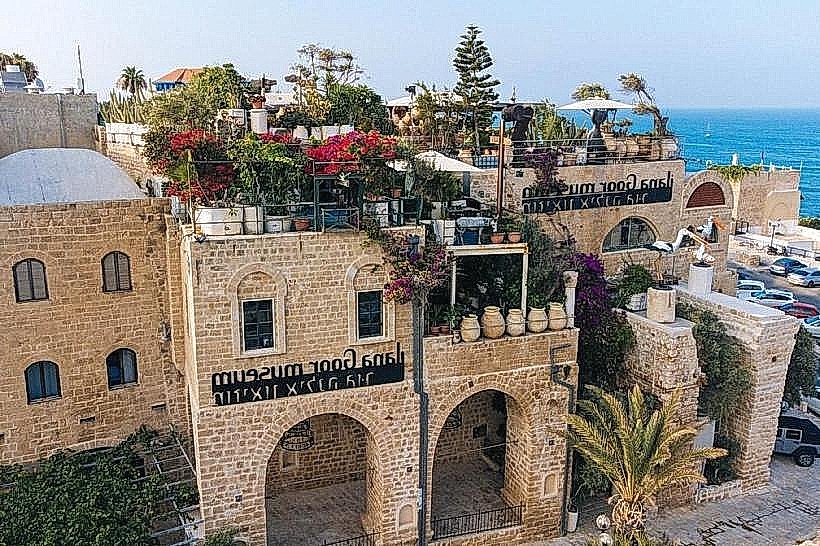
Ilana Goor Museum - 0.2km South
Jaffa Clock Tower - 0.4km Northeast