Landmark: Tangkuban Perahu Volcano
City: Bandung
Country: Indonesia
Continent: Asia
Tangkuban Perahu Volcano, Bandung, Indonesia, Asia
Tangkuban Perahu is a stratovolcano located approximately 30 kilometers north of Bandung, Indonesia. It is an active volcano with a distinctive boat-shaped crater.
Visual Characteristics
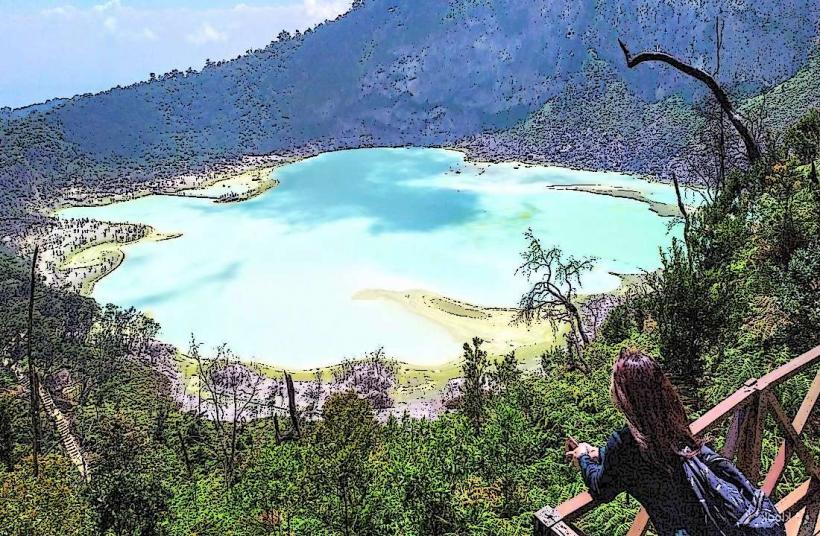
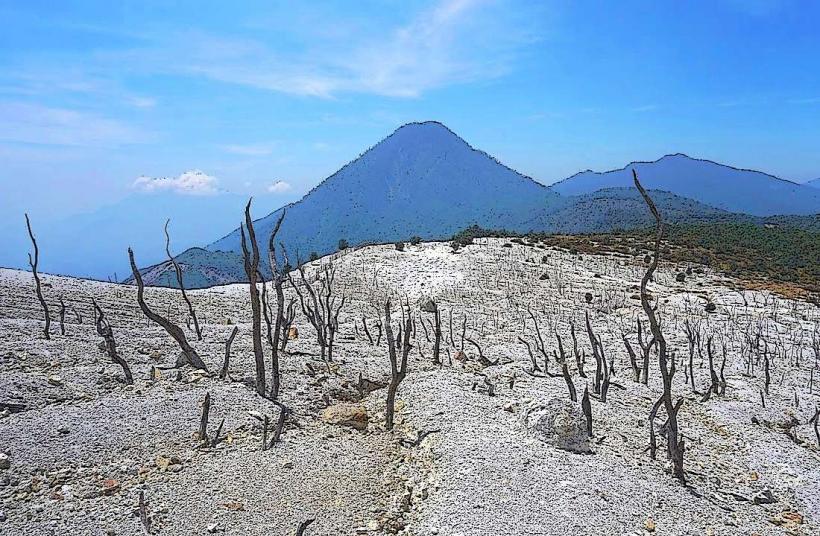
The volcano's summit features several craters, the most prominent being Kawah Ratu (Queen's Crater). The crater walls are composed of layered volcanic rock, exhibiting shades of grey, brown, and yellow due to mineral deposits. Steam and sulfurous gases are often visible emanating from fumaroles within the craters. The surrounding slopes are covered in dense tropical rainforest.
Location & Access Logistics
Tangkuban Perahu is accessible via the Jalan Tangkuban Perahu road, which branches off from the main Bandung-Subang highway. The drive from Bandung city center takes approximately 45-60 minutes, covering a distance of about 25-30 kilometers. Paid parking is available at the main visitor area near Kawah Ratu. Public transportation options are limited; shared minivans (angkot) can be taken from Bandung to Lembang, from where a motorcycle taxi (ojek) or a private car is required for the final ascent. There are no direct bus routes to the volcano summit.
Historical & Ecological Origin
Tangkuban Perahu is a stratovolcano formed by repeated eruptions over geological time. Its current form is the result of multiple caldera collapses and subsequent cone building. The volcano is part of the Sunda Arc, a volcanic arc that stretches across Sumatra and Java. The most recent significant eruption occurred in 2019.
Key Highlights & Activities
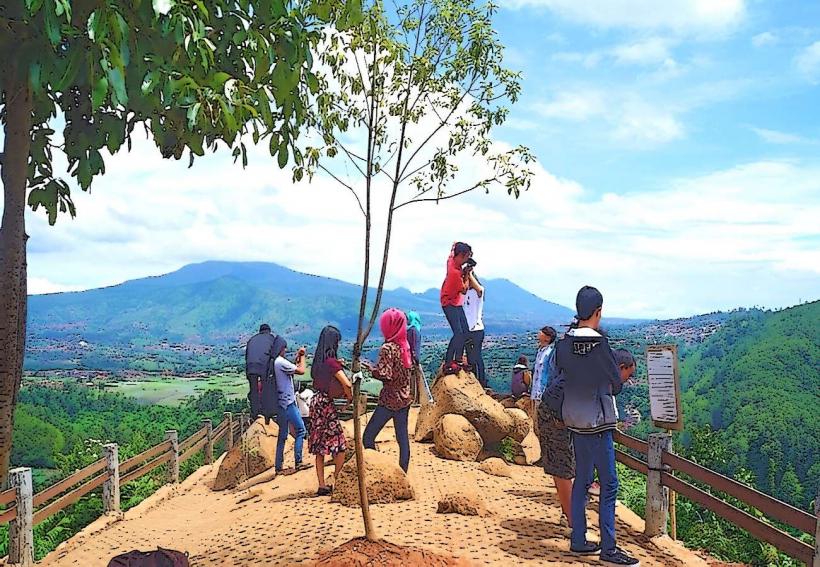
Visitors can walk to the rim of Kawah Ratu for close-up views of the crater floor and fumaroles. Observation decks provide vantage points for panoramic views. Hiking trails are available on the volcano's slopes, though access may be restricted based on volcanic activity. Guided tours of the crater area are offered by local guides.
Infrastructure & Amenities
Restrooms are available at the main visitor center. Small food stalls and souvenir shops are located near the parking area. Shade is limited around the crater rims. Cell phone signal (4G) is generally available in the visitor area.
Best Time to Visit
The best time of day for photography is typically in the morning, between 8:00 AM and 10:00 AM, when the light is softer and the steam is often more visible. The dry season, from June to September, offers the most favorable weather conditions with less rainfall. There are no tide-specific considerations for visiting.
Facts & Legends
According to Sundanese folklore, Tangkuban Perahu translates to "overturned boat." The name originates from a legend about a young woman named Dayang Sumbi who was tasked by her father to make a boat for her suitor, a dog named Tumang. Frustrated, she kicked the unfinished boat, causing it to overturn and become the volcano. A specific tip for visitors is to be aware of the sulfurous smell, which can be strong near active fumaroles.
Nearby Landmarks
- Ciater Hot Springs (5km Northeast)
- Maribaya Waterfall (8km South)
- Bosscha Observatory (12km Southwest)
- Farmhouse Lembang (15km Southwest)
- Floating Market Lembang (16km Southwest)