Landmark: Tsatsadu Falls
City: Hohoe
Country: Ghana
Continent: Africa
Tsatsadu Falls, Hohoe, Ghana, Africa
Tsatsadu Falls is a distinctive ecological and technological landmark located in Alavanyo Abehenease, within the Hohoe Municipality of the Volta Region. It is unique among Ghana’s waterfalls for hosting the country’s first micro-hydroelectric power plant, blending natural beauty with renewable energy infrastructure.
Visual Characteristics
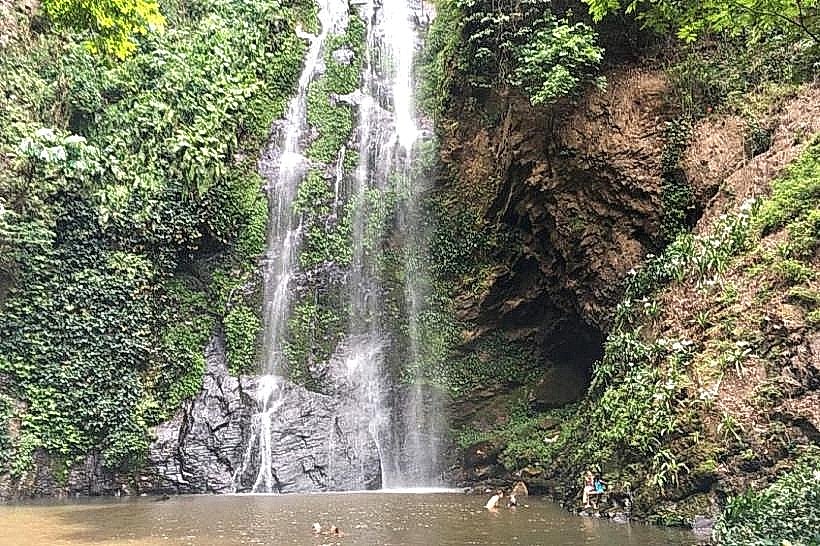
The falls are characterized by a steady cascade of water over a series of rugged, moss-covered rock faces, dropping approximately 90 meters (295 feet). Unlike the sheer vertical drop of Wli, Tsatsadu features a more layered, terraced flow through dense tropical vegetation. The area is notable for its lush green canopy and rocky outcrops, which remain largely intact due to the "run-of-river" design of the nearby power station that avoids the need for a large reservoir.
Location & Access Logistics
The site is situated approximately 10km from the city of Hohoe.
Access: From Hohoe, visitors can take the road toward Alavanyo. Shared taxis and "tro-tros" are available from the Hohoe central station.
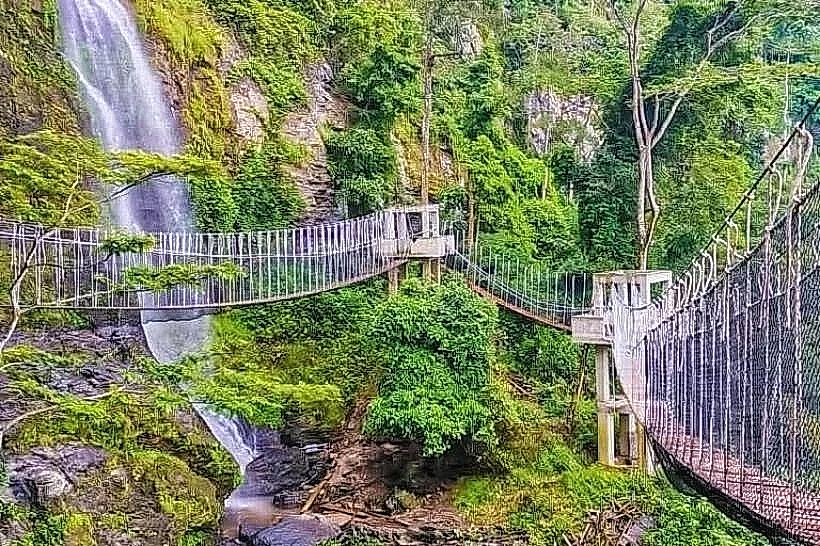
Trail: The path to the falls is relatively accessible, with a dedicated walkway and a recreational section that allows for close viewing.
Infrastructure: The site features the Tsatsadu Generating Station (TGS) and the Tsatsadu Centre of Excellence, which includes facilities for engineering students to conduct practical research.
Historical & Technological Origin
Originally known primarily as a local scenic spot, Tsatsadu became a pilot site for renewable energy in 2005. In 2020, Phase I of the micro-hydro plant was commissioned, followed by Phase II in October 2024, bringing the total capacity to 120kW. The project is a point of national pride as it was designed and constructed entirely by Ghanaian engineers from the Bui Power Authority (BPA). Ecologically, the project includes a reforestation program to protect the river's shoreline and maintain the water cycle.
Key Highlights & Activities
Micro-Hydro Tour: Visitors can observe the intake structures, penstocks, and the powerhouse, making it a rare destination for "industrial ecotourism."
Swimming and Recreation: The base of the falls features splash pools suitable for wading and swimming.
Engineering Education: The Centre of Excellence serves as a training hub for tertiary students focusing on hydropower and renewable systems.
Nature Walks: The surrounding forest offers opportunities for birdwatching and exploring the diverse flora of the Akwapim-Togo hills.
Infrastructure & Amenities
Power & Connectivity: Due to the on-site power generation, the immediate area is well-lit and has strong 4G/5G cellular coverage.
Facilities: There are basic reception facilities, paved walkways near the power plant, and public restrooms.
Provisions: While small kiosks in Alavanyo sell snacks, visitors are advised to carry specialized supplies from Hohoe.
Best Time to Visit
The falls are perennial, meaning they flow year-round. However, the volume is most impressive during the rainy season (June to October). For those interested in the engineering aspects, visiting during the dry season (November to March) allows for a clearer view of the diversion weirs and the riverbed architecture.
Facts & Legends
The name "Tsatsadu" is derived from the local dialect, referring to the "flowing" or "spreading" nature of the water over the rocks. A significant modern "legend" of the site is its status as a 100% Ghanaian-led engineering success, proving the viability of small-scale hydro projects for rural electrification in West Africa.
Nearby Landmarks
Alavanyo Traditional Area – 1.0km West
Hohoe Central Market – 10km East
Wli Waterfalls – 30km East
Mount Afadja – 35km Northeast
Tagbo Falls – 32km Northeast