Landmark: Wli Waterfalls
City: Hohoe
Country: Ghana
Continent: Africa
Wli Waterfalls, Hohoe, Ghana, Africa
Wli Waterfalls, located near the village of Wli in the Hohoe Municipality, is the highest waterfall in West Africa. It is situated within the Agumatsa Wildlife Sanctuary, approximately 280km northeast of Accra, near the border with Togo.
Visual Characteristics
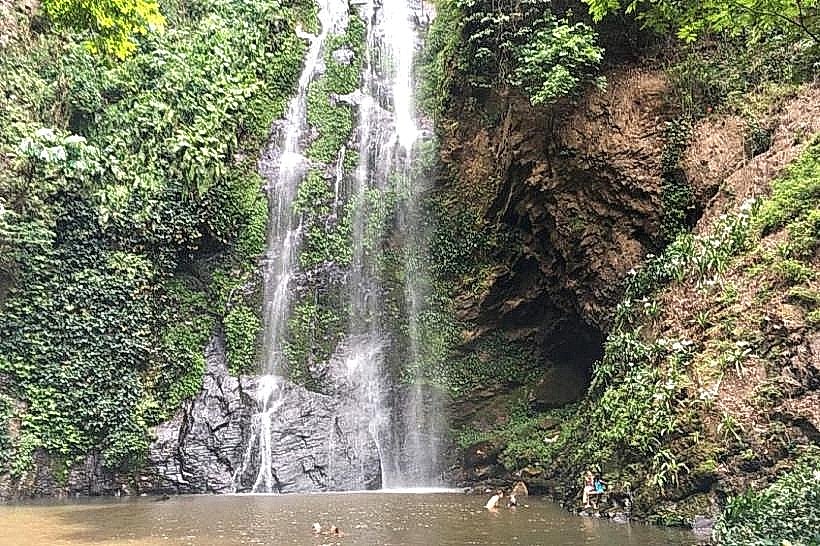
The falls are divided into the Lower Falls and the Upper Falls. The Lower Falls feature a vertical drop of approximately 80 meters into a large, deep plunge pool surrounded by sheer rock cliffs. The rock face is composed of dark metamorphic stone often covered in green moss and lichens. Thousands of straw-colored fruit bats typically cling to the high cliffs surrounding the water, creating a distinct visual and auditory environment.
Location & Access Logistics
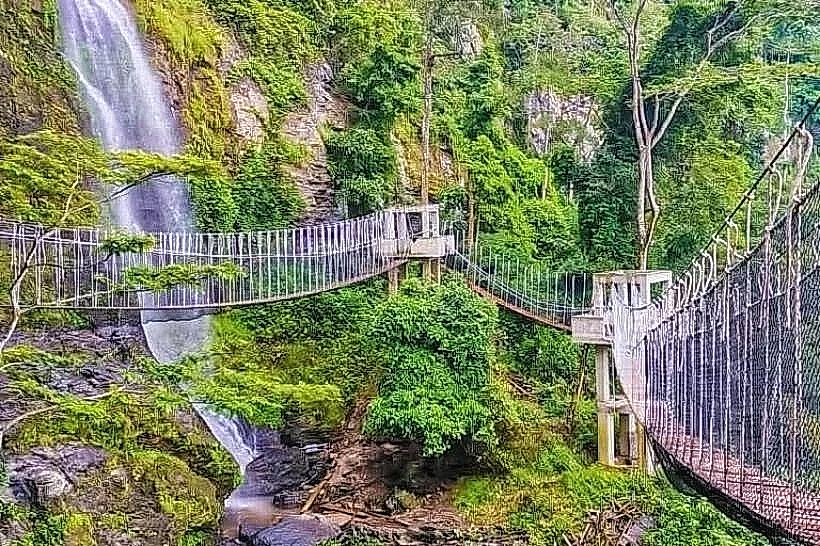
The site is accessed via the Ho-Hohoe road. From Hohoe, it is a 20km drive east to the Wli Todzi area. A well-maintained, flat dirt path leads from the visitor center to the Lower Falls, crossing the Agumatsa River 29 times via small footbridges. The hike to the Lower Falls takes approximately 45 minutes on level ground, while the trek to the Upper Falls requires a strenuous 2-to-3-hour steep climb through dense forest. Private vehicle parking is available at the main entrance in Wli Agumatsa.
Historical & Ecological Origin
The falls are part of the Agumatsa River system, which originates in the highlands of Togo. The area was designated as a wildlife sanctuary to protect the primary forest and the massive colonies of fruit bats. Geologically, the waterfall is a result of the river crossing the Togo structural unit, where resistant quartzite layers create the dramatic vertical escarpments.
Key Highlights & Activities
Visitors can swim in the plunge pool at the base of the Lower Falls. Guided botanical tours are available, highlighting indigenous trees and the massive bat colonies on the cliffs. Hiking to the Upper Falls provides a more secluded experience and a panoramic view of the surrounding forest-savannah mosaic. Birdwatching is a primary activity, with over 200 bird species recorded in the sanctuary.
Infrastructure & Amenities
The entrance features a formal visitor center with a ticket office and a small museum. Public restrooms and changing rooms are available at the start of the trail. While there are no facilities at the falls themselves, several eco-lodges and restaurants are located within 500 meters of the park entrance. 4G/5G cell signal is stable at the visitor center but becomes intermittent as one nears the cliffs and deep forest sections.
Best Time to Visit
The falls are most impressive during the rainy season (June to October) when the water volume is at its peak. However, for those wishing to hike to the Upper Falls, the dry season (November to March) is safer as the steep trails are less slippery. Mid-morning (09:00–11:00) is the best time for photography to capture the sunlight hitting the water before it is shaded by the high canyon walls.
Facts & Legends
According to local Ewe tradition, the falls are a sacred site, and the sound of the water is believed to be the voice of the ancestors. A verified ecological oddity is that the thousands of bats inhabiting the cliffs serve as a vital seed dispersal mechanism for the surrounding forest, making the falls a cornerstone of the regional ecosystem.
Nearby Landmarks
Agumatsa Wildlife Sanctuary – 0.1km East (Site location)
Tagbo Falls – 15km North
Mount Afadja (Afadjato) – 25km Northwest
Tafi Atome Monkey Sanctuary – 45km Southwest
Hohoe Central Market – 20km West