City: Annapolis
Country: USA Maryland
Continent: North America
Annapolis, USA Maryland, North America
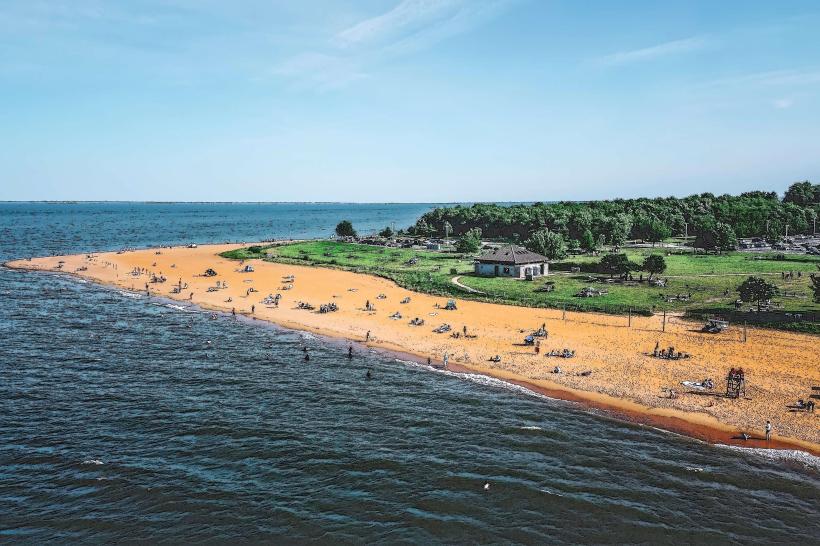
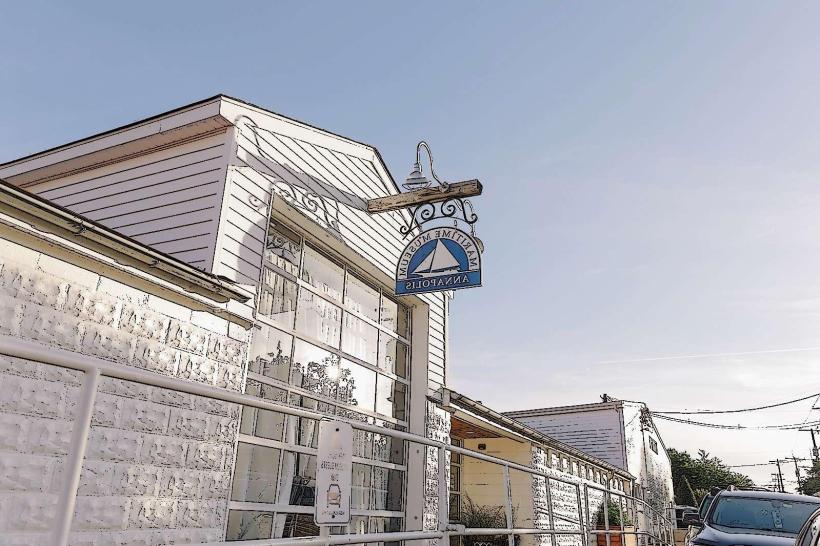
Annapolis is an independent city and the seat of Anne Arundel County, situated on the Chesapeake Bay at the mouth of the Severn River. Known as the "Sailing Capital of the World," it is defined by its role as the state capital of Maryland, its status as the home of the United States Naval Academy, and its exceptionally well-preserved 18th-century colonial architecture.
Historical Timeline
Inhabited by the Susquehannock and Piscataway peoples. Primary governance eras include its 1649 founding by Puritan exiles from Virginia as "Providence" and its 1708 incorporation as Annapolis (named for Princess Anne). A critical historical event occurred from 1783 to 1784 when Annapolis served as the temporary capital of the United States; it was here that George Washington resigned his commission as Commander-in-Chief and the Treaty of Paris was ratified. The 20th and 21st centuries have been characterized by the city's emergence as a premier maritime recreation hub and the continuous modernization of the Naval Academy.
Demographics & Population
The population is approximately 41,000. The demographics are White (60%), Black or African American (22%), Hispanic or Latino (14%), and Asian (2%). The economy is driven by state government, the Department of Defense, and a massive maritime service and tourism industry.
Urban Layout & Key Districts
The city is centered on a colonial-era radial plan with streets fanning out from State Circle and Church Circle.
Historic District: The 18th-century core featuring a high density of National Historic Landmarks, brick-paved streets, and boutique retail.
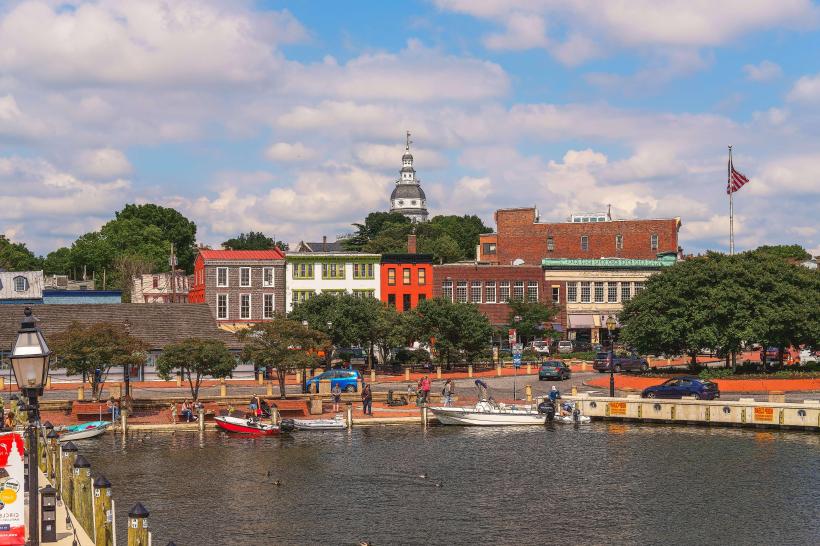
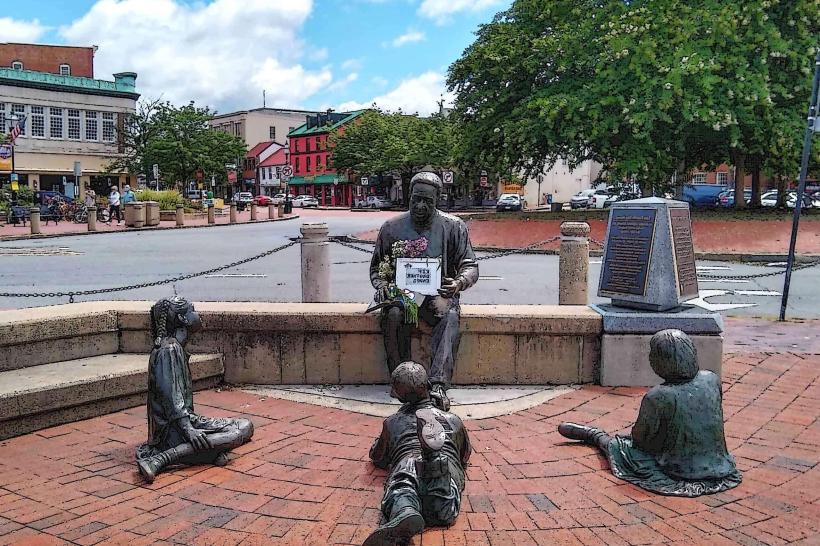
The City Dock (Ego Alley): The waterfront hub where the harbor meets the historic district, known for high-end yachts and public gatherings.
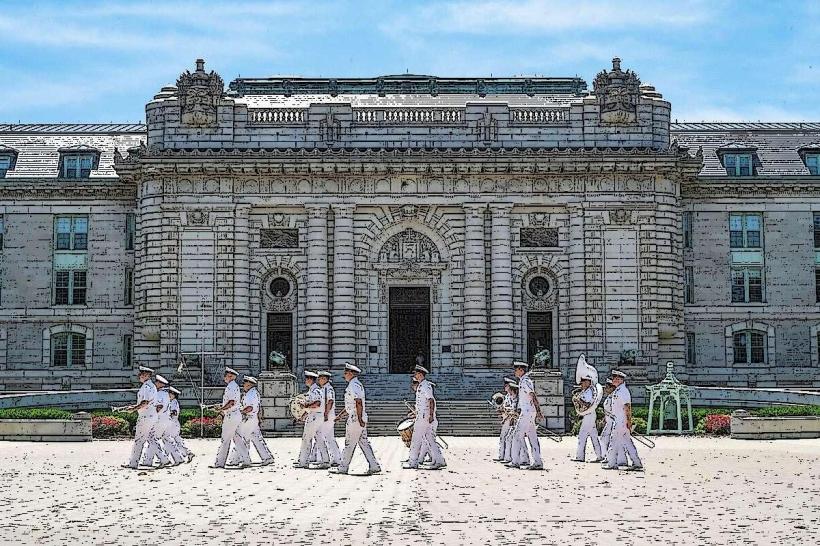
U.S. Naval Academy (USNA): A massive, gated federal campus occupying the northeastern waterfront of the peninsula.
West Street / Arts District: The modern cultural corridor featuring galleries, outdoor dining, and the city's newest hotel developments.
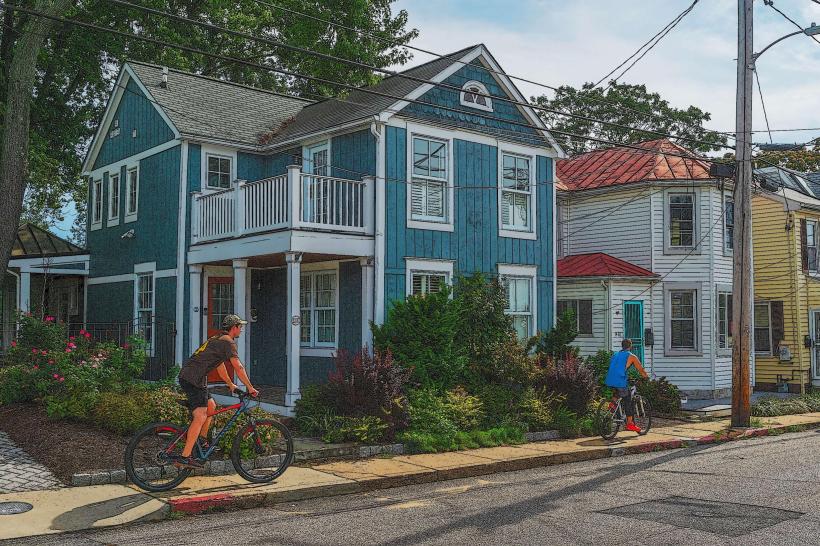
Eastport: A historically maritime neighborhood across the Spa Creek Bridge, known for its "independent" spirit and boating infrastructure.
Top City Landmarks
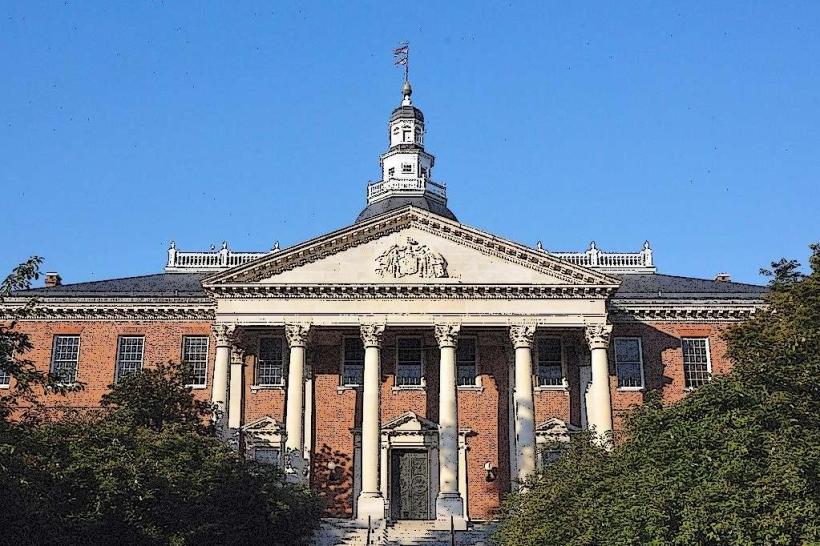
Maryland State House: The oldest state capitol in continuous legislative use in the U.S. and the only one to have served as the nation's capitol.
United States Naval Academy: Featuring the USNA Chapel, the crypt of John Paul Jones, and the massive Bancroft Hall.
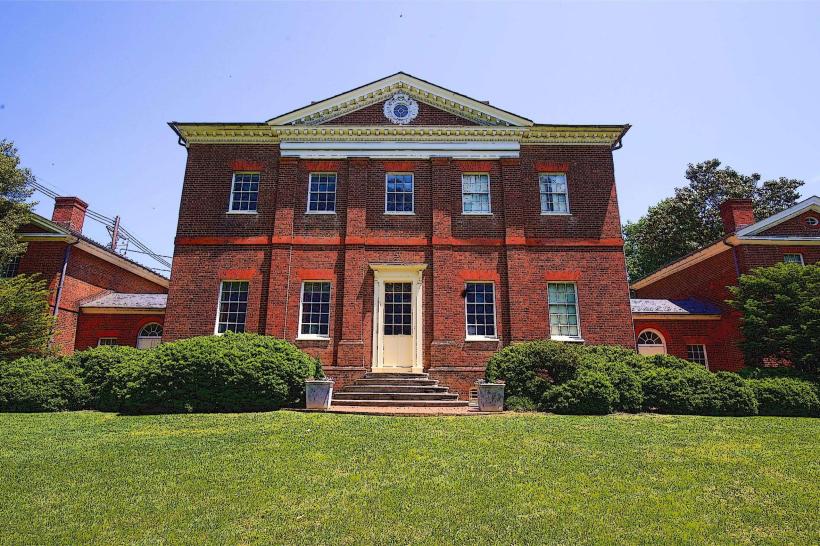
William Paca House & Garden: A restored 1763 mansion of a Declaration of Independence signer, featuring a 2-acre tiered garden.
Banneker-Douglass Museum: The state’s official museum of African American heritage, housed in a historic 19th-century church.
Hammond-Harwood House: An 18th-century Anglo-Palladian masterpiece known for its intricate woodcarvings and original architecture.
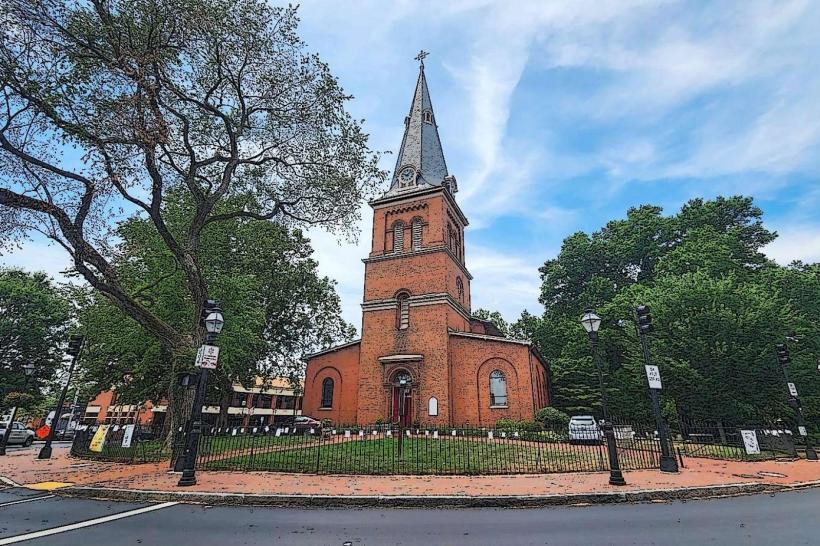
St. Anne’s Church: A historic Episcopal church situated at the center of Church Circle since the city's founding.
Transportation Network
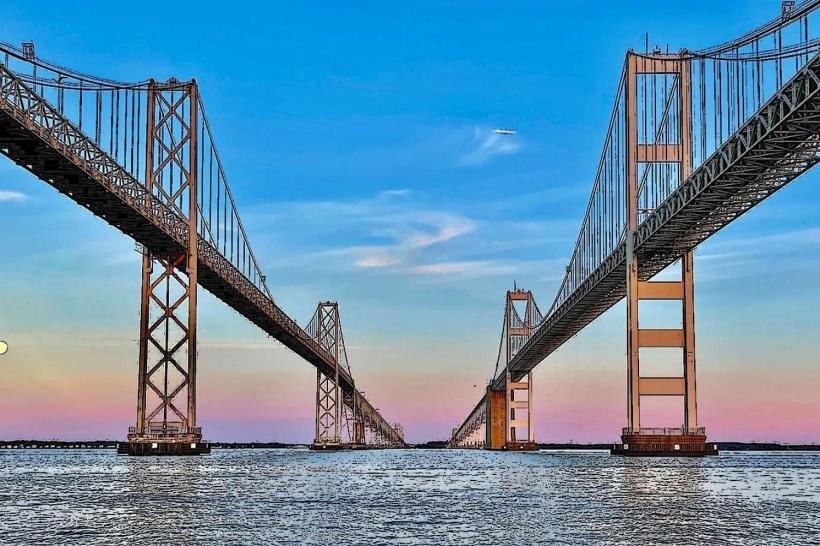
Movement is highly walkable within the historic core. Public transit is serviced by the Annapolis Transit bus system and a seasonal water taxi. The city is accessed via US-50 and I-97. Commercial air service is via Baltimore/Washington International (BWI), 35 km north. Ride-sharing is universal. Traffic density is high, particularly on the "Bay Bridge" (US-50) and within the narrow streets of the historic district during the United States Sailboat Show in October.
Safety & "Red Zones"
The general safety level is high. Property crime, specifically "theft from boat" and petty theft in tourist zones, is the primary concern. Caution is advised at night in parts of the Newtown area and specific public housing complexes near Forest Drive due to localized property crime. There are no officially designated "red zones." Environmental hazards include frequent nuisance flooding at the City Dock during high tides and storm surges.
Digital & Financial Infrastructure
Internet speeds average 500+ Mbps with fiber availability via Verizon Fios and Xfinity. Main mobile carriers are Verizon and AT&T. Card acceptance is universal. ATMs are concentrated on Main Street and West Street.
Climate & Air Quality
Temperatures range from -1°C to 7°C in winter and 21°C to 31°C in summer. The maritime location creates high humidity and moderates winter temperatures compared to inland Maryland. Air quality is high.
Culture & Social Norms
The standard tipping percentage is 20–25%. A formal "East Coast-Political" or "Maritime" greeting is standard. Dress codes are "Preppy-Casual" or "Nautical-Chic." The city is culturally defined by its "Navy" pride, its obsession with Blue Crabs, and its identity as a "Sailing Capital."
Accommodation Zones
Historic District: Recommended for boutique inns and walkable access to the State House and USNA.
West Street: Recommended for modern hotel chains and proximity to the arts district.
Local Cost Index
1 Espresso: $4.75 (USD)
1 Standard Lunch: $20.00 (USD)
1 State House Tour: $0.00 (Free).
Nearby Day Trips
Baltimore, MD: (45 km north).
Washington, D.C.: (50 km west).
St. Michaels, MD: (100 km east; historic Eastern Shore town via the Bay Bridge).
Facts & Legends
Annapolis has more 18th-century brick buildings than any other city in the United States. Historically, it was the site of the 1786 Annapolis Convention, which led to the Constitutional Convention. A local legend involves the "Ghost of the Maryland State House," rumored to be a workman who fell from the dome during construction. Another legend concerns the "Eastport Secession," a 1998 mock-secession that resulted in the "Maritime Republic of Eastport" as a protest against the temporary closing of the Spa Creek Bridge.