City: Dougga
Country: Tunisia
Continent: Africa
Dougga, Tunisia, Africa
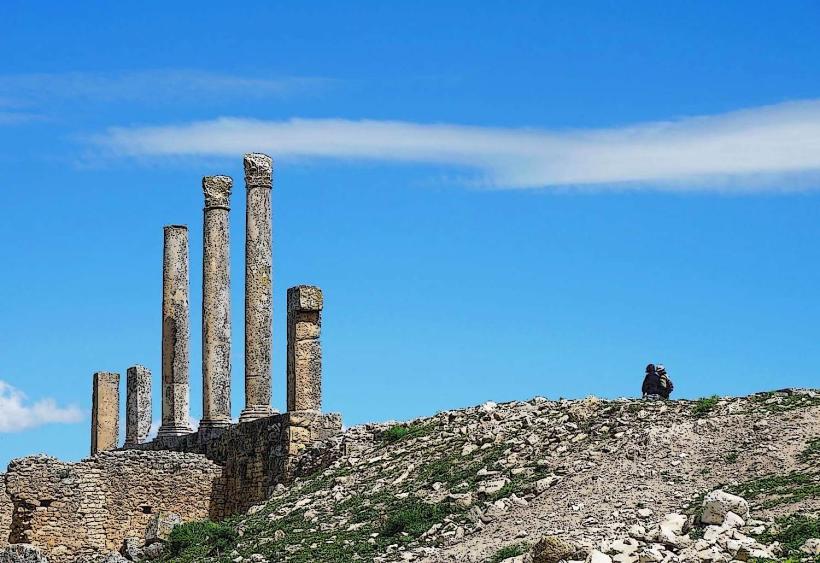
Dougga (ancient Thugga) is an archaeological site in North Central Tunisia, situated at an elevation of 571 meters on a hilltop overlooking the fertile Oued Khaled valley. It is recognized as the best-preserved Roman small town in North Africa and was designated a UNESCO World Heritage site in 1997.
Historical Timeline
Dougga was originally a fortified Numidian settlement (the name Thugga means "pastures"). Unlike many Roman cities built on flat plains, Dougga retained its irregular Numidian street plan after the Roman conquest. It flourished under Roman rule in the 2nd and 3rd centuries AD, becoming a prosperous center for grain and olive production. The city remained inhabited during the Vandal and Byzantine periods but was gradually abandoned after the Arab conquest in the 8th century, which contributed to its exceptional state of preservation.
Demographics & Population
The archaeological site is uninhabited. The nearest modern settlement is Teboursouk, located 6 km away, which has a population of approximately 11,000. The residents of Teboursouk are predominantly Arab-Berber, with an economy centered on olive farming and archaeological tourism.
Urban Layout & Key Districts
The site is built on a steep limestone outcrop, resulting in a terraced layout.
The Religious Center: The highest point, containing the Capitol and the Forum.
Residential Quarters: Located on the southern slopes, featuring complex villas with preserved floor mosaics.
The Entertainment Zone: Located on the northern periphery, housing the theater.
The Monumental Entrances: Marked by triumphal arches on the eastern and southern approaches.
Top City Landmarks
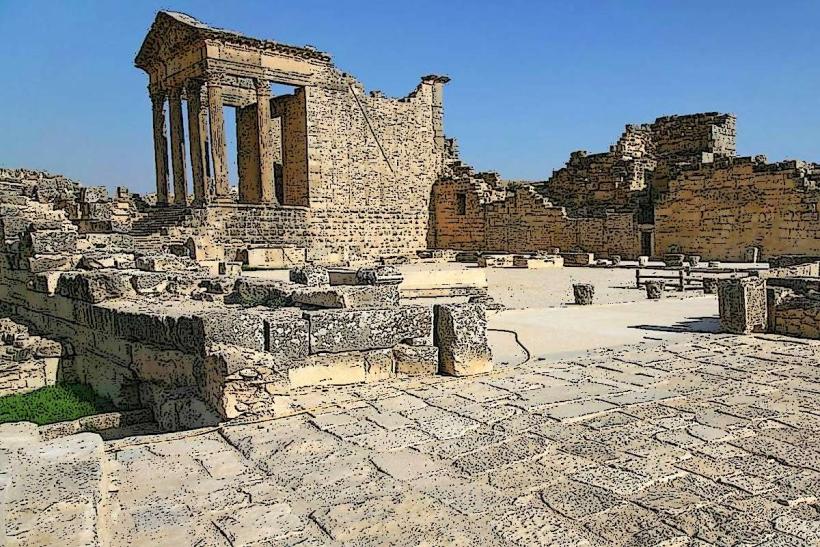
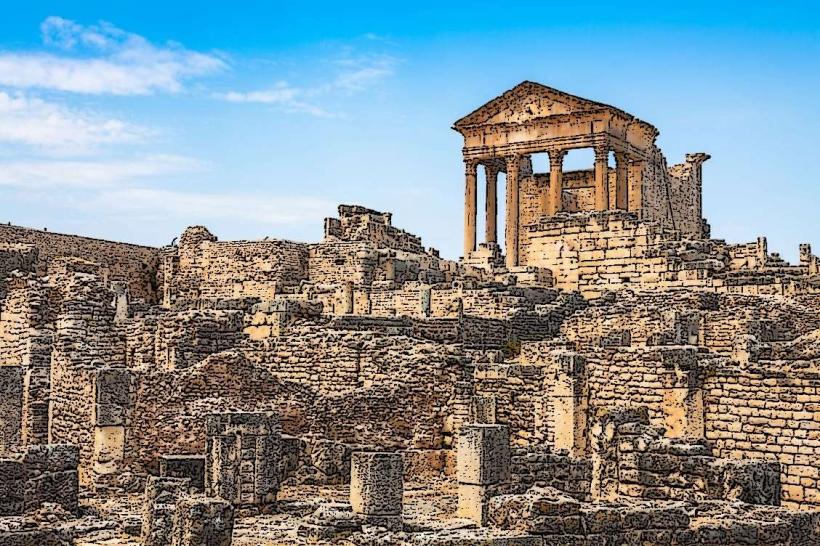
The Capitol: A temple dedicated to the Capitoline Triad (Jupiter, Juno, and Minerva), noted for its exceptionally preserved portico and pediment.
The Theater: Built in 168 AD, it could seat 3,500 people and is still used for the Dougga International Festival.
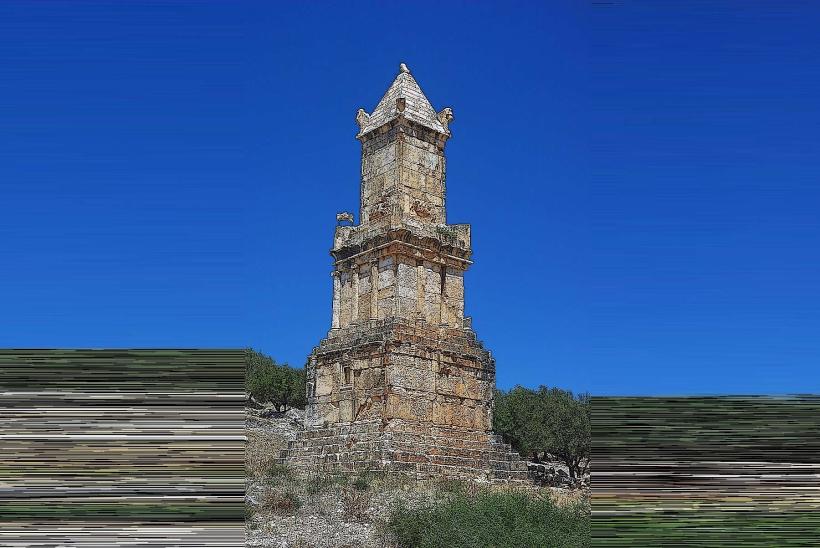
Libyco-Punic Mausoleum: A rare 2nd-century BC pre-Roman tower monument, one of the few examples of Numidian royal architecture.
The Baths of Licinius: Noted for their symmetrical design and large frigidarium.
The Temple of Caelestis: Known for its unique semi-circular courtyard.
The Rose of the Winds: A circular stone engraving in the pavement of the Forum listing the names of the 12 winds.
Transportation Network
There is no public transit directly to the ruins. Travelers typically take a Louage (shared taxi) from Tunis or Le Kef to the town of Teboursouk. From Teboursouk, the site is reached via a 6 km uphill walk or a short private taxi ride. The site is approximately 110 km from Tunis (2.5 hours by road). There is no rail service nearby.
Safety & "Red Zones"
The safety level is high within the archaeological park. The terrain is rugged and steep; sturdy footwear is required to prevent falls on the slippery Roman stones. There are no "red zones," but travelers should remain on marked paths to avoid unstable ruins. Security personnel are present at the park entrance.
Digital & Financial Infrastructure
Cellular coverage (4G/5G) is reliable at the site entrance but can be spotty in the lower valleys. There are no ATMs at the ruins; the nearest financial services are in Teboursouk. Credit cards are accepted only at the official ticket office. Cash (Tunisian Dinar) is mandatory for local transport and small cafes nearby.
Climate & Air Quality
Temperatures range from 4°C in winter to 38°C in summer. The site is exposed and lacks shade. Air quality is pristine due to the high elevation and rural surroundings. Significant weather risks include extreme heat during July and August and localized freezing fog or frost in January.
Culture & Social Norms
The site is a museum environment. Professional photography and drone usage require prior permits from the Ministry of Cultural Affairs. In the nearby town of Teboursouk, social norms are conservative; modest dress is recommended. Tipping is not required but appreciated for local guides.
Accommodation Zones
Teboursouk: The primary location for travelers wishing to stay near the site overnight (limited options like Hotel Thugga).
Le Kef: 60 km away, offering more diverse accommodation and cultural sites.
Local Cost Index
1 Site Entrance Ticket: 8 TND ($2.60 USD)
1 Standard Lunch in Teboursouk: 15 TND ($4.85 USD)
1 Taxi (Teboursouk to Ruins): 5-10 TND ($1.60 - $3.25 USD)
Nearby Day Trips
Bulla Regia: 65 km (Famous for its unique underground Roman villas).
Le Kef: 60 km (Hilltop town with a Byzantine kasbah and Jewish heritage).
Testour: 30 km (Andalusian-style town known for its unique clock tower).
Facts & Legends
Dougga is considered the most complete Roman city in Africa. A local legend surrounding the Libyco-Punic Mausoleum claims it was the tomb of a prince whose spirit protects the valley's olive harvests. A verified historical oddity is that many of the site's most famous mosaics were found in the "Trifolium Villa," which was named for its clover-shaped floor plan and functioned as a high-end Roman brothel.