Landmark: City Walls of Dougga
City: Dougga
Country: Tunisia
Continent: Africa
City Walls of Dougga, Dougga, Tunisia, Africa
The City Walls of Dougga are a defensive fortification surrounding the ancient Roman city of Thugga, located in the Beja Governorate of Tunisia.
Visual Characteristics
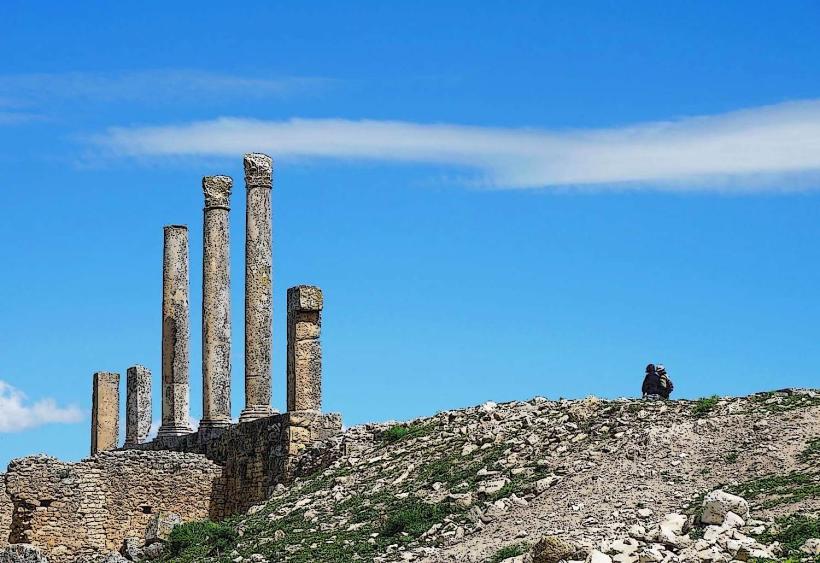
The walls are constructed primarily from local limestone blocks, exhibiting a weathered grey and tan coloration. Sections of the wall vary in height, with some reaching up to 5 meters. The architectural style reflects Roman military engineering, characterized by sturdy, unadorned construction with occasional watchtower remnants.
Location & Access Logistics
Dougga is situated approximately 100 kilometers southwest of Tunis. Access is via the P19 regional road, turning off towards the village of Dougga. Parking is available at designated areas near the main archaeological site entrance. Public transport options are limited; bus services typically run from Tunis to nearby towns, requiring a local taxi or pre-arranged transport for the final leg to Dougga.
Historical & Ecological Origin
The construction of the City Walls of Dougga is attributed to the Roman period, with significant phases of reinforcement and expansion occurring between the 2nd and 4th centuries CE. Their original purpose was to protect the thriving Roman settlement of Thugga from potential incursions. The site is situated on a limestone plateau, a geological formation common to the region.
Key Highlights & Activities
Walking along accessible sections of the walls provides an elevated perspective of the archaeological site. Identifying different construction phases and defensive features is possible. Observing the integration of the walls with the natural topography is a key activity.
Infrastructure & Amenities
Restrooms are available at the main visitor center near the entrance to the archaeological park. Limited shade is provided by natural rock formations and sparse vegetation. Cell phone signal (4G) is generally available in the vicinity. Food vendors are not present directly at the walls; options are available in the nearby village of Dougga.
Best Time to Visit
For optimal lighting for photography of the walls and surrounding landscape, early morning (08:00-10:00) or late afternoon (16:00-18:00) is recommended. The months of April, May, September, and October offer the most pleasant weather conditions, with average temperatures ranging from 20-28 degrees Celsius. No tide considerations apply.
Facts & Legends
A specific architectural detail to note is the presence of post-holes along the top of some wall sections, suggesting the former existence of wooden palisades or defensive structures. Local lore does not contain prominent legends specifically tied to the walls themselves, but rather to the broader city of Thugga.
Nearby Landmarks
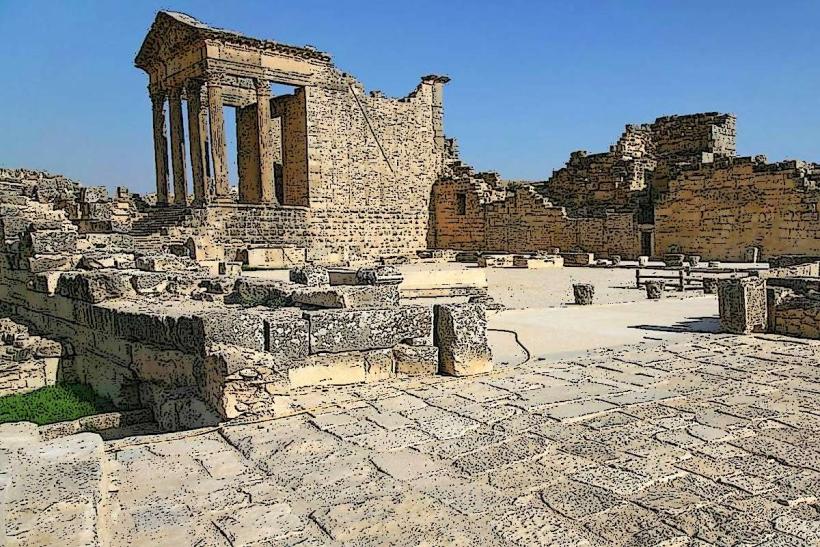
- Capitol of Antoninus: 0.3km West
- Temple of Juno: 0.4km Southwest
- Roman Theatre: 0.6km South
- Licinius Arch: 0.7km South
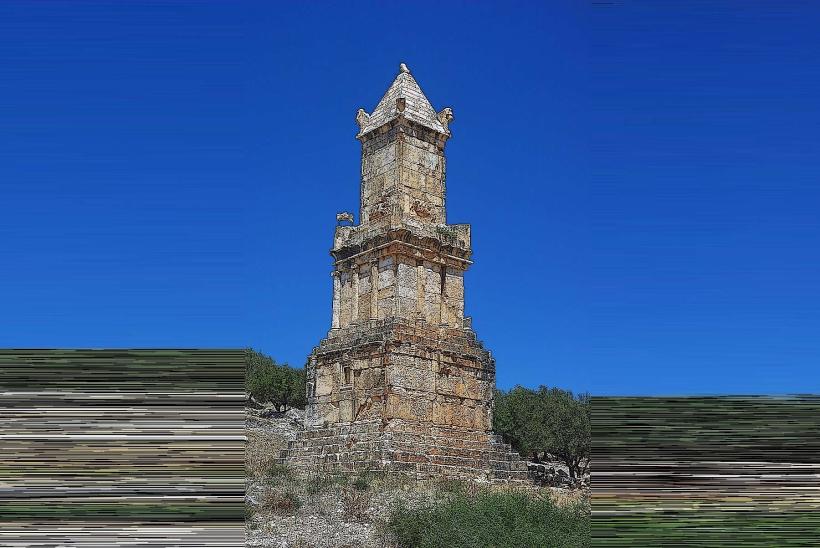
- Mausoleum of the Ateii: 0.9km West