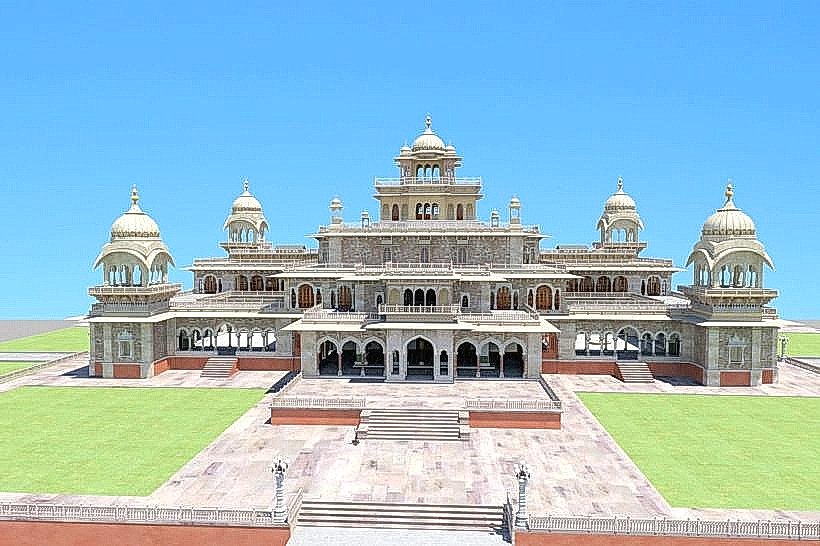
Landmark: Albert Hall Museum
City: Jaipur
Country: India
Continent: Asia
Albert Hall Museum, Jaipur, India, Asia
The Albert Hall Museum is a public museum located in Jaipur, Rajasthan, India. It is the oldest museum in the state.
Visual Characteristics
The museum building is constructed from red sandstone and is designed in the Indo-Saracenic architectural style. It features a central dome, minarets, and intricate carvings. The exterior is painted in a light ochre color, contrasting with the red sandstone elements. The structure stands approximately 30 meters tall.
Location & Access Logistics
The Albert Hall Museum is situated in the Ram Niwas Garden, approximately 2 kilometers east of the Walled City of Jaipur. Access is via Jawahar Lal Nehru Marg. Ample parking is available within the Ram Niwas Garden complex. Several local bus routes serve the area, with the nearest stop being the Albert Hall bus stop, located directly opposite the museum entrance.
Historical & Ecological Origin
The museum building was designed by Sir Samuel Swinton Jacob and its foundation stone was laid on February 6, 1876. It was originally intended as a public assembly room and art museum. Construction was completed in 1887. The purpose was to house a collection of artifacts and to serve as a venue for public gatherings.
Key Highlights & Activities
Visitors can view collections of pottery, carpets, metalwork, ivory, and paintings. Specific galleries include Egyptian antiquities, Indian arms and armour, and Rajasthani art. Photography is permitted within the museum premises, though flash photography may be restricted in certain areas. Guided tours are available upon request.
Infrastructure & Amenities
Restrooms are available on-site. Shaded seating areas are located within the surrounding Ram Niwas Garden. Cell phone signal (4G/5G) is generally good in the vicinity. Food vendors and small eateries are present within the Ram Niwas Garden complex.
Best Time to Visit
The best time of day for photography of the exterior is during the late afternoon, approximately 2-3 hours before sunset, for optimal natural lighting. The most favorable months for visiting are from October to March, when temperatures are cooler. The museum is open year-round, with no specific tidal requirements.
Facts & Legends
A unique aspect of the museum's collection is a preserved mummy from Egypt, acquired in the early 20th century. Local lore suggests that the mummy was brought to Jaipur by a visiting dignitary and has been a subject of fascination for many visitors.
Nearby Landmarks
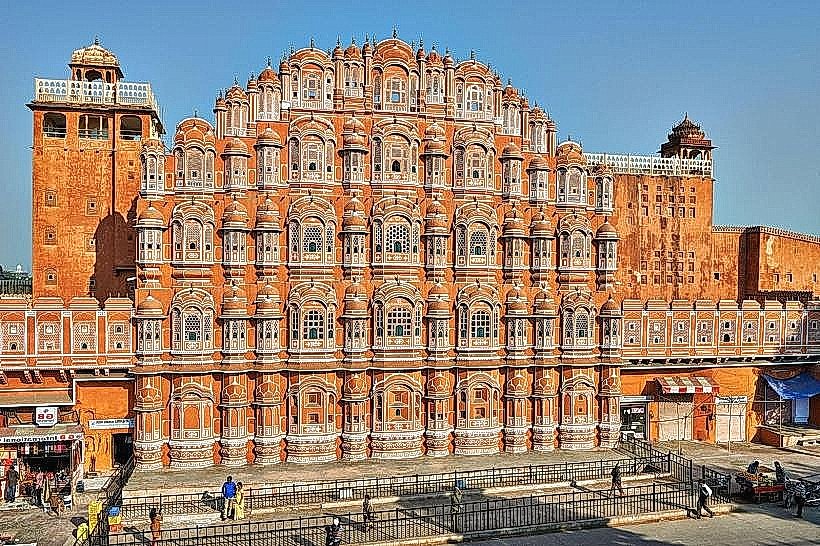
- Hawa Mahal (0.8km West)
- City Palace (1.2km West)
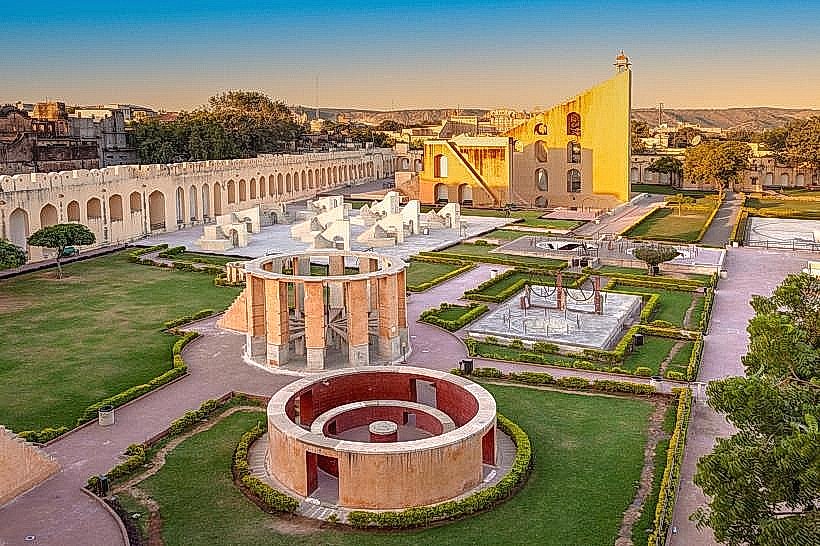
- Jantar Mantar (1.5km West)
- Johari Bazaar (1.0km West)
- Galtaji Temple (7.0km East)