Landmark: Jantar Mantar
City: Jaipur
Country: India
Continent: Asia
Jantar Mantar, Jaipur, India, Asia
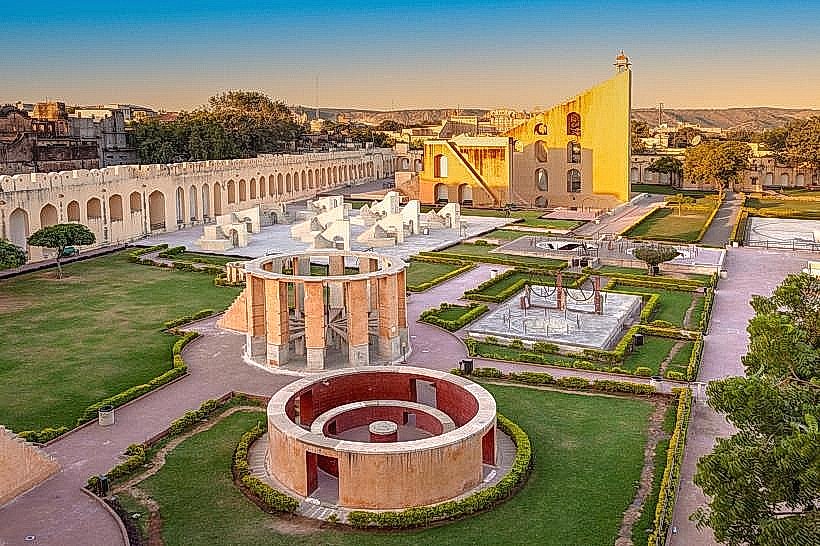
Jantar Mantar is an astronomical observation site located in Jaipur, Rajasthan, India. It comprises a collection of nineteen architectural astronomical instruments.
Visual Characteristics
The site features large-scale masonry instruments constructed from local stone and plastered with lime. The dominant colors are earthy tones of stone and plaster, with some instruments exhibiting metallic components. The largest instrument, the Samrat Yantra, reaches a height of approximately 27 meters. The architectural style is a fusion of Indian and Islamic astronomical traditions, characterized by geometric precision and functional design.
Location & Access Logistics
Jantar Mantar is situated in the walled city of Jaipur, adjacent to the City Palace. It is approximately 1 kilometer east of the city center. Vehicle access is restricted within the immediate vicinity; parking is available at designated lots around the periphery of the walled city, requiring a short walk to the site. Public transport options include local buses that stop near Hawa Mahal, a short walk from Jantar Mantar. Auto-rickshaws and taxis are readily available.
Historical & Ecological Origin
Construction of Jantar Mantar began in 1727 and was completed in 1734 under the patronage of Maharaja Sawai Jai Singh II. He was a keen astronomer and commissioned the construction of five such observatories across India. The primary purpose was to observe celestial positions and predict eclipses and planetary movements with greater accuracy than previously possible.
Key Highlights & Activities
Visitors can observe and learn about the function of instruments such as the Samrat Yantra (a giant sundial), the Jai Prakash Yantra (a hemispherical instrument for measuring altitude and azimuth), and the Ram Yantra (for measuring time and altitude). Guided tours are available, providing detailed explanations of each instrument's operation and astronomical significance. Photography is permitted, but tripods are generally not allowed inside the main observatory area.
Infrastructure & Amenities
Restrooms are available on-site. Shaded areas are limited, primarily around the entrance and ticket counter. Cell phone signal (4G/5G) is generally available within the complex. Food vendors are not located within Jantar Mantar itself, but numerous options exist in the surrounding market areas.
Best Time to Visit
The best time of day for observing the Samrat Yantra's accuracy is between 9:00 AM and 3:00 PM, when the sun's position allows for clear shadow readings. The optimal months for visiting are from October to March, offering pleasant weather conditions. High tide or low tide considerations are not applicable to this land-based observatory.
Facts & Legends
The Samrat Yantra is accurate to within two seconds, a remarkable feat for its time. A lesser-known fact is that the instruments are designed to be read by naked eye observation, with no optical aids required.
Nearby Landmarks
- City Palace (0.2km West)
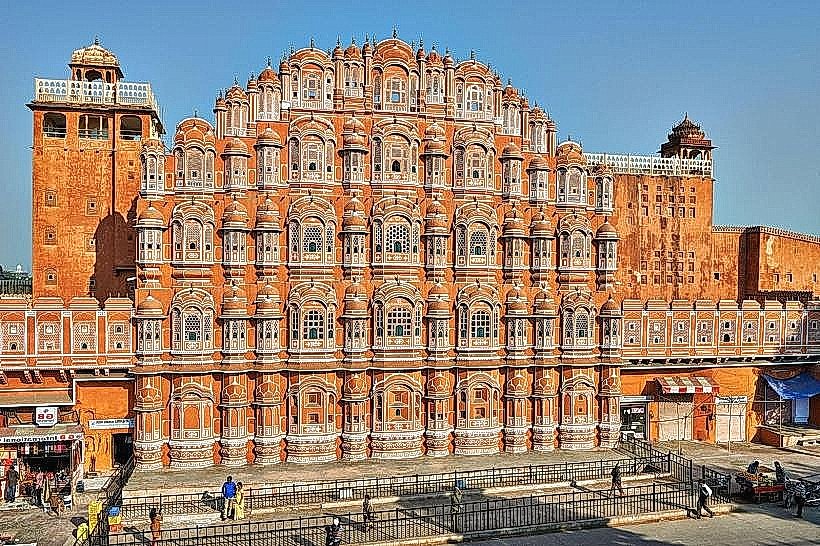
- Hawa Mahal (0.3km North-West)
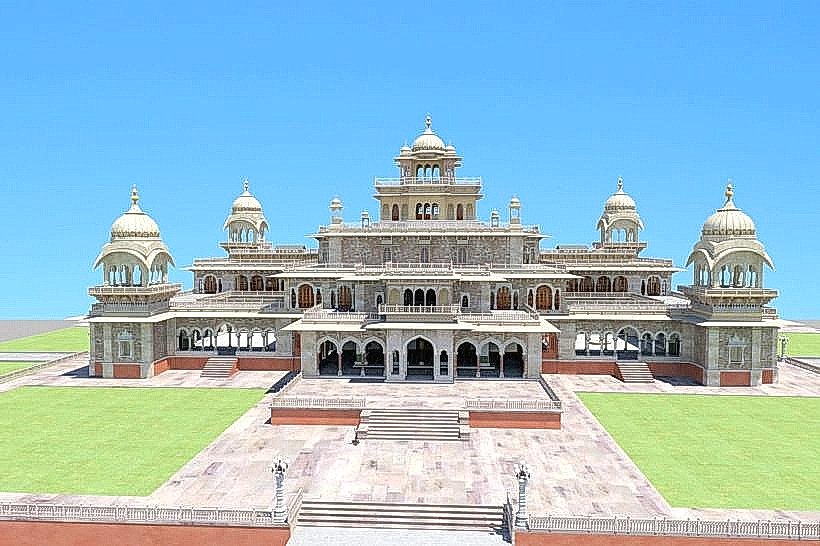
- Albert Hall Museum (1.5km South-West)
- Nahargarh Fort (4.0km North)