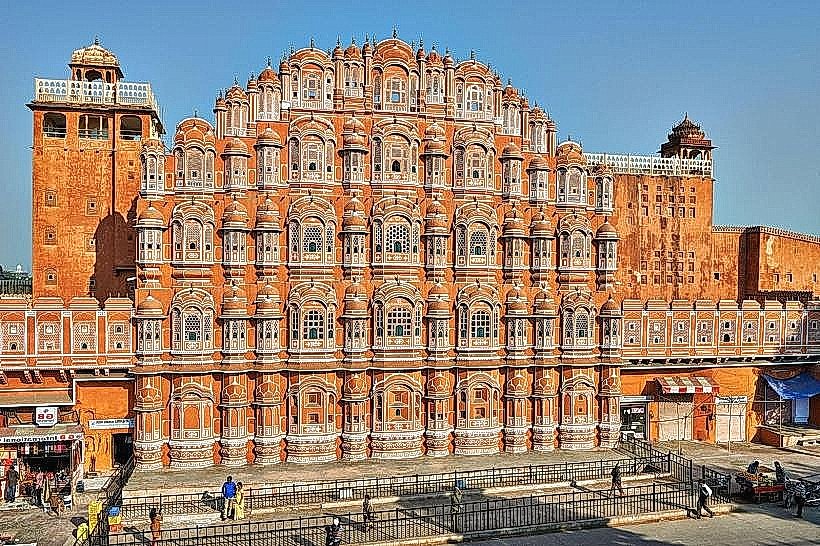
Landmark: Hawa Mahal
City: Jaipur
Country: India
Continent: Asia
Hawa Mahal, Jaipur, India, Asia
The Hawa Mahal, also known as the Palace of Winds, is a distinctive palace located in Jaipur, Rajasthan, India.
Visual Characteristics
Constructed from red and pink sandstone, the five-story structure stands at approximately 15 meters (50 feet) in height. Its facade features 953 small windows, or jharokhas, arranged in a honeycomb pattern. The architectural style blends Rajput and Mughal influences, characterized by its latticework screens and curved chhatris.
Location & Access Logistics
The Hawa Mahal is situated in the heart of Jaipur's Old City, adjacent to the City Palace. It is approximately 1.5 kilometers (0.9 miles) east of the Jaipur Railway Station. Metered taxis and auto-rickshaws are readily available from all parts of the city. Limited street parking is available in the vicinity, and visitors are advised to utilize designated parking areas or public transport.
Historical & Ecological Origin
The Hawa Mahal was built in 1799 by Maharaja Sawai Pratap Singh. It was designed by Lal Chand Ustad. Its primary purpose was to allow royal women to observe street festivities and daily life without being seen, due to the strict rules of purdah.
Key Highlights & Activities
Visitors can explore the interior of the palace, observing the intricate latticework and the design of the jharokhas. Ascending to the upper floors provides views of the surrounding city. Photography is permitted within the premises.
Infrastructure & Amenities
Restrooms are available on-site. Limited shaded areas are present within the palace complex. Cell phone signal (4G/5G) is generally good. Food vendors and small shops are located outside the Hawa Mahal on the main street.
Best Time to Visit
For optimal photography lighting, the early morning (between 8:00 AM and 10:00 AM) is recommended, as the sun illuminates the facade. The best months for visiting Jaipur, in general, are from October to March, offering pleasant weather. No specific tide requirements apply.
Facts & Legends
The unique facade of the Hawa Mahal was designed to allow cool air to circulate through the palace, acting as a natural air conditioning system. It is said that the palace was built to resemble the crown of Lord Krishna.
Nearby Landmarks
- City Palace (0.2km West)
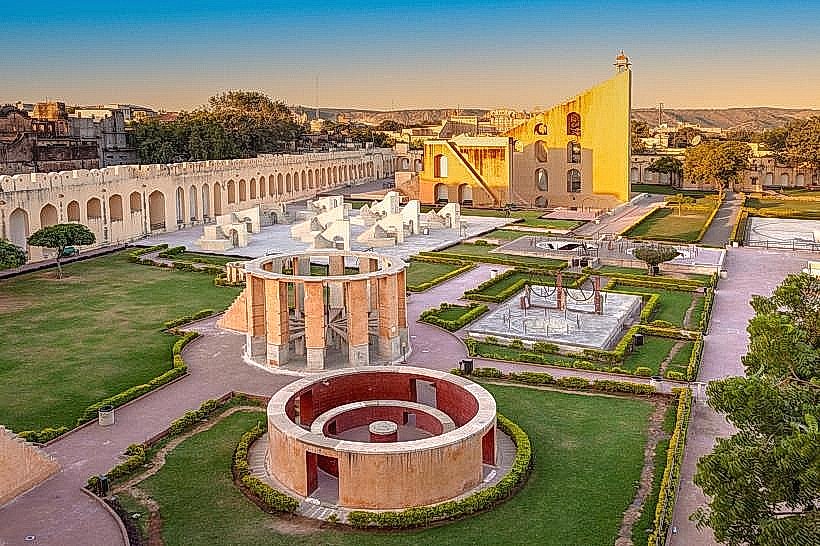
- Jantar Mantar (0.3km West)
- Hawa Mahal Museum (within the Hawa Mahal complex)
- Johari Bazaar (0.4km South)
- Galtaji Temple (8km Southeast)