Landmark: Big Cottonwood Canyon
City: Salt Lake City
Country: USA Utah
Continent: North America
Big Cottonwood Canyon, Salt Lake City, USA Utah, North America
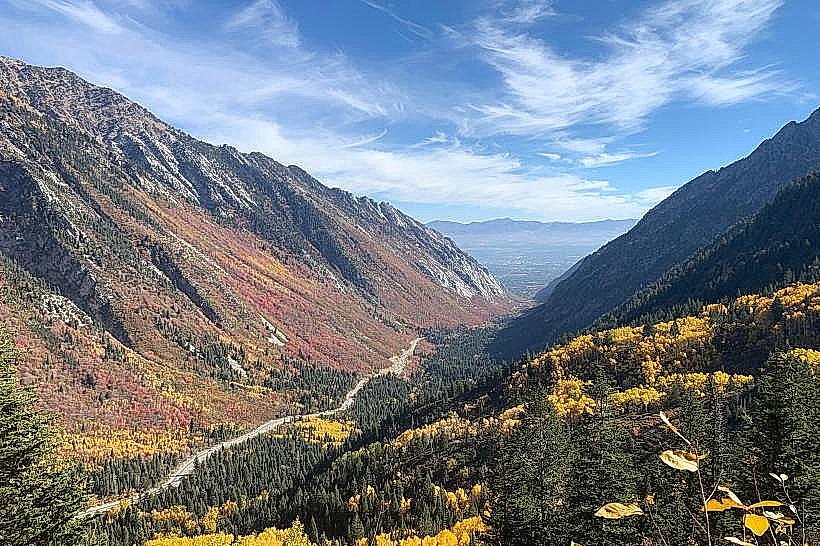
Big Cottonwood Canyon is a geological feature located east of Salt Lake City, Utah. It is a significant watershed and recreational area.
Visual Characteristics
The canyon walls are composed primarily of Precambrian metamorphic rock, exhibiting shades of gray, pink, and white. The canyon floor is characterized by a mix of gravel, sand, and exposed bedrock, with the Big Cottonwood Creek flowing through its center. Vegetation density varies, with aspen and conifer forests dominating higher elevations and scrub oak and grasses present at lower altitudes.
Location & Access Logistics
Big Cottonwood Canyon is accessible via Utah State Route 190 (Wasatch Boulevard) and then turning onto Utah State Route 210 (Big Cottonwood Canyon Road). The entrance to the canyon is approximately 15 kilometers east of downtown Salt Lake City. Parking is available at designated pull-offs and at ski resort lots during off-season. Public transportation is limited to seasonal bus services during winter months for ski access.
Historical & Ecological Origin
The canyon was carved by glacial activity during the Pleistocene epoch. The metamorphic rocks exposed within the canyon are among the oldest in North America, dating back over 1.7 billion years. Historically, the canyon was a source of timber and minerals for early settlers.
Key Highlights & Activities
Hiking trails include the Lake Blanche Trail (6.4km roundtrip) and the Mill B South Fork Trail. Rock climbing routes are present on various cliff faces. Skiing and snowboarding are primary activities during winter at Brighton Resort and Solitude Mountain Resort. Fishing in Big Cottonwood Creek is permitted with a valid Utah fishing license.
Infrastructure & Amenities
Restrooms are available at designated picnic areas and trailheads. Shade is provided by natural tree cover. Cell phone signal is intermittent, with 4G/5G coverage generally limited to the lower canyon sections and near developed areas. No food vendors are permanently located within the canyon; visitors should bring their own provisions.
Best Time to Visit
For hiking and general exploration, late spring through early fall (May to October) offers the most favorable conditions. Mid-morning to late afternoon provides adequate natural light for photography. The creek's flow is highest in late spring due to snowmelt. Winter months are dedicated to snow sports.
Facts & Legends
The canyon's name originates from the large cottonwood trees that once lined its banks. A notable geological feature is the "Twin Peaks," two prominent summits visible from the canyon floor.
Nearby Landmarks
- Little Cottonwood Canyon (0.5km South)
- Millcreek Canyon (3km West)
- Mount Olympus Wilderness (4km West)
- Park City (15km Northeast)