Landmark: Natural History Museum of Utah
City: Salt Lake City
Country: USA Utah
Continent: North America
Natural History Museum of Utah, Salt Lake City, USA Utah, North America
The Natural History Museum of Utah is an institution dedicated to the scientific study and public exhibition of the natural world, located in Salt Lake City, Utah.
It houses extensive collections and presents exhibits covering paleontology, geology, biology, and anthropology of the Intermountain West region.
Visual Characteristics
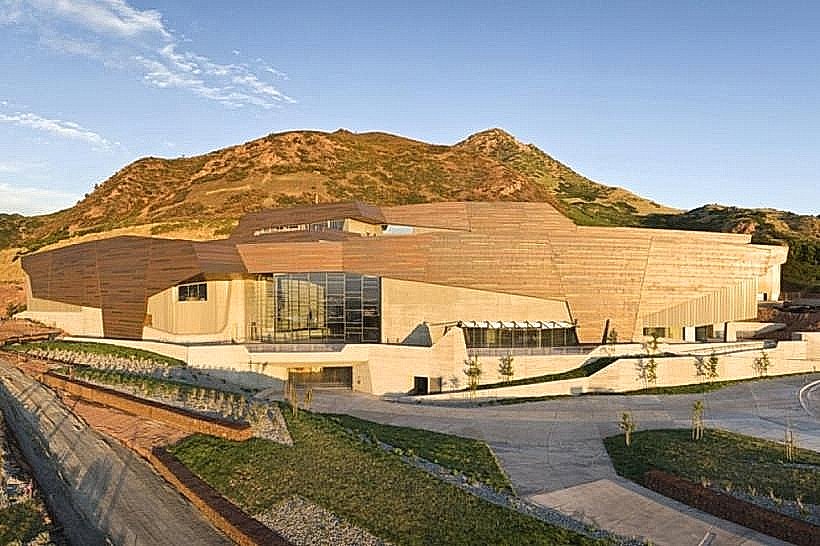
The museum building features a modern architectural design with a facade primarily composed of precast concrete panels and extensive use of glass. Its exterior colors are neutral, emphasizing earth tones and grays. The structure rises several stories, with a prominent cantilevered section that creates a distinctive silhouette against the sky. The interior exhibits are housed in climate-controlled galleries with varied lighting conditions to suit the displays.
Location & Access Logistics
The Natural History Museum of Utah is situated at 301 Wakara Way, Salt Lake City, UT 84108. It is approximately 5 kilometers (3.1 miles) east of the Salt Lake City downtown core. Access is via Wakara Way, which connects to Sunnyside Avenue. Ample parking is available in a dedicated lot adjacent to the museum, with fees applicable. Public transportation options include the Utah Transit Authority (UTA) bus route 213, which stops near the museum entrance.
Historical & Ecological Origin
The museum's origins trace back to the establishment of the Utah Museum of Natural History at the University of Utah in 1959. The current facility, designed by the architectural firm Brooks + Scarpa, opened in 2011. Its purpose is to serve as a research center and a public educational resource for the natural and cultural heritage of Utah and the surrounding regions. The museum's location is within the foothills of the Wasatch Range, an area geologically significant for its sedimentary rock formations and diverse ecosystems.
Key Highlights & Activities
Visitors can explore permanent exhibits such as the "Native American Voices" gallery, the "Gems and Minerals" collection, and the "Past Worlds" dinosaur hall. Interactive displays are integrated throughout the museum. Special temporary exhibitions are also presented. Educational programs and lectures are scheduled regularly.
Infrastructure & Amenities
Restrooms are available on all public floors. Indoor seating areas provide resting points. The museum has a gift shop and a cafe. Cell phone signal (4G/5G) is generally reliable within the building. Outdoor shaded areas are limited to the immediate vicinity of the entrance.
Best Time to Visit
Weekdays, particularly Tuesday through Thursday, tend to have lower visitor numbers than weekends. Mornings, shortly after opening, offer a less crowded experience. The museum is open year-round, with no specific seasonal weather considerations impacting indoor access. Lighting within exhibits is controlled for preservation and display purposes.
Facts & Legends
The museum houses one of the most significant collections of dinosaur fossils from the Morrison Formation, including the holotype specimen of the Utahraptor. A specific tip for visitors is to allocate at least 3-4 hours to fully experience the breadth of the exhibits.
Nearby Landmarks
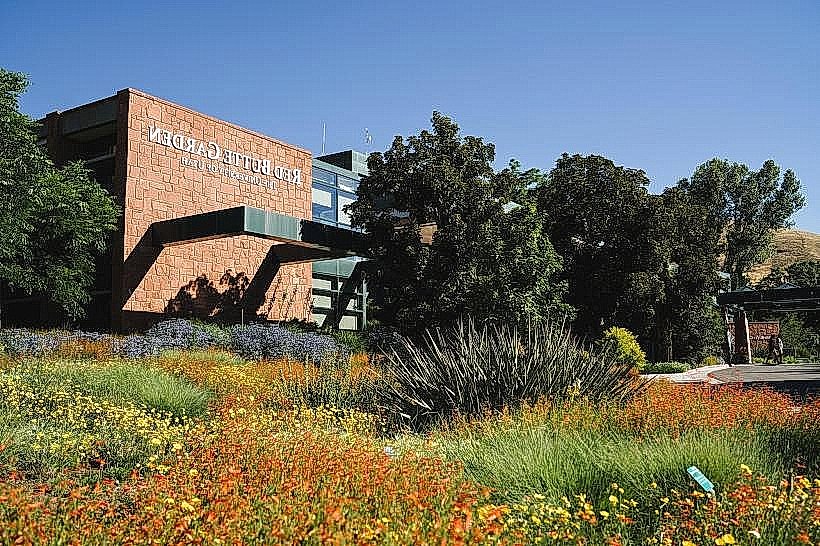
- Red Butte Garden (0.3km West)
- Fort Douglas Military Museum (1.2km Southwest)
- University of Utah Campus (1.5km West)
- Hogle Zoo (2.1km Southwest)
- This Is the Place Heritage Park (2.5km Southwest)