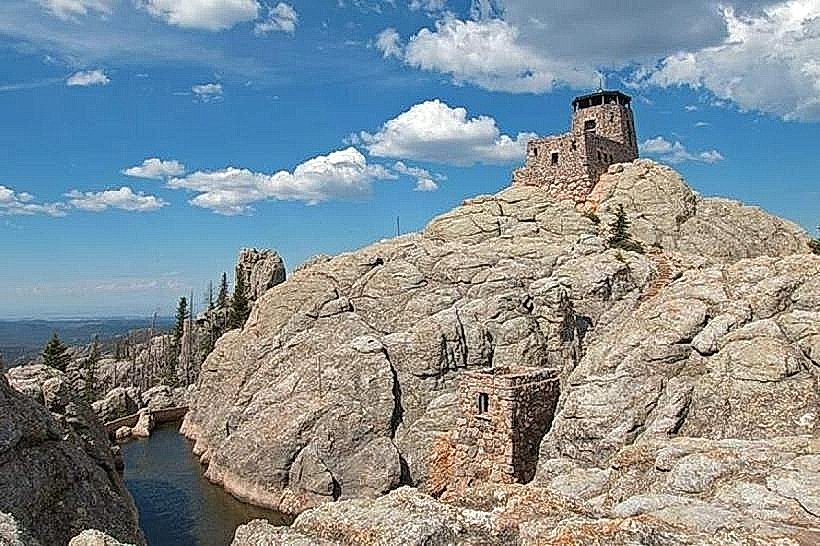
Landmark: Black Elk Peak
City: Custer
Country: USA South Dakota
Continent: North America
Black Elk Peak, Custer, USA South Dakota, North America
Black Elk Peak is the highest natural point in South Dakota, located within the Black Elk Wilderness in Custer-state-park_custer" class="underline">Custer State Park.
It is a granite summit with a stone fire lookout tower constructed in the 1930s.
Visual Characteristics
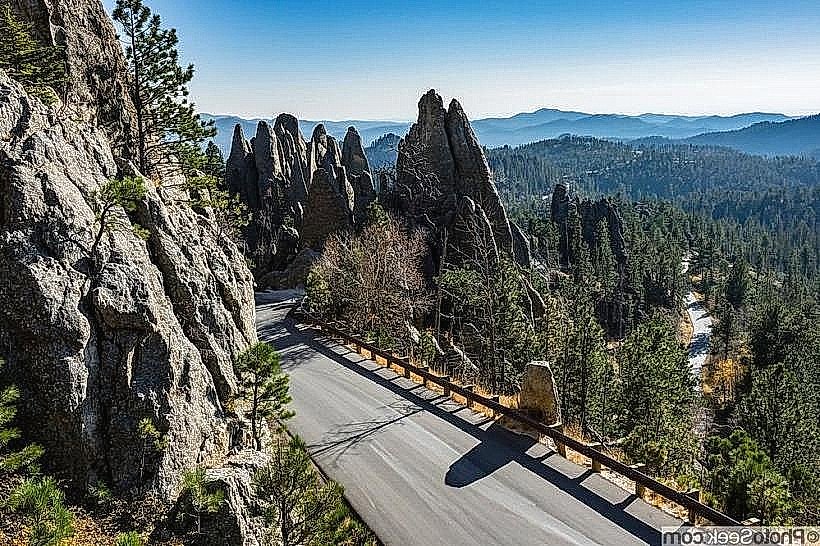
The summit is characterized by exposed granite formations and sparse alpine vegetation, including grasses and low-lying shrubs. The fire lookout tower is a 40-foot stone structure with a square base and a pyramidal roof. The surrounding landscape consists of dense coniferous forests and rugged granite outcrops.
Location & Access Logistics
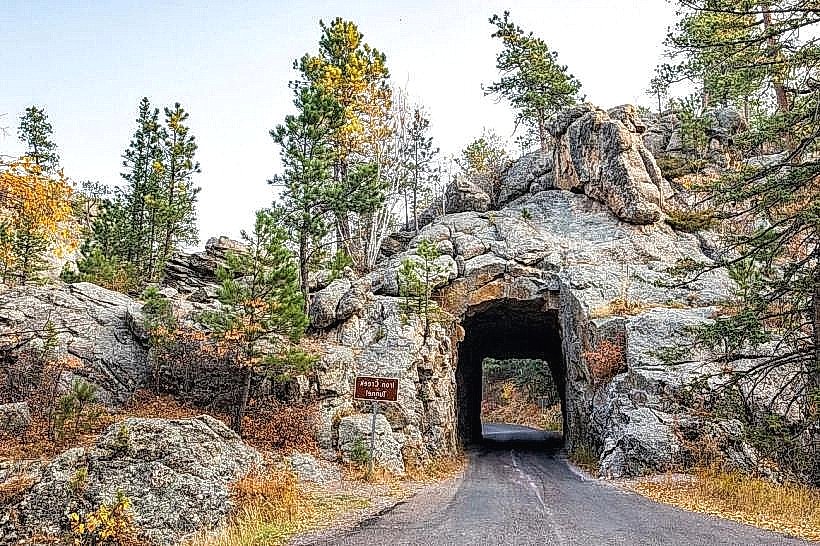
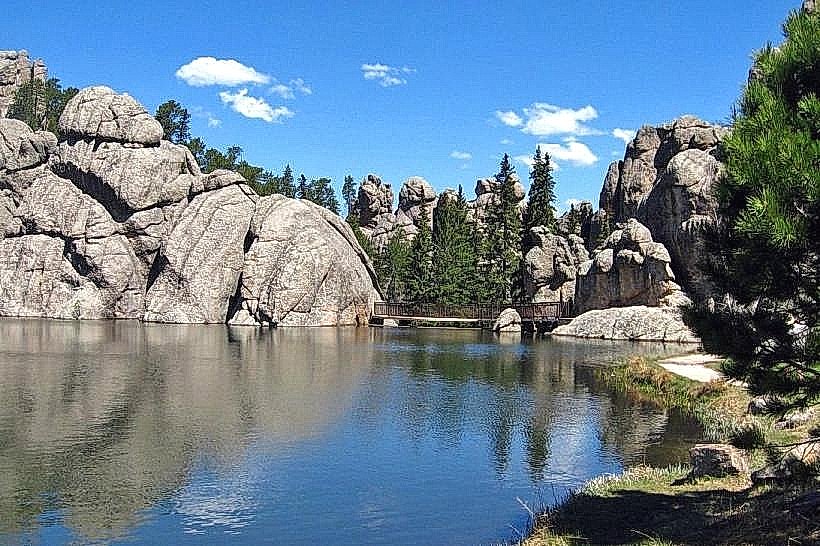
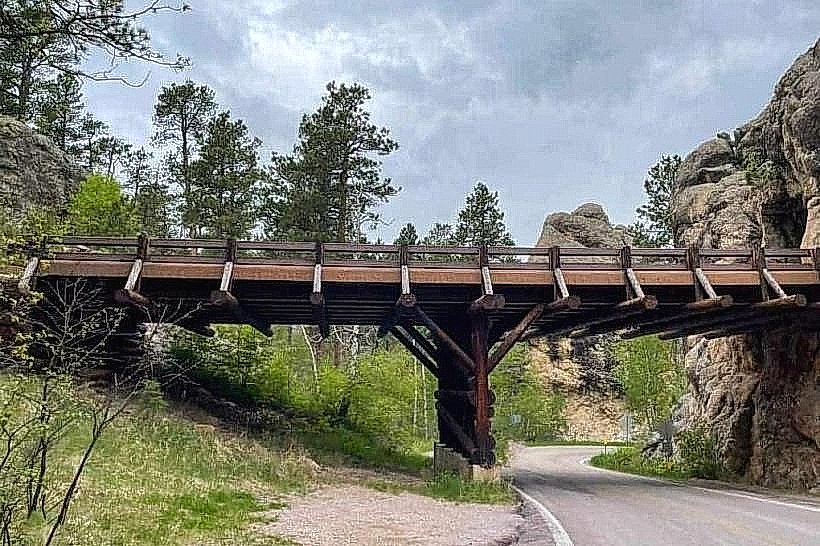
Black Elk Peak is situated in the Black Hills National Forest, approximately 15 miles west of the town of Custer, South Dakota. Access is primarily via hiking trails. The most common trailhead is the Black Elk Peak Trailhead, located off State Highway 16A (Iron Mountain Road) near the Sylvan Lake area of Custer State Park. Parking is available at the trailhead, which can fill during peak seasons. Public transport is not available to the trailhead.
Historical & Ecological Origin
The peak's geological origin is Precambrian granite, formed approximately 1.7 billion years ago. The fire lookout tower was constructed by the Civilian Conservation Corps (CCC) between 1935 and 1938. It was designed to provide wildfire observation and was one of many such structures built across the United States during that era.
Key Highlights & Activities
Hiking to the summit is the primary activity. The main trail is approximately 3.5 miles one-way from the trailhead. Visitors can climb the stone tower for panoramic views. Photography is popular, especially during sunrise and sunset. Wildlife observation is also possible.
Infrastructure & Amenities
Restrooms are available at the trailhead parking area. There is no potable water or food service at the summit or along the trail. Cell phone signal is intermittent and unreliable on the trails and at the summit. Limited shade is available on the trails, primarily from trees. The stone tower offers some shelter.
Best Time to Visit
The best months for hiking are generally from late May through October, avoiding winter snow and ice. The best time of day for photography is early morning or late afternoon for optimal lighting conditions on the landscape and tower. High winds can occur year-round, particularly at the summit.
Facts & Legends
The peak was formerly known as Harney Peak until 2016, when it was officially renamed Black Elk Peak in honor of the Lakota medicine man Black Elk. A unique feature of the stone tower is that it was constructed using local granite, with stones reportedly carried to the summit by hand or by pack animals during its construction.
Nearby Landmarks
- Sylvan Lake (1.5km Northeast)
- Crazy Horse Memorial (12km Southwest)
- Mount Rushmore National Memorial (20km North)
- Wind Cave National Park (35km South)