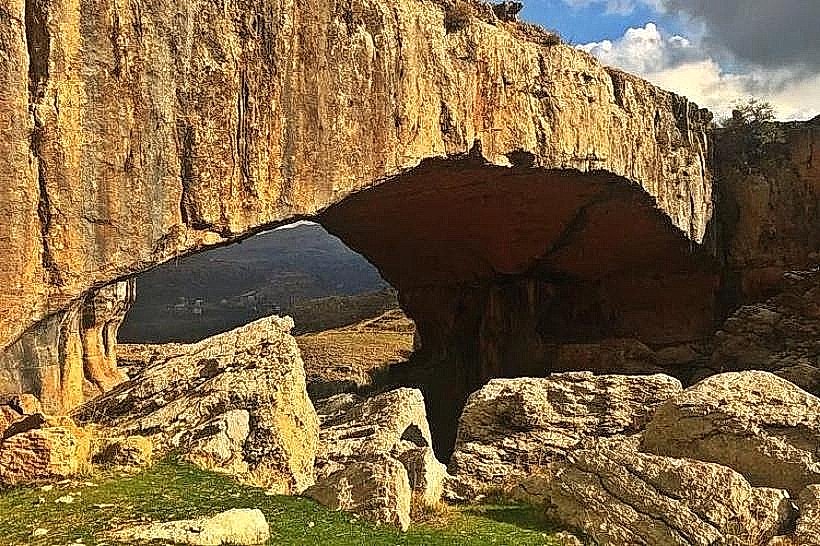
Landmark: Faqra Natural Bridge
City: Faqra
Country: Lebanon
Continent: Asia
Faqra Natural Bridge, Faqra, Lebanon, Asia
The Faqra Natural Bridge, also referred to as Jisr el-Hajar (The Stone Bridge), is a monumental geological formation situated in the mountain village of Kfardebian within the Keserwan District of the Mount Lebanon Governorate, Lebanon. This natural arch spans a deep limestone ravine at an altitude of approximately 1,500 meters above sea level.
Visual Characteristics
The Faqra Natural Bridge features a massive rock arch composed entirely of heavily eroded, light-grey Jurassic limestone. The bridge spans a total length of 38 meters, stands at a clearance height of 58 meters above the dry riverbed below, and possesses a structural thickness exceeding 5 meters at its narrowest point. The surrounding terrain is a classic karst landscape filled with jagged rock pillars, deep-cut solution flutes, and sparse alpine shrubs. During the spring thaw, a mountain torrent runs directly beneath the vaulted structure, while the summer months leave the rocky chasm dry and exposed.
Location & Access Logistics
The site is located 45 kilometers northeast of Beirut and roughly 2 kilometers past the Faqra Roman Ruins. Access from the coastal highway is via the Nahr el-Kalb exit, driving inland along the regional highway through Ajaltoun and Ashqout toward Faraya and Kfardebian. A paved mountain road leads directly to the base of the formation, where visitors can park private vehicles along designated gravel shoulders. Public transportation does not directly serve the natural bridge, requiring private transport, car rentals, or regional taxi hires from coastal transport nodes.
Historical & Ecological Origin
Geologically, the Faqra Natural Bridge is the result of continuous underwater erosion that occurred millions of years ago when the area was submerged under a prehistoric sea. Subsequent tectonic uplift combined with surface chemical weathering by snowmelt and carbonic acid dissolved the softer underlying limestone layers, leaving the resistant upper stratum intact to form a natural bridge. Historically, the feature served as a prominent geographic landmark along ancient mountain transit tracks, attracting early European travelers and geologists who documented its scale during the 19th century.
Key Highlights & Activities
Inspecting the geological stratifications and erosion patterns visible on the interior underside of the limestone arch.
Traversing the base of the canyon to view the vertical scale of the rock supports from directly below.
Landscape photography of the arch framing the Mount Lebanon peaks and the adjacent valley floor.
Observing the seasonal water flow from the nearby Nebaa el-Laban spring passing through the gorge.
Infrastructure & Amenities
The Faqra Natural Bridge is treated as an open-access natural monument with no ticketing requirements or entry gates. Minimal infrastructure is present; a basic metal safety railing runs along the upper viewing platforms to prevent falls into the chasm. Public restrooms and visitor centers are absent at the immediate site. Due to the proximity to mountain resort communities, cellular service is stable, offering 4G and 5G network coverage. Commercial amenities, including cafes, local food stands, and restaurants, are situated within a 500-meter radius along the main Kfardebian road.
Best Time to Visit
The ideal period for visitation is from April to June when the spring snowmelt activates the lower streams and the mountain visibility is highest. Photography is most effective during the early morning hours, from 07:00 to 09:00, or the late afternoon, between 16:00 and 18:00, when indirect sunlight maximizes the texture of the grey limestone walls without casting the interior of the arch into complete darkness.
Facts & Legends
A well-documented historical account notes that during his expedition to the Levant in the mid-19th century, the French explorer and scholar Ernest Renan conducted surveys of the bridge, describing it as one of the most striking natural wonders of the Middle East. Local lore long held that the bridge was artificially constructed by ancient Phoenician architects to connect opposing mountain settlements, a myth disproven by modern geomorphological analysis confirming its purely natural origin.
Nearby Landmarks
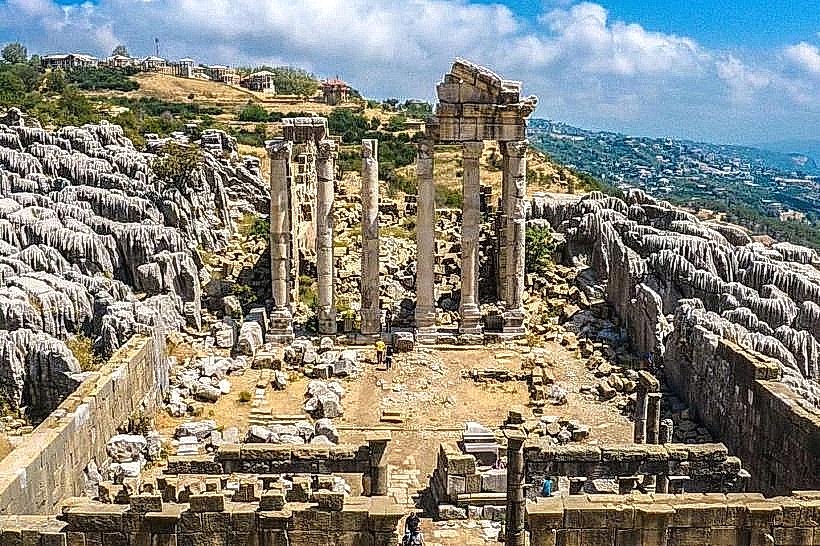
Faqra Roman Ruins: 1.2km Southwest
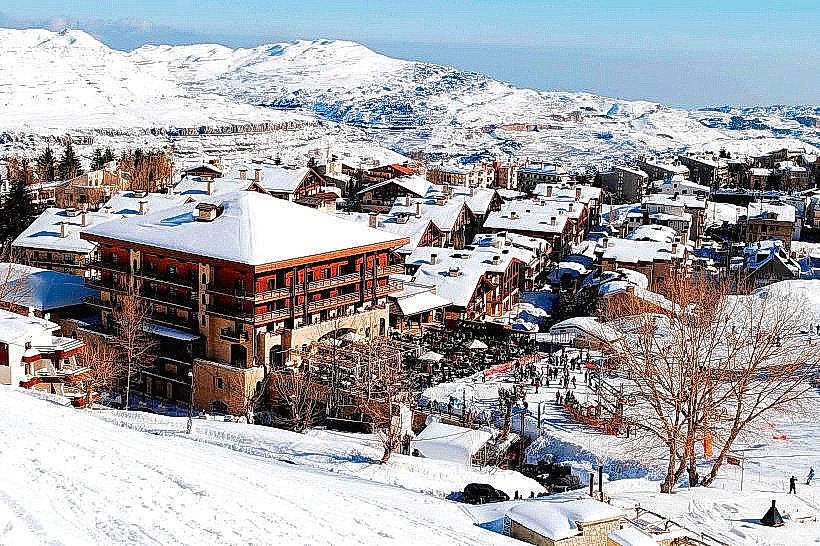
Faqra Club Resort: 1.5km West
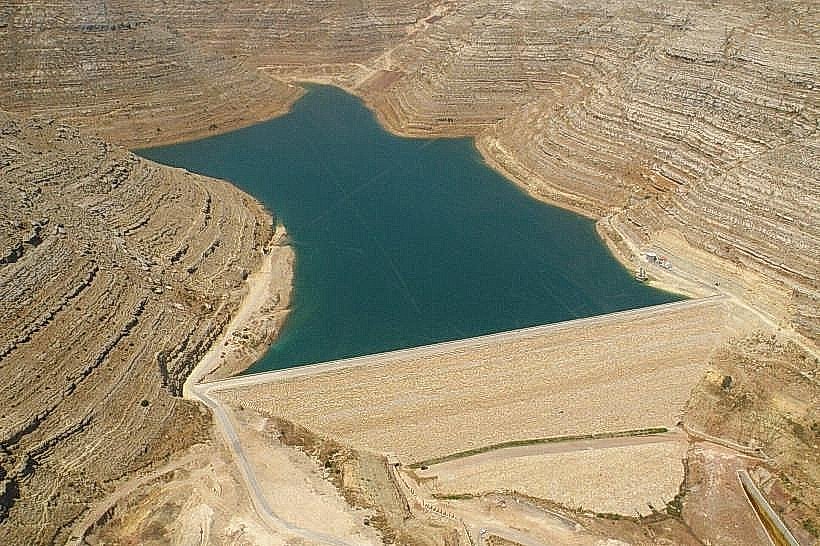
Chabrouh Dam: 2.8km Southeast
Faraya Town Center: 3.5km West