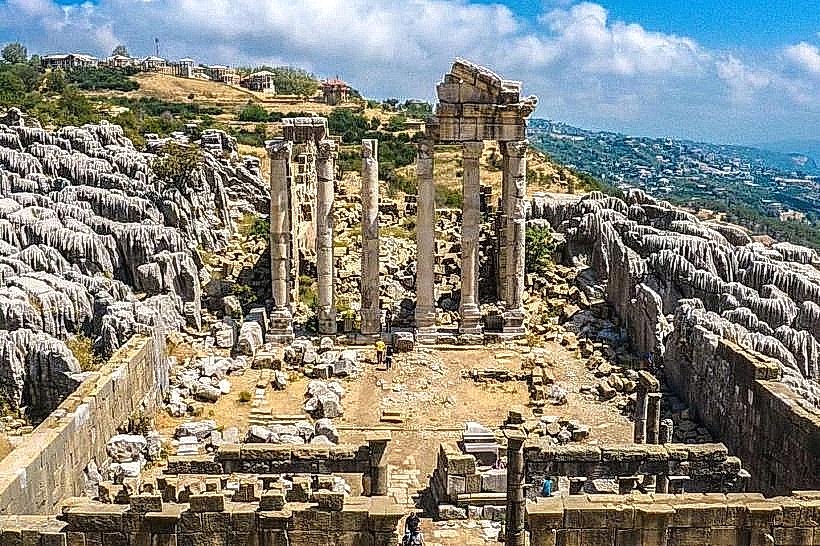
Landmark: Faqra Roman Ruins
City: Faqra
Country: Lebanon
Continent: Asia
Faqra Roman Ruins, Faqra, Lebanon, Asia
The Faqra Roman Ruins, also known as Qalaat Faqra, are an extensive archaeological complex located in the village of Kfardebian within the Keserwan District of the Mount Lebanon Governorate, Lebanon. Positioned at an altitude of approximately 1,500 meters above sea level, the site is situated within a jagged karst landscape on the slopes of the Mount Lebanon range.
Visual Characteristics
The Faqra Roman Ruins are constructed from massive blocks of grey limestone that blend directly into the surrounding natural rock formations, known locally as the "Houses of Ghosts" (Buyut el-Khein). The complex features a large, square tower measuring 15 meters by 15 meters, a monumental temple dedicated to Claudius, and a smaller sanctuary dedicated to the goddess Atargatis. Columns with Corinthian capitals, large stone altars, and deep-cut structural conduits are scattered across the uneven, rocky terrain, which is characterized by sharp limestone pillars and low mountain shrubs.
Location & Access Logistics
The site is located 45 kilometers northeast of Beirut and approximately 6 kilometers past the town of Faraya. Access from Beirut is via the northern coastal highway to Tripoli, exiting east at the Nahr el-Kalb interchange toward Jeita, Ajaltoun, and Ashqout, following the main road up to Kfardebian and Faqra. A designated paved parking area is located directly at the entrance of the archaeological site along the main mountain road. Public transit options are non-existent to the ruins proper, requiring visitors to utilize private vehicles or hire taxis from the coastal transport nodes.
Historical & Ecological Origin
The construction of the primary temples at the Faqra Roman Ruins dates back to the 1st century AD, with significant expansions commissioned during the reign of Roman Emperor Claudius. The site functioned as a major high-altitude sanctuary within the territory of ancient Heliopolis (Baalbek). Geologically, the ruins occupy a unique karst landscape formed by millions of years of chemical weathering on Jurassic limestone strata. Ecologically, it is classified as a Mediterranean alpine ecosystem with cold, snowy winters and dry, temperate summers.
Key Highlights & Activities
Examining the monumental square tower and its remaining Greek and Latin inscriptions dedicated to Emperor Claudius.
Exploring the cella and colonnaded portico of the Great Temple of Claudius.
Surveying the smaller Temple of Atargatis, which features a natural rock-cut pool later converted into a Byzantine baptismal font.
Hiking through the adjacent natural limestone labyrinth and observing the geological rock pillars.
Infrastructure & Amenities
The Faqra Roman Ruins are managed as a protected archaeological site under the jurisdiction of the Directorate General of Antiquities. The entry point features a small ticketing booth and basic directional signage, but lacks a formal visitor center or indoor exhibition hall. Public restrooms are available near the entrance checkpoint. Due to the high altitude and open topography, cellular coverage is highly stable, providing 4G and 5G connectivity across the entire complex. No permanent food vendors operate inside the archaeological enclosure, but multiple high-end restaurants, cafes, and shops are located within a 1-kilometer radius in the resort area of Faqra.
Best Time to Visit
The optimal months for visitation are from May to October when the mountain paths are completely free of snow and ice. Photography is most effective during the late afternoon hours between 16:30 and 18:30, as the low angles of the setting sun accentuate the deep textures of the weathered grey limestone columns and the adjacent natural karst formations.
Facts & Legends
A historical inscription found on the large square tower reveals that the structure was built in the year 355 of the Seleucid era (corresponding to 43 AD) and was originally topped by a pyramid-shaped roof. Local mountain lore frequently associated the jagged, human-like shapes of the surrounding natural limestone pillars with ancient petrified giants who were turned to stone for defying the gods of the mountain.
Nearby Landmarks
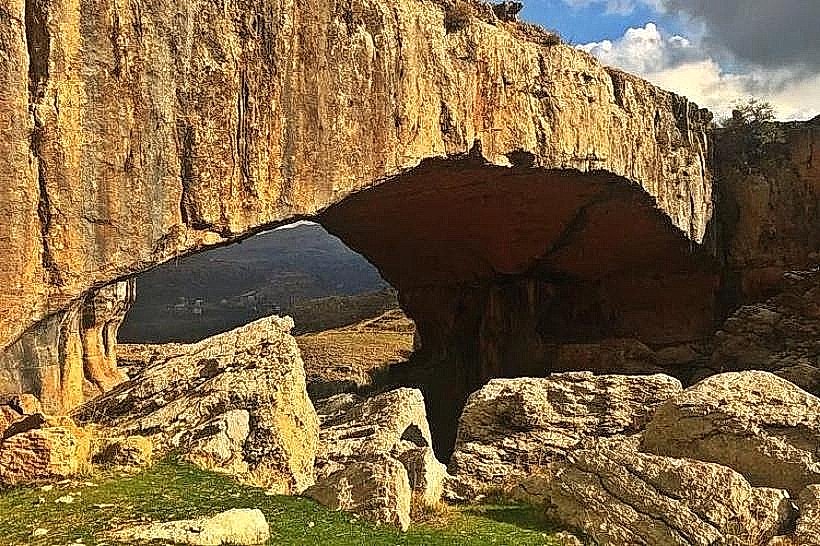
Kfardebian Natural Bridge: 1.2km Northeast
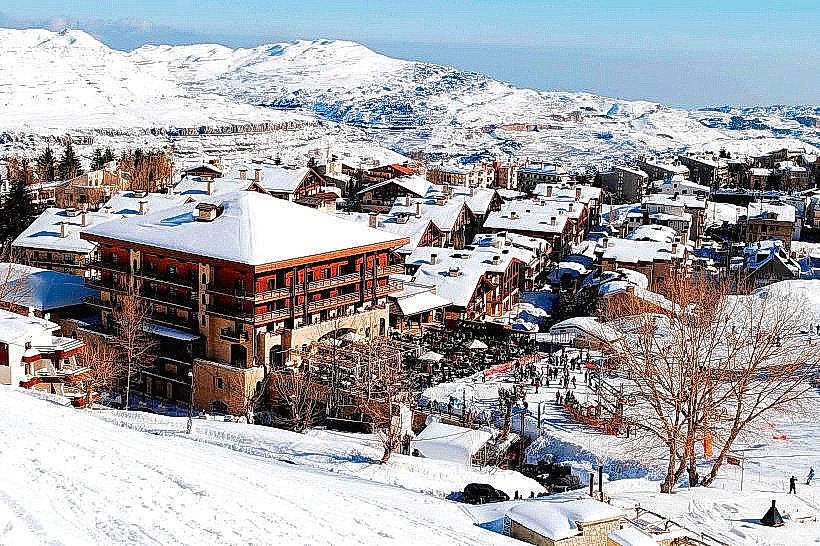
Faqra Club Resort: 0.8km Northwest
Faraya Town Center: 4.5km West
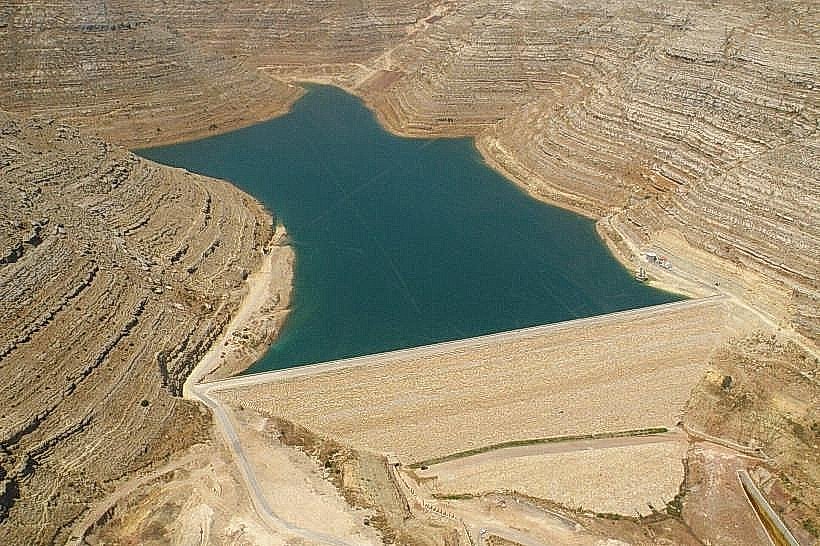
Chabrouh Dam: 3.5km East