Landmark: Ganges Ghats
City: Varanasi
Country: India
Continent: Asia
Ganges Ghats, Varanasi, India, Asia
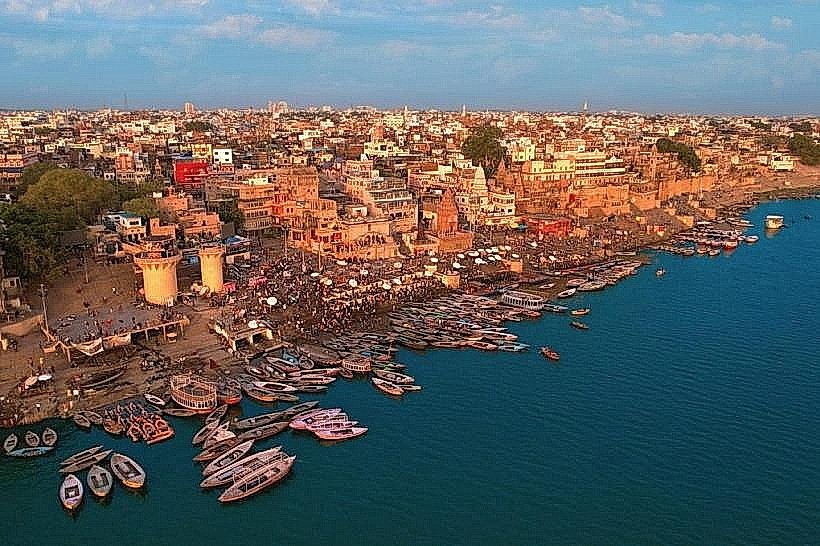
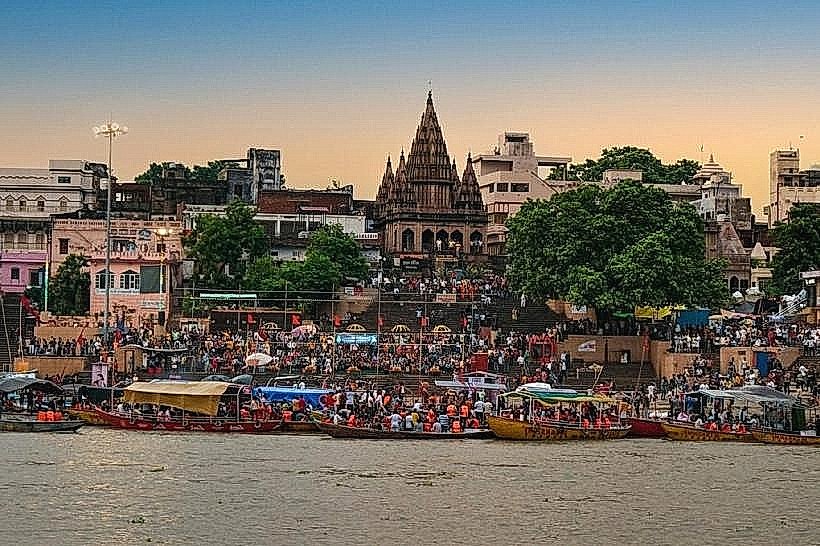
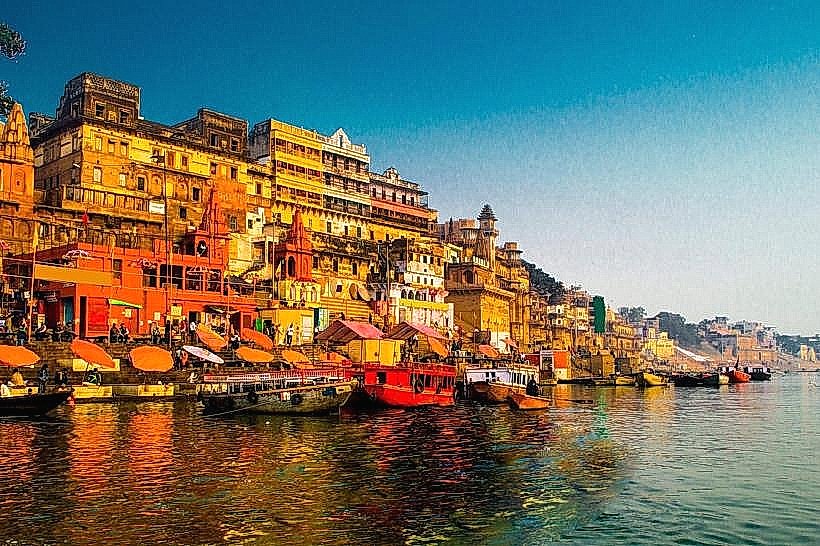
The Ganges Ghats are a series of steps leading down to the Ganges River in Varanasi, India. They serve as a central point for religious and social activities.
Visual Characteristics
The ghats are constructed from stone, primarily sandstone and granite, with varying levels of erosion due to the river's flow. They are characterized by numerous staircases, platforms, and temples built along the riverbank. The color palette ranges from the earthy tones of the stone to the brighter hues of temple decorations and the often murky brown of the Ganges River. The scale is extensive, stretching for several kilometers along the western bank.
Location & Access Logistics
The Ganges Ghats are located in the city of Varanasi, Uttar Pradesh, India. They are situated along the western bank of the Ganges River. Access is primarily on foot from the city's narrow lanes. The nearest major railway station is Varanasi Junction (BSB), approximately 5 km southeast of the ghats. Auto-rickshaws and cycle-rickshaws are available from the station to the ghats, with the journey taking 20-30 minutes depending on traffic. There is no direct vehicle access to the ghats themselves; visitors must walk the final distance. Boat services are available on the river for viewing the ghats from the water.
Historical & Ecological Origin
The construction and development of the ghats span centuries, with many dating back to the 18th century, though their origins are much older. They were built and renovated by various rulers and wealthy patrons. The original purpose was to provide access to the sacred Ganges River for bathing, religious rituals, and cremation. Ecologically, the ghats are situated on the alluvial plains of the Ganges River, a major river system in the Indian subcontinent.
Key Highlights & Activities
Activities include observing religious ceremonies such as the Ganga Aarti (fire ritual), participating in ritualistic bathing, and witnessing cremation ceremonies at specific ghats like Manikarnika Ghat. Boat rides along the river offer a comprehensive view of the ghats. Pilgrims and visitors can walk along the ghats, exploring the various temples and observing daily life. Photography is permitted, though respect for religious practices is required.
Infrastructure & Amenities
Restrooms are available at some ghats, though their condition varies. Shade is provided by the structures of the ghats and nearby buildings. Cell phone signal (4G/5G) is generally available in the area. Food vendors are present along the lanes leading to the ghats, offering local snacks and beverages. Basic medical facilities are located within the city.
Best Time to Visit
For photography, early morning (sunrise) and late afternoon (sunset) offer optimal lighting conditions. The best months for weather are generally from October to March, with cooler temperatures and lower humidity. The monsoon season (July to September) can bring heavy rainfall, affecting accessibility and comfort. High tide can increase water levels, impacting the lower steps of some ghats.
Facts & Legends
It is believed that bathing in the Ganges at Varanasi cleanses one of sins. A specific tip for visitors is to be aware of touts offering boat rides or other services; agree on prices beforehand. The Dashashwamedh Ghat is said to have been created by Lord Brahma to welcome Lord Shiva.
Nearby Landmarks
- Kashi Vishwanath Temple (0.3km Northwest)
- Manikarnika Ghat (0.8km South)
- Assi Ghat (1.5km South)
- Chowk (1.2km West)
- Sarnath (10km Northeast)