Landmark: Koforidua Beads Market
City: Koforidua
Country: Ghana
Continent: Africa
Koforidua Beads Market, Koforidua, Ghana, Africa
The Koforidua Beads Market is a specialized weekly open-air commercial hub for traditional bead trade located in the capital of the Eastern Region of Ghana. It serves as a primary wholesale and retail point for glass, stone, and clay beads produced within the surrounding Krobo and New Juaben districts.
Visual Characteristics
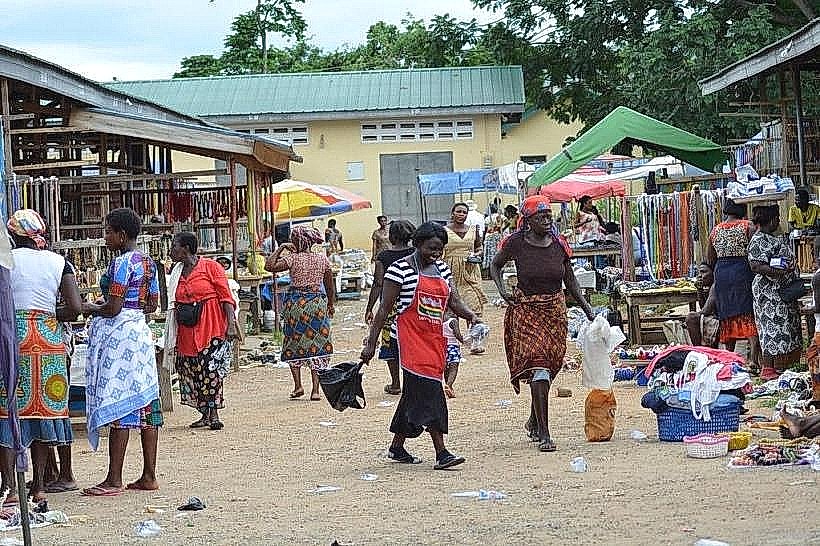
The market consists of a concentrated grid of concrete stalls and wooden tables sheltered by corrugated zinc roofing and large umbrellas. Beads are displayed in bulk on flat wooden trays or hung in vertical strands, showcasing a spectrum of opaque and translucent colors including cobalt blue, iron oxide red, and chrome yellow. Hand-painted "powder glass" beads feature distinct geometric patterns, while "recycled glass" beads possess a matte, slightly pitted surface texture.
Location & Access Logistics
The market is situated in the center of Koforidua, approximately 85km north of Accra via the N6 and R40 highways. It occupies the space adjacent to the Koforidua Jackson Park off Hedeze Avenue. Travelers can access the site via "tro-tro" (minibuses) from the Accra-Tema station to the Koforidua main station, followed by a 10-minute walk or a short taxi ride. Street parking is limited on market days; designated parking is available at the nearby Jackson Park.
Historical & Ecological Origin
The market was established to centralize the trade of beads, which have been integral to Krobo and Ashanti culture for centuries, used in "Dipo" initiation rites and as a symbol of social status. The specific beads sold are predominantly manufactured using the "cire perdue" (lost wax) method or compressed glass powder techniques developed by the Krobo people in the 19th century.
Key Highlights & Activities
Wholesale and retail bead purchasing is the primary activity, with vendors selling individual beads or pre-strung necklaces. Custom jewelry assembly is available on-site, where artisans string beads to specific lengths. Educational observation of bead-grading-distinguishing between antique Venetian trade beads and modern local replicas-is common among collectors.
Infrastructure & Amenities
Public restrooms are located at the edge of the market area for a small fee. Shade is provided by permanent stall roofs, though peripheral areas are exposed to direct sunlight. Cell phone signal (4G/5G) is consistently strong across MTN and Telecel networks. Multiple food vendors and "chop bars" selling local staples like fufu and jollof rice are located within a 100-meter radius.
Best Time to Visit
The market operates exclusively on Thursdays from 06:00 to 18:00. Optimal photography lighting occurs between 07:00 and 09:00 before the overhead sun creates harsh shadows under the stall roofs. The dry season (November to March) is preferred to avoid tropical rain, which can disrupt the open-air displays.
Facts & Legends
Local tradition holds that some beads, known as "Koli," were historically believed to "grow" in the earth or were found in the forest after heavy rains, though they are actually ancient trade beads buried and later unearthed. A specific "secret" for visitors is that prices for bulk purchases are significantly lower before 09:00 when wholesale transactions between regional traders are finalized.
Nearby Landmarks
Jackson Park: 0.1km East
Koforidua Central Mosque: 0.4km North
New Juaben Traditional Council Palace: 1.2km Northeast
Koforidua Technical University: 2.5km Southeast
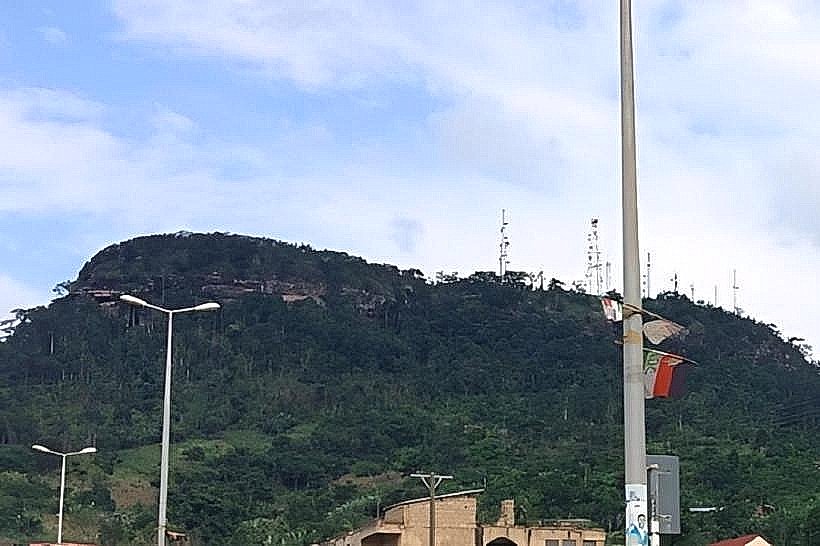
Obuo Tabiri Hill: 4.8km South