Landmark: Three-Headed Palm Tree
City: Koforidua
Country: Ghana
Continent: Africa
Three-Headed Palm Tree, Koforidua, Ghana, Africa
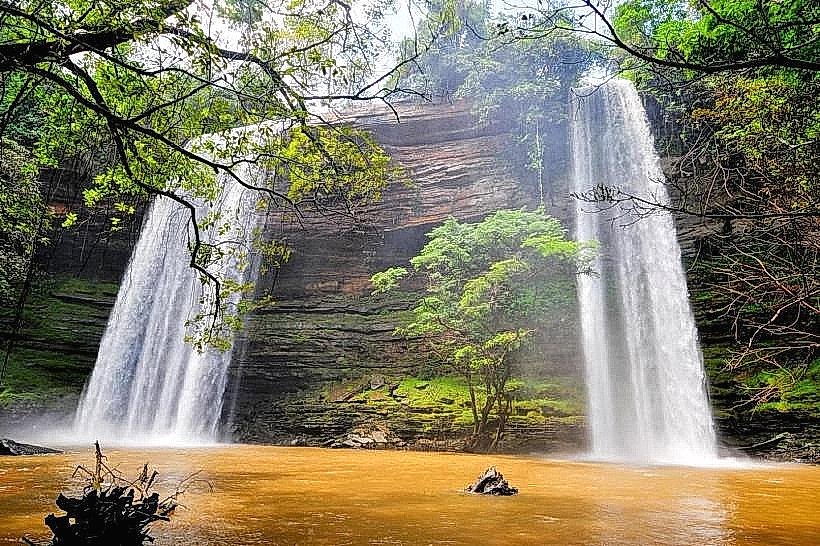
The Three-Headed Palm Tree is a rare botanical anomaly of the Elaeis guineensis species located in the forest hills of the Yilo Krobo District. It is a biological landmark situated within the broader Boti Falls heritage area, approximately 18km northeast of Koforidua.
Visual Characteristics
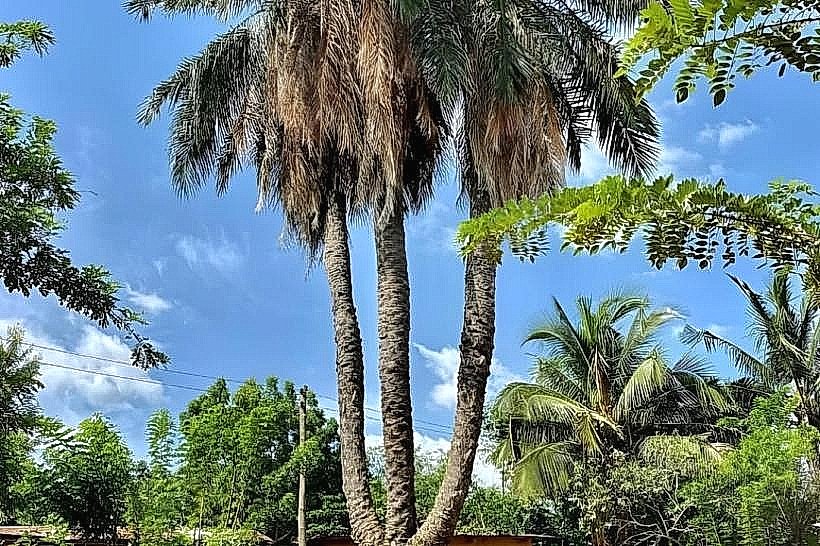
The specimen is a mature oil palm tree that features a single primary trunk which bifurcates and then trifurcates into three distinct, independent growing heads. Each head possesses its own set of green, pinnate fronds and produces separate clusters of palm fruit. The trunk is characterized by the typical scarred, cylindrical texture of the Arecaceae family, reaching a height of approximately 10 to 12 meters.
Location & Access Logistics
The tree is located on a ridge overlooking the Pawnpawn River valley, accessible via a 1.2km uphill hiking trail from the Boti Falls visitor center. The trailhead is reached by the Koforidua-Huhunya Road (R40), which is a 40-minute drive from Koforidua. Visitors must park at the Boti Falls gravel lot and proceed on foot through secondary forest and sandstone outcrops; the path is steep and often narrow.
Historical & Ecological Origin
This specific palm is a genetic mutation or a result of apical meristem damage that caused the single growing point to split into three. While the exact age is unverified, local oral history suggests the tree has been a landmark for over 50 years. Ecologically, it sits within the moist semi-deciduous forest zone of the Eastern Region, surrounded by wild cocoa and tropical hardwoods.
Key Highlights & Activities
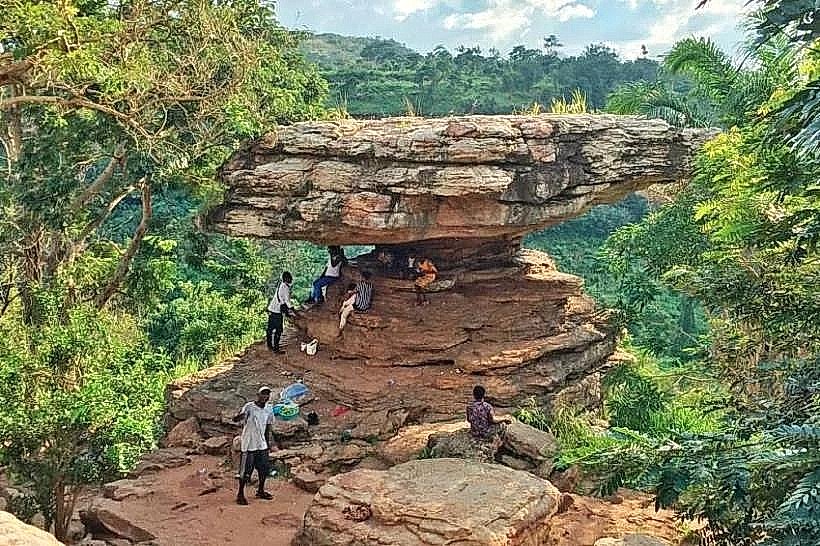
Guided nature walks are the primary activity, often combined with a visit to the Umbrella Rock. Botanical photography is the main draw due to the rarity of the multi-headed growth pattern. Educational tours provided by local guides explain the biological uniqueness of the tree and its significance within the Krobo landscape.
Infrastructure & Amenities
The site is primitive with no built infrastructure; all amenities, including restrooms, potable water, and a ticketing office, are located at the Boti Falls base 1.2km away. Natural shade is provided by the surrounding forest canopy. Cell phone signal (4G/5G) is generally available due to the high elevation of the ridge.
Best Time to Visit
The optimal time for a visit is during the dry season (November to March) to ensure the hiking trail is dry and manageable. Morning hours between 08:00 and 10:00 are recommended to avoid high humidity and heat during the ascent. Clear skies during these months provide the best light for capturing the full silhouette of the three heads against the horizon.
Facts & Legends
Local folklore attributes the tree's form to a spiritual blessing, suggesting that the three heads represent the Holy Trinity or a symbol of unity for the Krobo people. A verified biological fact is that while oil palms occasionally split into two heads (dichotomous branching), a stable three-headed mutation is an extremely rare occurrence in the wild.
Nearby Landmarks
Umbrella Rock: 0.4km West
Boti Falls: 1.2km South
Huhunya Forest Reserve: 1.8km West
Akaa Falls: 4.9km Southeast