Information
Landmark: Palafitos de CastroCity: Chiloe
Country: Chile
Continent: South America
Palafitos de Castro, Chiloe, Chile, South America
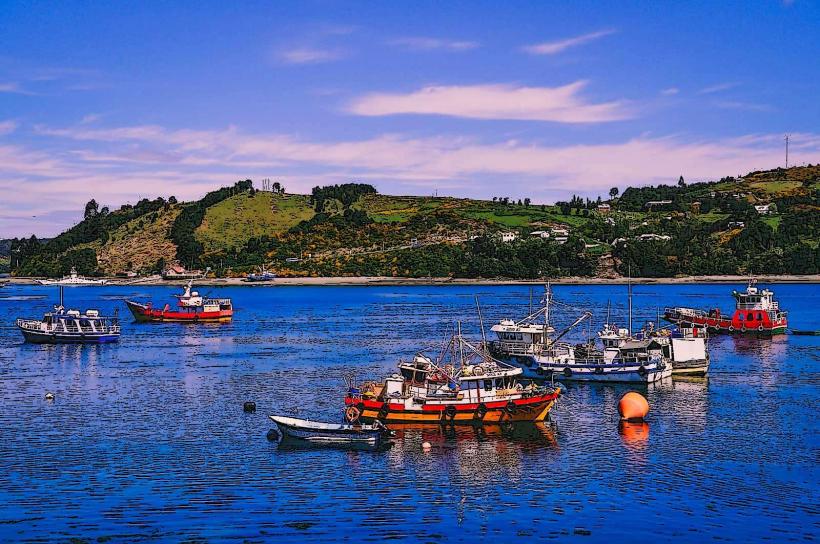
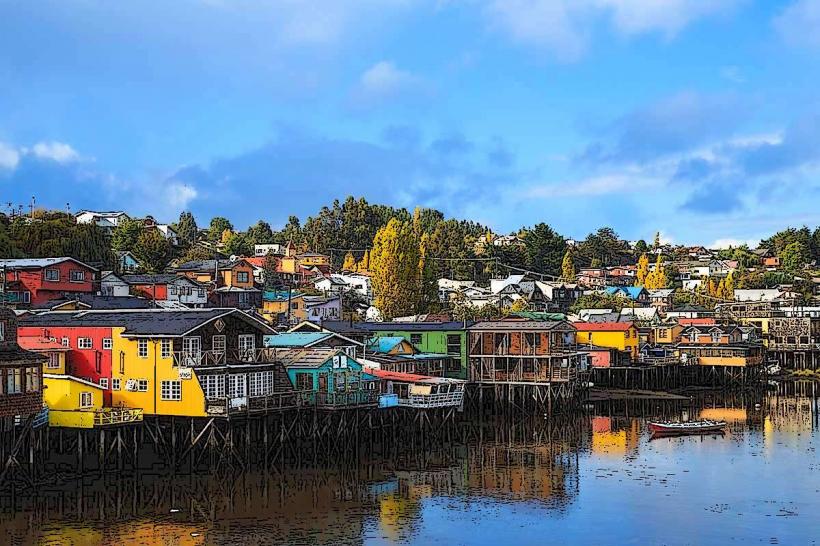
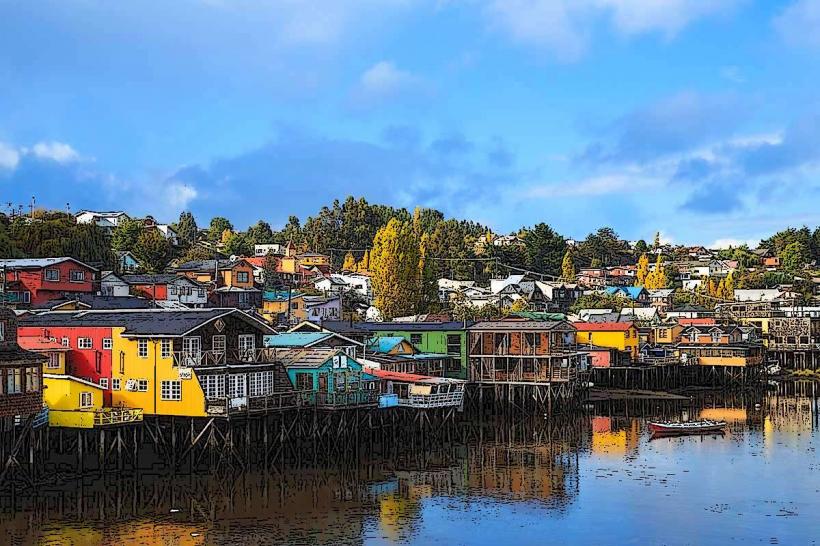
The Palafitos de Castro are a collection of stilt houses situated along the waterfront of Castro, a city on the island of Chiloé in southern Chile.
Visual Characteristics
These structures are characterized by their elevated wooden stilts, supporting houses painted in a variety of colors, including red, blue, yellow, and green. The stilts, typically made of wood, anchor the houses directly into the mudflats of the bay. The architectural style is vernacular, adapted to the tidal environment.
Location & Access Logistics
The Palafitos are located along the eastern edge of Castro's bay, accessible from the city's main waterfront promenade, Costanera. They are situated approximately 0.5km East of the city center. Access is primarily on foot via the promenade. Limited parking is available along the Costanera, with the nearest public transport (bus terminal) located approximately 0.8km West of the palafitos.
Historical & Ecological Origin
The palafitos originated in the late 19th and early 20th centuries as a practical solution for housing in an area with significant tidal fluctuations. They allowed residents to build directly on the water's edge, with the stilts providing stability and protection from high tides. The construction materials were locally sourced timber.
Key Highlights & Activities
Walking along the Costanera provides views of the palafitos. Some palafitos have been converted into small shops, cafes, or guesthouses, offering opportunities for observation and limited interaction. Photography is a primary activity due to the unique visual composition.
Infrastructure & Amenities
Restrooms are available along the Costanera promenade. Shade is minimal, primarily provided by the structures themselves. Cell phone signal (4G/5G) is generally available in the area. Food vendors and restaurants are located on the Costanera and in the adjacent city streets.
Best Time to Visit
For photography, early morning or late afternoon light offers optimal conditions. The best months for weather are generally December through March, during the Chilean summer, when rainfall is less frequent. Tidal conditions can affect the visual appearance of the stilts; low tide exposes more of the stilts and mudflats.
Facts & Legends
A local belief suggests that the colorful paint was originally used to distinguish houses from a distance, particularly for fishermen returning to shore. Another anecdote mentions that some of the older palafitos were built using salvaged ship parts.
Nearby Landmarks
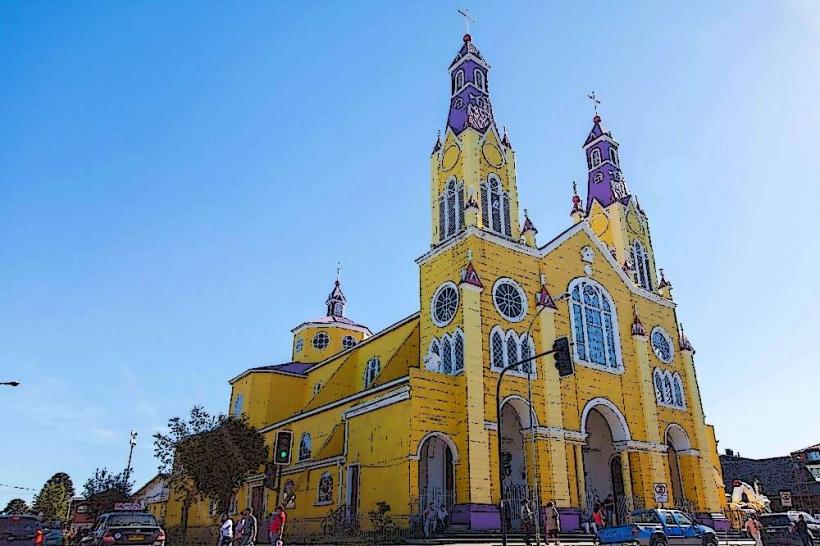
- Church of San Francisco (0.6km West)
- Museo Regional de Ancud (25km Northwest)
- Pumalin Park (150km North)
- Chiloé National Park (70km Southwest)