Landmark: Rio Celeste Waterfall
City: Guanacaste
Country: Costa Rica
Continent: North America
Rio Celeste Waterfall, Guanacaste, Costa Rica, North America
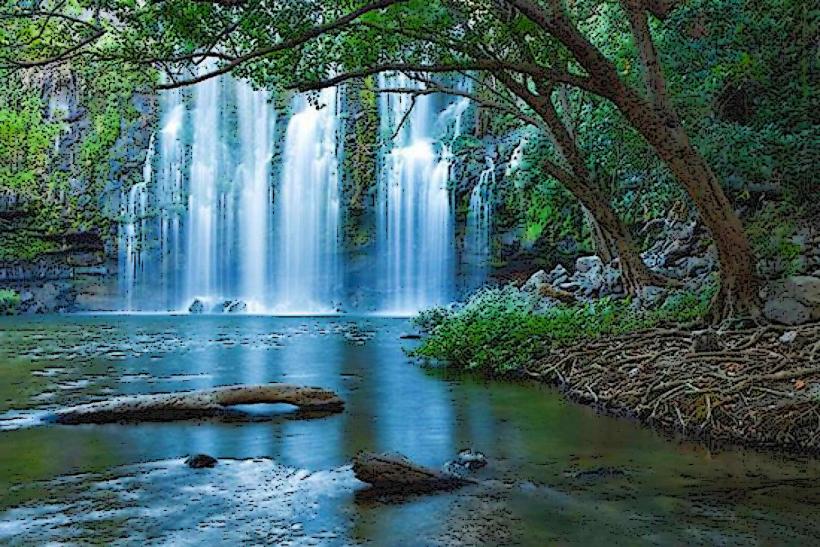
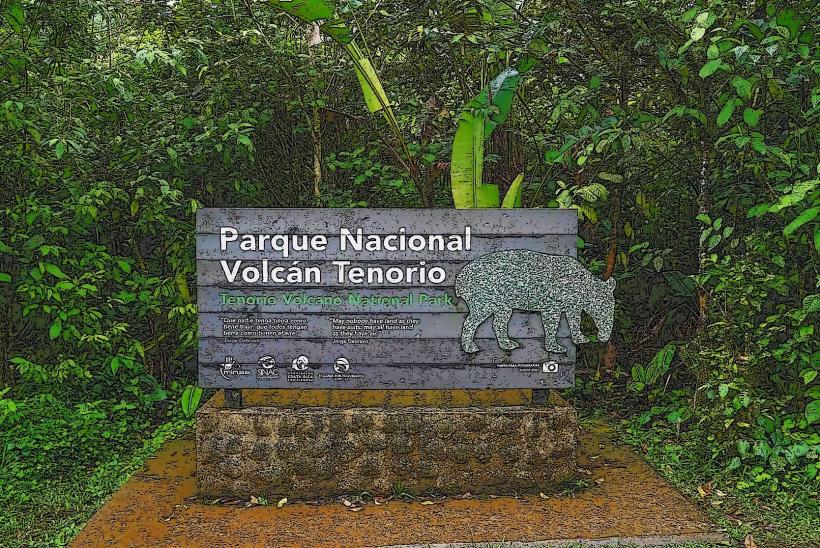
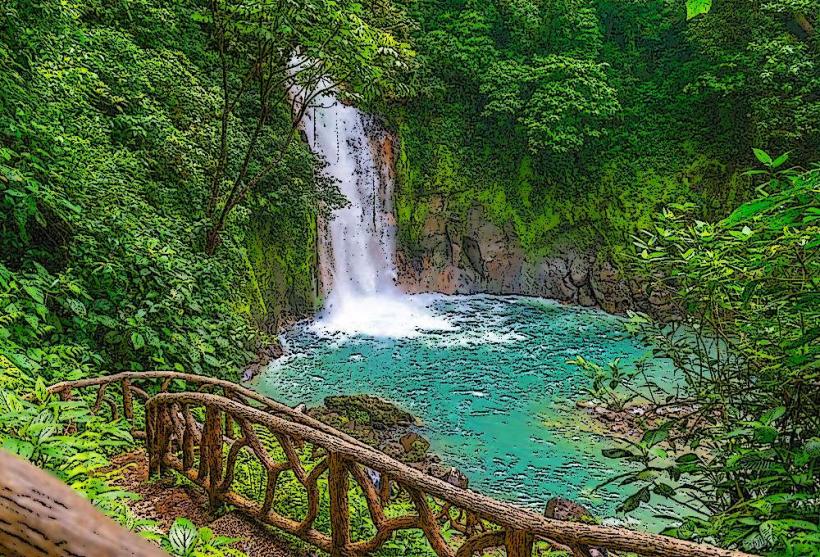
The Rio Celeste Waterfall is a natural cascade located within the Tenorio Volcano National Park in Guanacaste, Costa Rica. It is formed by the confluence of two rivers, the Sour Creek and the Roble River.
Visual Characteristics
The waterfall drops approximately 90 meters (300 feet) into a turquoise pool. The distinctive blue color of the water is a result of light refraction from suspended mineral particles, primarily aluminum and silicon. The surrounding vegetation is dense tropical rainforest, characterized by a variety of tree species and undergrowth.
Location & Access Logistics
The waterfall is situated within Tenorio Volcano National Park. Access is via the park entrance, approximately 15 kilometers (9.3 miles) from the town of Bijagua. The final section of the road to the park entrance is unpaved and can be rough. Parking is available at the park's main entrance. Public transport options to Bijagua are limited; bus services operate from major cities like San Jose and Liberia, requiring transfers. From Bijagua, a taxi or pre-arranged transport is necessary to reach the park.
Historical & Ecological Origin
The unique coloration of the Rio Celeste is a geological phenomenon. It is caused by a chemical reaction between volcanic minerals from the Tenorio Volcano and the water. Specifically, the pH of the water causes the suspended particles of aluminum hydroxide to aggregate, increasing their size and altering their light-scattering properties, resulting in the vibrant blue hue. The area is classified as a tropical wet forest ecosystem.
Key Highlights & Activities
Hiking to the waterfall is the primary activity. The trail to the waterfall is approximately 3 kilometers (1.9 miles) one-way from the park entrance. Visitors can observe the waterfall from designated viewpoints. Swimming is prohibited at the base of the waterfall due to strong currents and safety concerns. Observation of diverse flora and fauna is also a key activity.
Infrastructure & Amenities
Restrooms are available at the park entrance. There are no food vendors within the park; visitors should bring their own provisions. Shade is provided by the dense forest canopy along the trails. Cell phone signal is generally unreliable within the park boundaries.
Best Time to Visit
The best time of day for photography is generally mid-morning to early afternoon when sunlight is most direct, enhancing the water's color. The dry season, from December to April, offers more stable weather conditions. The wet season, from May to November, can result in higher river levels and potentially less vibrant water color due to increased sediment.
Facts & Legends
Local folklore suggests that the vibrant blue color of the river is a divine gift, painted by God himself. A verified fact is that the blue color is most pronounced when the water is flowing at a moderate pace; heavy rainfall can temporarily dilute the mineral concentration, making the water appear less intensely blue.
Nearby Landmarks
- Tenorio Volcano (3km Northwest)
- La Fortuna Waterfall (45km Southeast)
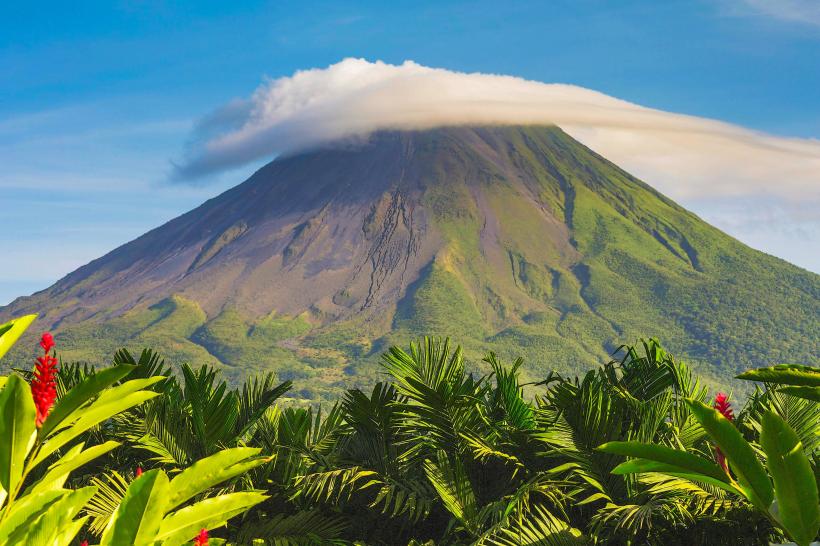
- Arenal Volcano National Park (50km Southeast)
- Lake Arenal (48km Southeast)