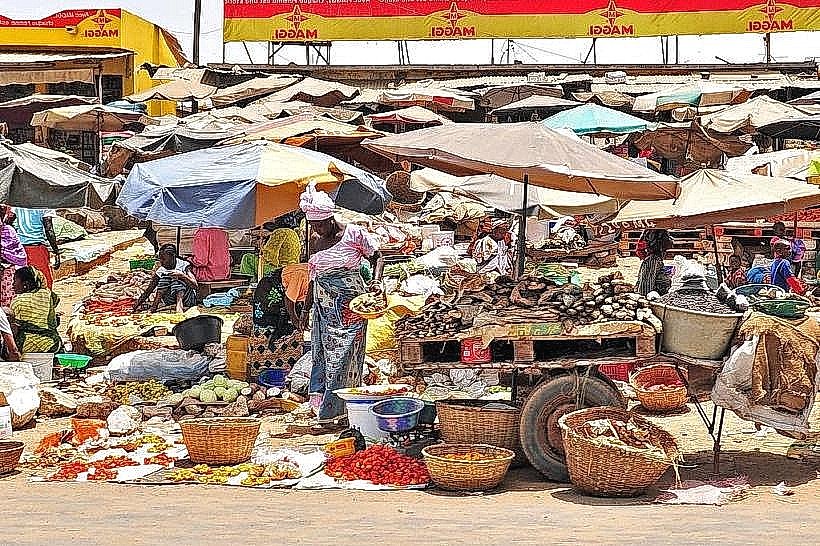
Landmark: Sandaga Market
City: Dakar
Country: Senegal
Continent: Africa
Sandaga Market, Dakar, Senegal, Africa
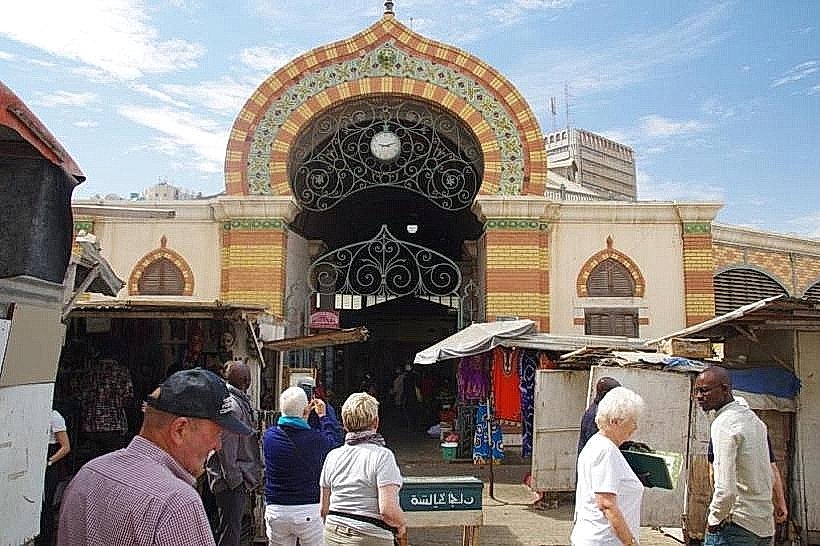
Sandaga Market is the largest commercial center in Dakar, Senegal, occupying a major urban block in the Plateau district. It serves as the primary wholesale and retail hub for the city, specializing in textiles, electronics, and food products.
Visual Characteristics
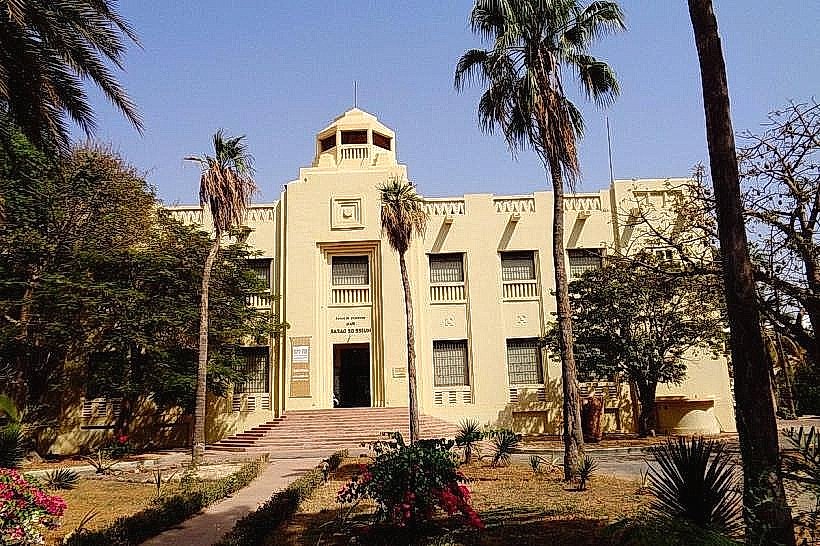
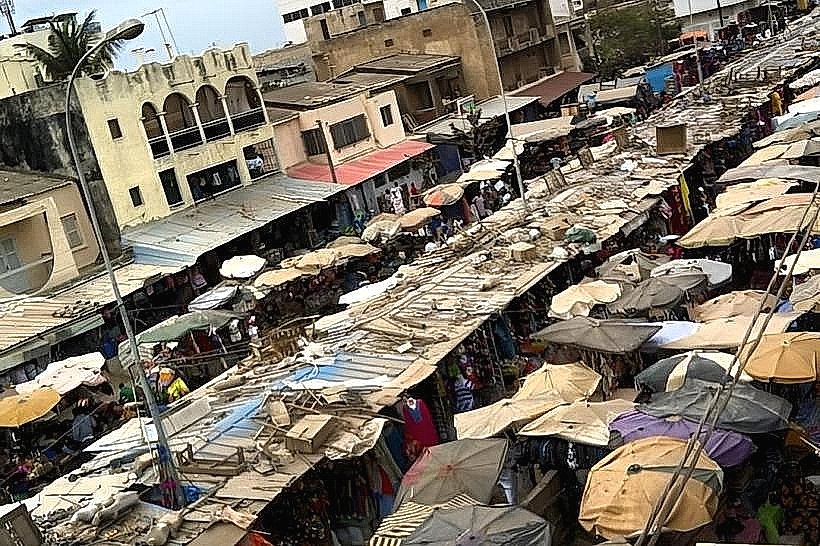
The market originally centered around a 1933 Sudano-Sahelian style building featuring white masonry, crenelated parapets, and arched windows. While the central historic structure has faced structural degradation and partial demolition, the surrounding area consists of dense, multi-story concrete stalls and temporary metal-roofed kiosks. The environment is characterized by narrow alleys, brightly colored wax-print fabrics, and high pedestrian and vehicular congestion.
Location & Access Logistics
Sandaga is located at the intersection of Avenue Lamine Guèye and Avenue Émile Badiane in central Dakar. It is approximately 1.5 kilometers north of the Palais de la République. Public transport is ubiquitous, with nearly all "Car Rapide" and "Ndiaga Ndiaye" minibuses passing through the sector. Parking is extremely limited and generally restricted to paid spots on peripheral streets such as Rue de Sandiniéry.
Historical & Ecological Origin
The market was established during the French colonial era to centralize trade in the indigenous quarter of the city. The central building, designed in the "Neo-Sudanese" architectural style, was intended to blend West African traditional aesthetics with European construction techniques. Over decades, the market expanded organically beyond the original building to occupy several square blocks of the Médina and Plateau border.
Key Highlights & Activities
Textile shopping is the primary draw, with thousands of vendors selling "Bazin," "Wax," and hand-woven "Manjak" fabrics. Tailoring services are available on-site, where garments can be sewn within 24 to 48 hours. The market also contains a significant section for traditional spices, dried fish, and local produce located in the lower tiers and surrounding alleys.
Infrastructure & Amenities
Infrastructure is rudimentary; narrow passages lack ventilation and can become flooded during the rainy season. Public restrooms are scarce and typically managed by private stall owners for a small fee. 4G and 5G cellular signals are functional but may fluctuate inside concrete structures. There is no central shade, as most protection is provided by individual store awnings and umbrellas.
Best Time to Visit
The market is most active between 10:00 and 17:00. For a less congested experience, visits should be planned for early morning (08:30 to 10:00). Photography is difficult due to the crowd density and requires permission from individual vendors. Sunday mornings see a significant reduction in commercial activity.
Facts & Legends
Sandaga is often referred to as the "Barometer of the Senegalese Economy" because the prices set here for textiles and staples often dictate market rates across the rest of the country. Local lore suggests that if a specific item cannot be found in Sandaga, it does not exist in Senegal.
Nearby Landmarks
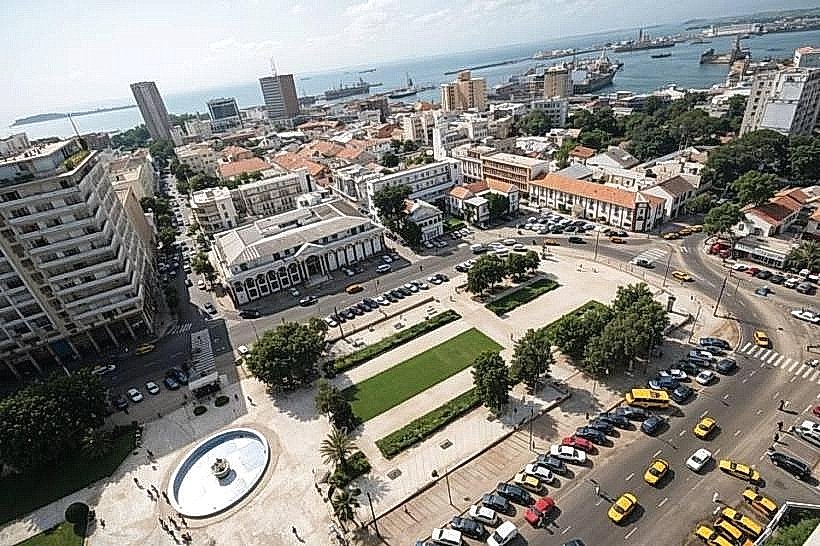
Place de l'Indépendance - 0.7km South
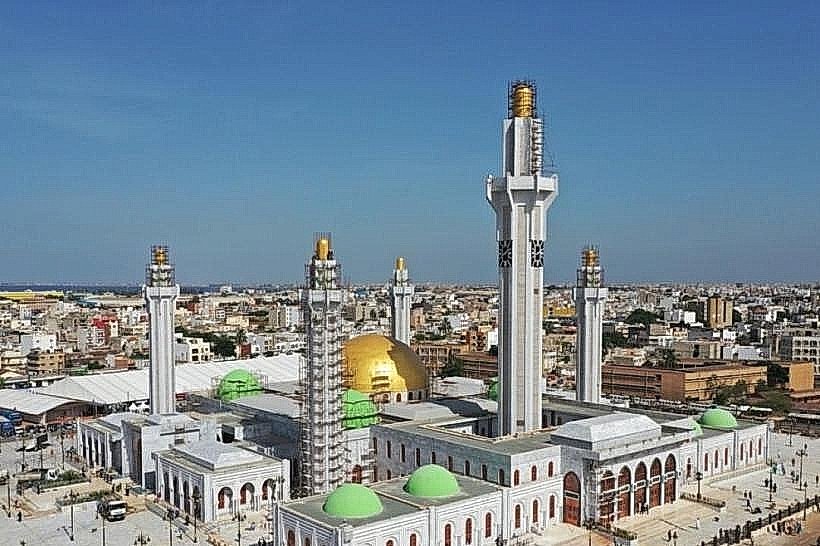
Dakar Grand Mosque - 0.9km North
IFAN Museum of African Arts - 0.8km South
Dakar Railway Station - 1.1km East