Landmark: Tel Beer Sheva
City: Beersheba
Country: Israel
Continent: Asia
Tel Beer Sheva, Beersheba, Israel, Asia
Tel Beer Sheva is a prominent archaeological site in the northern Negev, recognized as a UNESCO World Heritage Site. It represents the best-preserved example of a pre-planned Iron Age biblical town in the Levant, famously associated with the journeys of the Patriarchs Abraham and Isaac.
Visual Characteristics
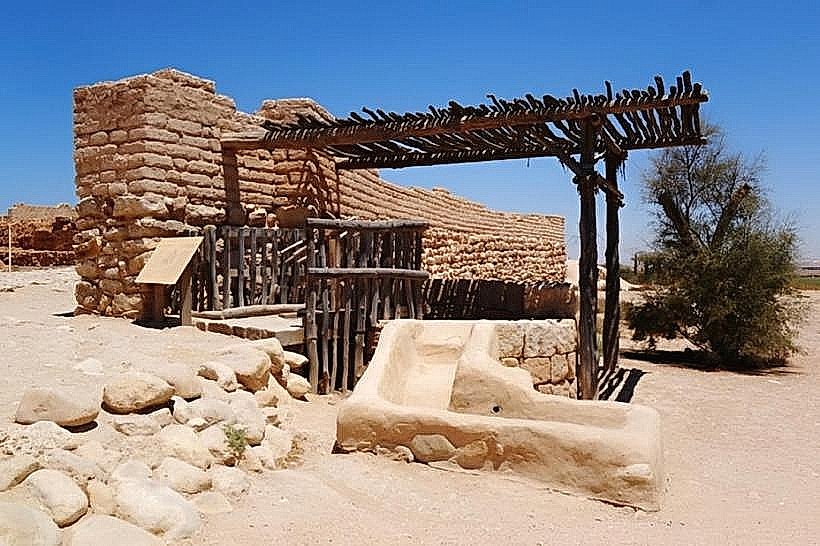
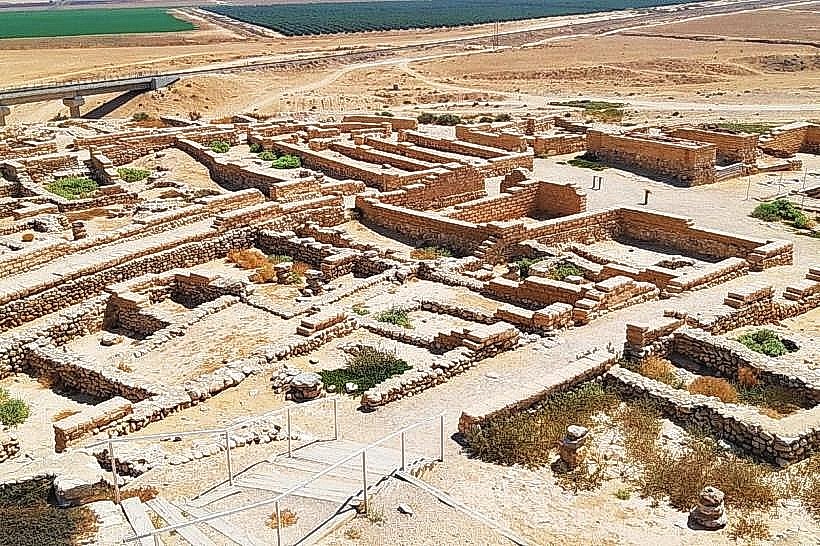
The site is a classic "tel" (archaeological mound) with a distinct circular urban plan. From its summit, the grid-like street system of the ancient city is clearly visible, featuring a peripheral road that runs parallel to the casemate walls. The landscape is dominated by reconstructed limestone structures, including a massive four-chambered gate and the "Governor's Palace." The most striking visual element is the modern metal observation tower, which provides a 360-degree view of the desert landscape and the nearby modern city of Beer Sheva.
Location & Access Logistics
The national park is located approximately 5km east of modern Beer Sheva, between the city and the town of Tel Sheva. It is situated at the junction of the Hebron and Beer Sheva wadis. Access is via Route 60; the site is well-signposted and about a 10-minute drive from the city center. Public transport is available via local buses from the Beer Sheva central station, though a short walk from the main road to the park entrance is required.
Historical & Ecological Origin
Geologically, the tel is composed of layers of ancient settlement debris built upon a natural chalk hill. Historically, the city reached its peak during the 8th century BCE as a major administrative center for the Kingdom of Judah. The site is famous for its sophisticated water system, which includes a 69-meter-deep well-one of the deepest in Israel-and a massive subterranean cistern hewn into the rock to collect flash flood waters from the Hebron Stream.
Key Highlights & Activities
The Horned Altar: A replica of a rare four-horned sacrificial altar stands at the entrance (the original is in the Israel Museum). Its discovery suggests the site was a center for ritual worship before religious reforms.
The Water System: Visitors can descend a modern staircase into the impressive underground reservoirs, which held up to 700 cubic meters of water.
The City Gate and Streets: Exploration of the outer and inner gates, complete with stone benches where elders and judges traditionally sat.
The Storehouses: A large complex of pillared buildings used for storing grain, oil, and wine.
Infrastructure & Amenities
The national park features a modern visitor center with a small museum, a souvenir shop, and a snack bar. Public restrooms are available at the entrance. The site is partially ADA-compliant; while the upper paths of the tel are accessible, the descent into the deep water system requires navigating many stairs and is not suitable for those with limited mobility. The park provides shaded picnic areas and drinking water stations. Full 5G cellular coverage is available.
Best Time to Visit
The park is open Sunday–Thursday and Saturday from 08:00 to 17:00 (closing at 16:00 in winter). The best time to visit is early morning during the winter or spring (October–April) to avoid the intense Negev heat. For photography, the late afternoon light emphasizes the texture of the excavated stone walls and the depth of the surrounding wadis.
Facts & Legends
The name "Beer Sheva" translates to "Well of the Oath" or "Well of the Seven," referring to the covenant made between Abraham and Abimelech involving seven ewes. A historical oddity is that the city was meticulously destroyed, likely by the Assyrian King Sennacherib in 701 BCE, which paradoxically preserved its ground plan perfectly for modern archaeologists to uncover in the 1970s.
Nearby Landmarks
Abraham’s Well International Visitor Center – 5.5km West
Israeli Air Force Museum – 12km West
Beit Guvrin-Maresha National Park – 45km North
Mamshit National Park – 40km Southeast
Modern Beer Sheva Old City – 5km West