Landmark: Templars' Tunnel
City: Akko
Country: Israel
Continent: Asia
Templars' Tunnel, Akko, Israel, Asia
The Templars' Tunnel is a subterranean passage in Old Acre that served as a strategic connection between the main Templar fortress and the city's port.
Visual Characteristics
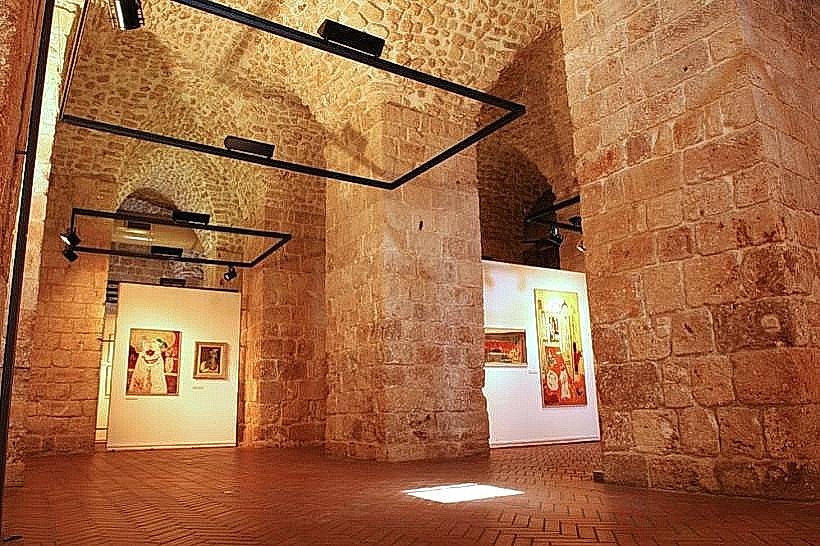
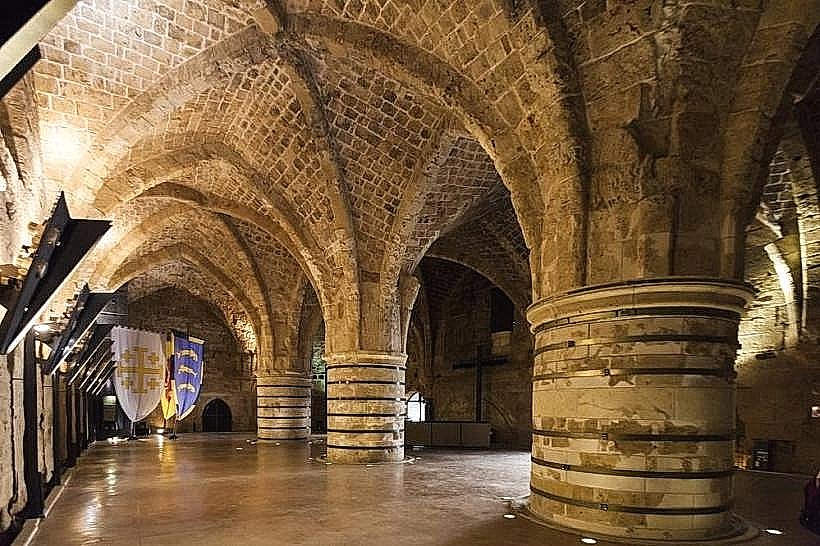
The tunnel is a 150-meter-long corridor carved into the lower part of a natural stone ridge. The upper section consists of a semi-circular hewn-stone arch, while the lower part is cut directly into the kurkar (sandstone) bedrock. It features modern wooden walkways positioned above the original floor level to navigate the constant flow of groundwater. Atmospheric, low-intensity lighting is installed along the walls to highlight the masonry and the natural rock textures.
Location & Access Logistics
The western entrance is located near the lighthouse, and the eastern entrance is situated near the Khan al-Umdan. Access is via the pedestrian streets of the Old City. The site is a short walk from the central bus stops and public parking lots at the entrance to Old Acre. Tickets are typically purchased as part of a combined pass with the Knights' Halls.
Historical & Ecological Origin
Constructed in the late 12th century by the Templar Order, the tunnel provided a secure, concealed route for moving supplies and personnel between the fortress and the Mediterranean shoreline. It was rediscovered in 1994 by a local resident investigating a blocked sewer line. Geologically, the tunnel exploits the soft sandstone coastal ridge. The presence of water in the tunnel is due to its depth, which reaches the local water table.
Key Highlights & Activities
The primary activity is walking the length of the tunnel, which provides a physical experience of medieval military architecture. Multimedia projections on the stone walls depict scenes of Crusader life and the history of the Order. Visitors can observe the transition from natural bedrock to sophisticated masonry arches. The tunnel serves as a direct link between the residential Western district and the bustling port area.
Infrastructure & Amenities
The facility is a linear, climate-controlled environment that remains naturally cool. There are no restrooms or shops inside the tunnel itself, but these are available at the main visitor centers at either end. Due to the narrow dimensions and the nature of the historic structure, the site is not ADA-compliant, as it involves steps at both entrances. 5G cellular signal is generally weak or unavailable inside the deeper sections of the tunnel.
Best Time to Visit
The tunnel is open daily from 09:00 to 17:00 (shorter hours on Fridays). It is an ideal refuge during the hottest part of the day (12:00–14:00) because of its stable, cool underground temperature. Weekday mornings are recommended for a quiet experience without the echoes of large tour groups.
Facts & Legends
A verified historical fact is that the upper part of the Templar fortress, which the tunnel served, was destroyed by the Mamluks in 1291 and eventually collapsed into the sea. Local legend long suggested that the tunnel led to a hidden treasury, though excavations revealed it was primarily a functional transit route. It remains one of the best-preserved examples of secondary Crusader infrastructure in the Levant.
Nearby Landmarks
Old Acre Lighthouse – 0.1km West
Khan al-Umdan – 0.1km East
Acre Port – 0.2km East
Knights' Halls – 0.4km North
Turkish Bazaar – 0.3km Northeast