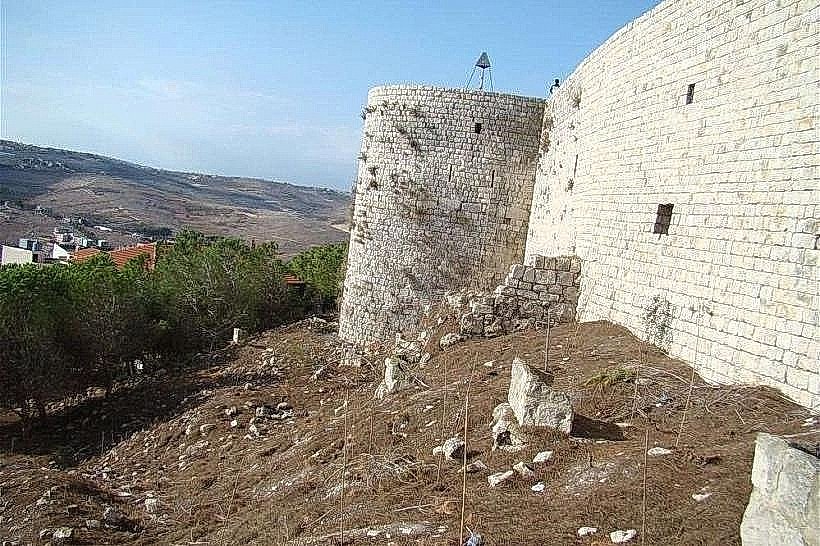
Landmark: Tibnine Castle
City: Nabatieh
Country: Lebanon
Continent: Asia
Tibnine Castle, Nabatieh, Lebanon, Asia
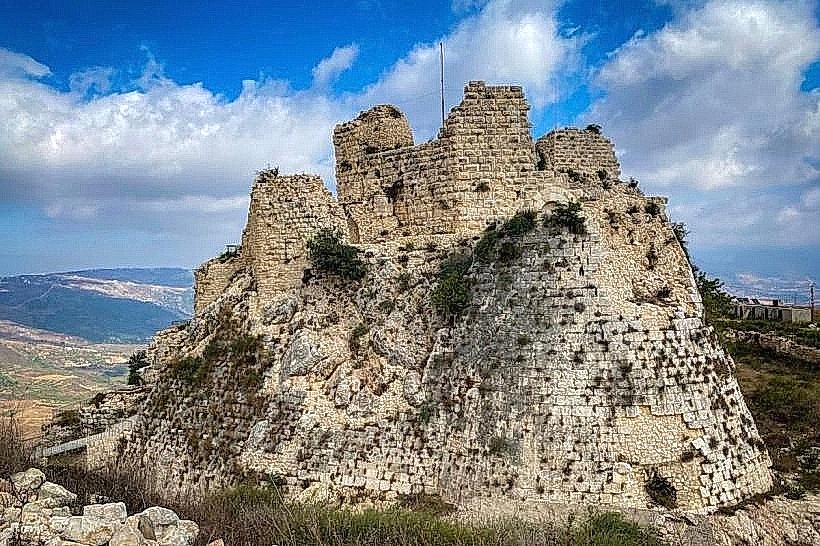
The Tibnine Castle, historically documented as the Crusader fortress of Toron, is a medieval fortification positioned on a prominent hilltop in the town of Tibnine, within the Bint Jbeil District of the Nabatieh Governorate in Southern Lebanon. The site commands a central strategic high point overlooking the surrounding valleys and old transit routes linking Tyre to the interior Jordan Valley.
Visual Characteristics
The Tibnine Castle (Toron) features a multi-tiered circular layout built directly onto a natural limestone mound. The structural ruins are composed of large, locally quarried ashlar limestone blocks, displaying a mixture of Crusader, Mamluk, and Ottoman masonry techniques. The standing infrastructure includes semi-circular defensive towers, vaulted underground storage halls, thick outer curtain walls, and an arched main gatehouse on the northern side. The exterior stone faces show extensive weathering, with grey lichen growth and iron-oxide mineral staining contrasting with the sparse Mediterranean oak shrubs and olive groves lining the steep hill slopes.
Location & Access Logistics
The site is situated approximately 110 kilometers south of Beirut and 25 kilometers southeast of Tyre. Access from Beirut is via the Southern Coastal Highway south past Saida to Tyre, turning inland onto the regional highway heading southeast through Kana and Haris directly into Tibnine. The castle is positioned in the northern sector of the town, accessible via a paved asphalt road that winds up to the base of the ruins. A small asphalt parking area is located directly below the primary entrance gate. Public transport is limited to regional shared vans running from Tyre to the Tibnine town square, from which the castle is a 400-meter uphill walk.
Historical & Ecological Origin
The fortress was originally constructed in 1105 by Hugh of Saint Omer, the Crusader Lord of Tiberias, to secure the mountain passes during the siege of Tyre. It became the seat of the powerful Barony of Toron before being captured by Saladin's Ayyubid forces in 1187 following the Battle of Hattin. The castle shifted control repeatedly between Crusader barons and Mamluk sultans until the 16th century, when it was occupied and significantly rebuilt by the Ottoman governor Zahir al-Umar to serve as a regional administrative garrison. Geologically, the castle sits on a karstified Cretaceous limestone formation characteristic of the South Lebanon highlands.
Key Highlights & Activities
Exploring the vaulted subterranean galleries, armories, and large rainwater cistern networks.
Examining the architectural layout of the Ottoman-era upper residential quarters built over medieval foundations.
Traversing the circular rampart paths to observe panoramic views of the Jabal Amel mountain range.
Documenting the structural mason marks and pointed arches visible within the northern gatehouse complex.
Infrastructure & Amenities
The Tibnine Castle (Toron) is managed as a public historical heritage site by the local municipality under the supervision of the Directorate General of Antiquities. The site features baseline visitor infrastructure, including stone paths, basic informational plaques, and metal safety railings along exposed vertical drops. Public restrooms are located near the municipal gardens at the base of the hill. Due to its elevated town-center position, cell phone signal is highly stable, delivering reliable 4G and 5G network coverage. No commercial food vendors operate inside the fortress walls, but multiple restaurants and shops are located within a 500-meter radius in the town center.
Best Time to Visit
The optimal period for visitation is from April to October when the regional weather is dry and visibility across the southern highlands is highest. Photography is most effective during the late afternoon hours, between 16:30 and 18:30, as the low sun directly illuminates the western limestone towers and highlights the relief of the ancient masonry.
Facts & Legends
A well-documented historical incident from 1197 notes that a German Crusader army launched a massive siege to recapture the fortress from its Muslim garrison. The defenders were on the verge of surrendering through a secret tunnel excavation when internal divisions among the Crusader commanders caused the attacking army to panic and retreat overnight, leaving the fortress securely in regional hands.
Nearby Landmarks
Tibnine Municipal Park: 0.3km South
Historic Church of Saint George: 0.5km Southwest
Haris Valley Viewpoint: 3.5km Northwest
Sultanieh Byzantine Ruins: 4.2km Northeast