Landmark: Adum Commercial District
City: Kumasi
Country: Ghana
Continent: Africa
Adum Commercial District, Kumasi, Ghana, Africa
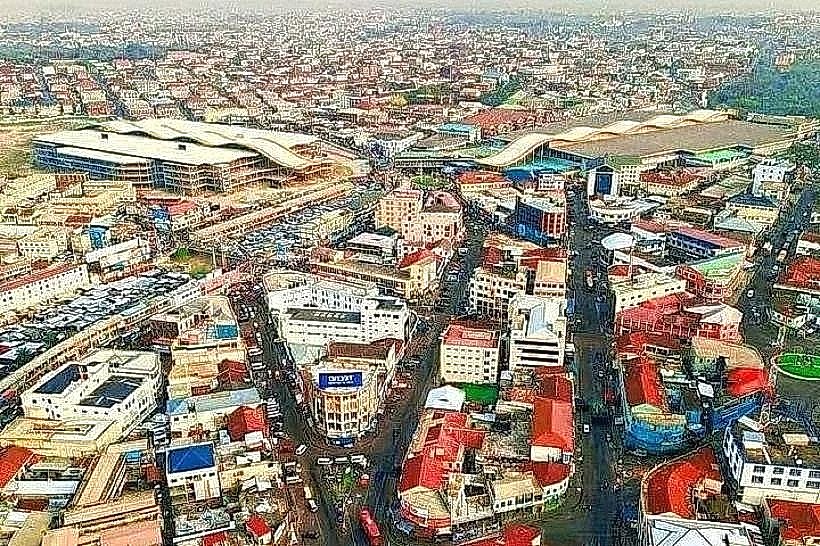
Adum is the primary central business district of Kumasi and the financial nerve center of the Ashanti Region. It is characterized by a high-density mix of colonial-era architecture, modern bank headquarters, and specialized retail zones.
Visual Characteristics
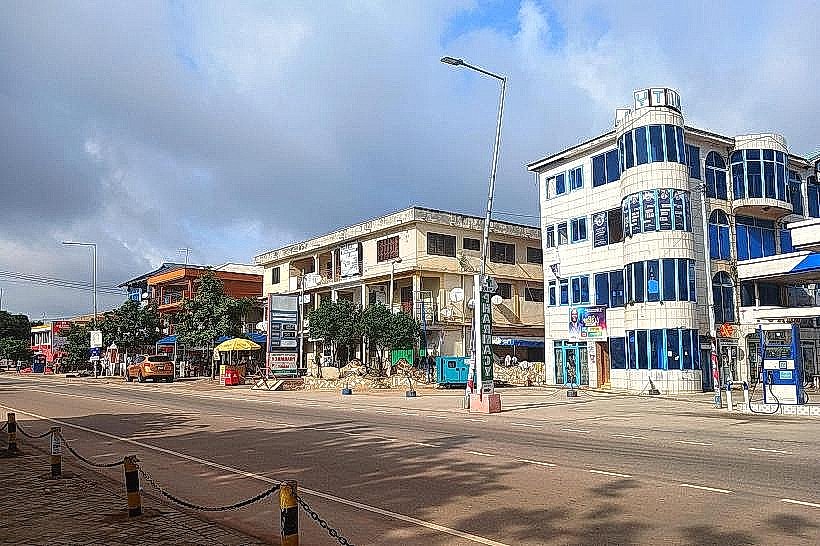
The district is defined by a grid-like street pattern filled with multi-story commercial buildings. The aesthetic is a juxtaposition of weathered mid-20th-century concrete structures and renovated glass-fronted corporate offices. Streets are narrow and perpetually congested with a mix of delivery trucks, yellow-and-white taxis, and dense pedestrian crowds. Specialized sectors are visually distinct, such as the cluster of gold-smithing shops, textile wholesalers, and consumer electronics hubs.
Location & Access Logistics
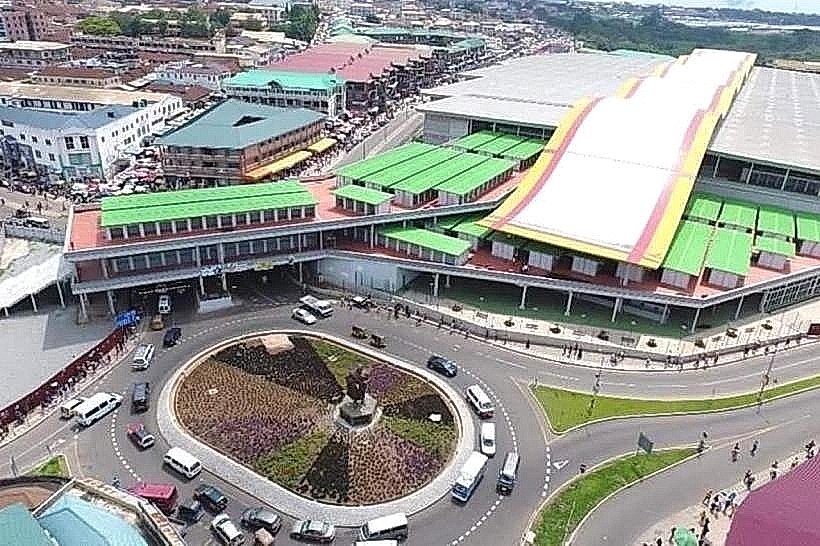
Adum is bounded by the Kumasi Railway Station to the south and the Kejetia Market to the north.
Access: Primary entry points include Harper Road, Prempeh II Street, and Stewart Avenue.
Public Transport: All major "tro-tro" routes in Kumasi terminate at or pass through the adjacent Kejetia or Dr. Mensah stations. Taxis are the most effective way to navigate the interior streets.
Parking: Formal parking is extremely scarce. Most visitors utilize the multi-story car park at the Kumasi City Mall (3km away) and take a taxi in, or use small, privately managed dirt lots scattered between buildings.
Historical & Ecological Origin
Developed during the British colonial period as the administrative and mercantile heart of the Gold Coast’s inland territory, Adum replaced older residential quarters of the Ashanti capital. The district sits on a series of low hills; the name "Adum" refers to the Adum (Okoo) trees that once dominated the area. It remains the site of the Kumasi Fort, signifying its historical role as a defensive and administrative stronghold.
Key Highlights & Activities
Banking & Finance: Houses the regional headquarters for the Bank of Ghana and major commercial banks.
Textile Trade: The premier location for high-quality Dutch Wax (Vlisco) and local prints.
Gold Trade: A traditional center for licensed gold buyers and master goldsmiths specializing in Ashanti jewelry.
Logistics: The district contains the main offices for major courier services and international shipping agents.
Infrastructure & Amenities
Adum features the highest concentration of ATMs, insurance firms, and pharmacies in the city. 4G/5G cell phone signal is robust. While street-level amenities are crowded, the district contains several established business hotels and restaurants, such as the Noda Hotel (off-site) or local branches of international fast-food chains. Public restrooms are available in major commercial plazas like the SSNIT House.
Best Time to Visit
Business Hours: 08:30–17:00 (Monday–Friday).
Optimal for Visitors: 09:00–11:00 to avoid the peak afternoon "rush hour" (15:30–17:30) when movement becomes difficult.
Saturday: Trade remains high until 14:00, after which activity drops significantly. Most businesses are closed on Sunday.
Facts & Legends
Adum is historically known as the "Wall Street of Kumasi." A logistical reality is that street addresses are rarely used; navigation relies on landmarks such as "The Post Office," "The Barclays Corner," or "The UTC Building." It is widely asserted that the daily cash liquidity in Adum often rivals that of the national capital, Accra, due to the volume of the transit trade.
Nearby Landmarks
Kumasi Fort and Military Museum – 0.2km West
Kejetia Market – 0.5km North
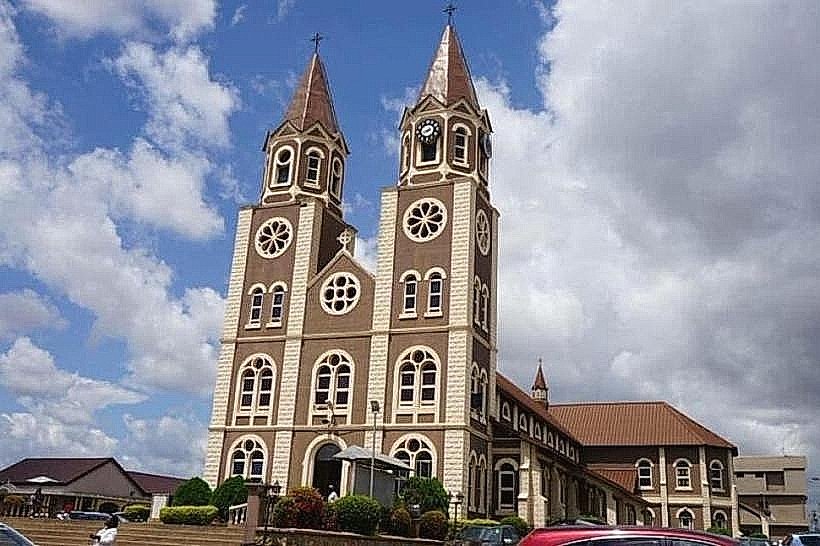
Saint Peter’s Cathedral Basilica – 0.6km East
Kumasi Railway Station – 0.3km South
Central Post Office – 0.1km Central