Landmark: Ayn Hamran
City: Salalah
Country: Oman
Continent: Asia
Ayn Hamran, Salalah, Oman, Asia
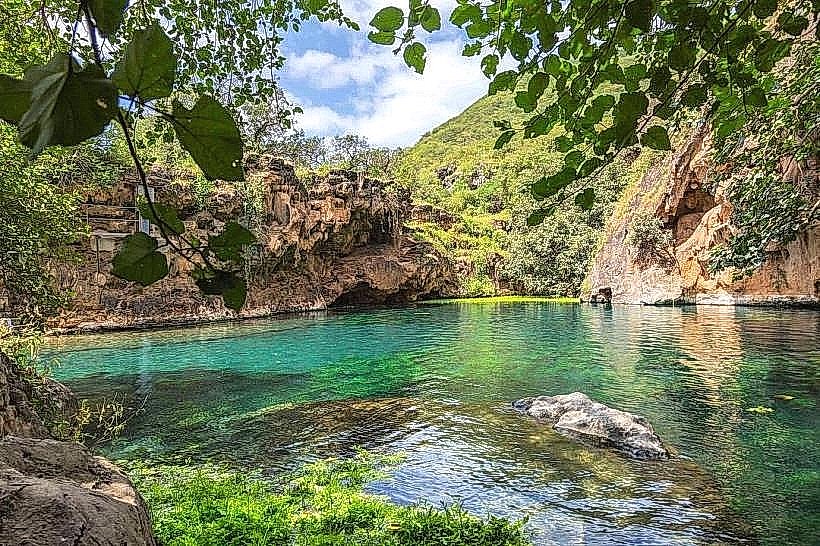
Ayn Hamran is a natural spring and ecological site located at the base of the eastern Qara Mountains in Salalah. It is distinguished by its dense cluster of tall trees and its role as a significant habitat for regional bird species and local livestock.
Visual Characteristics
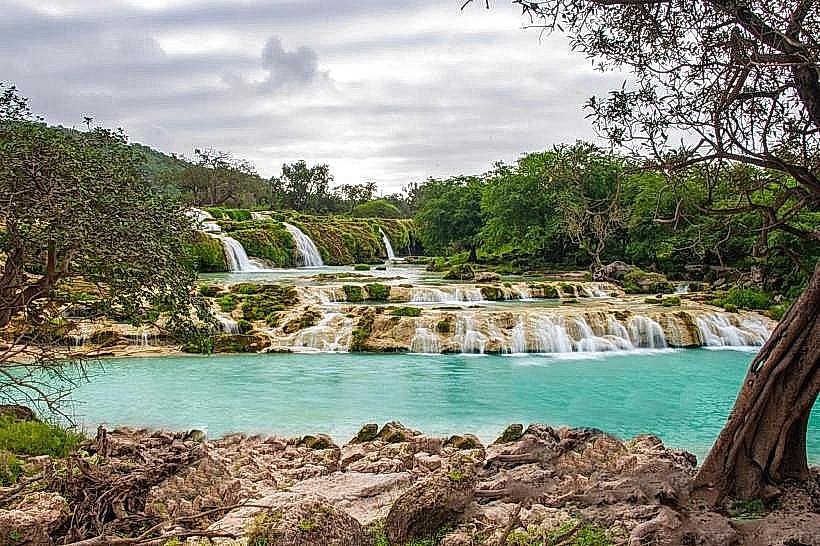
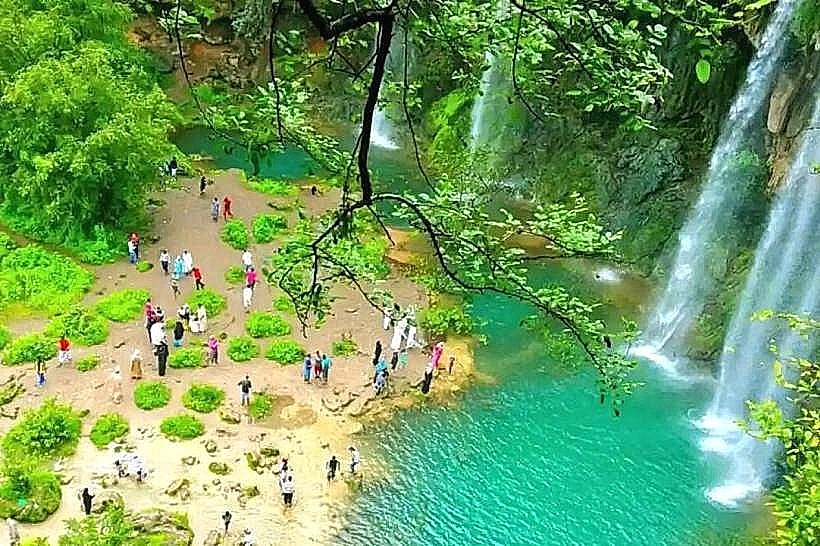
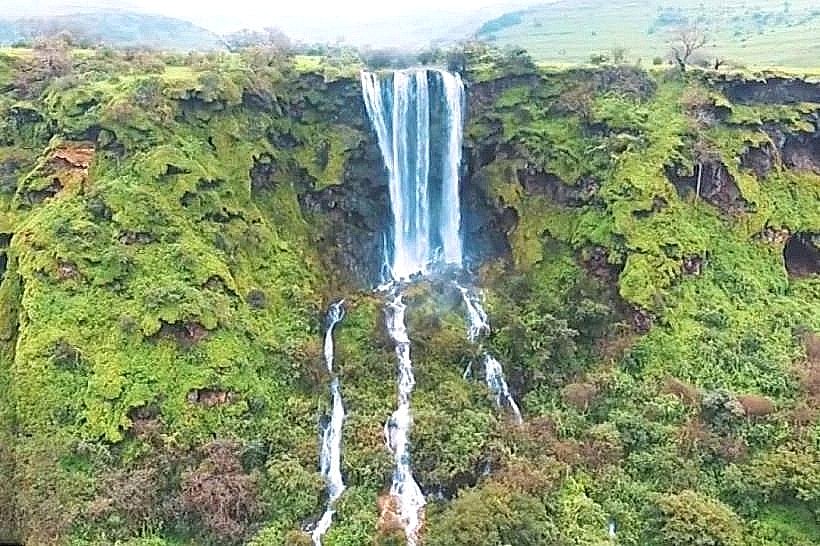
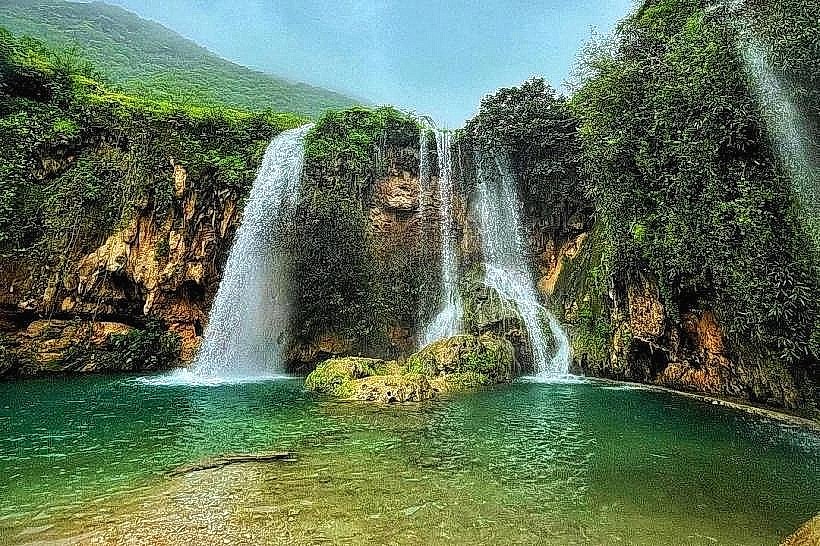
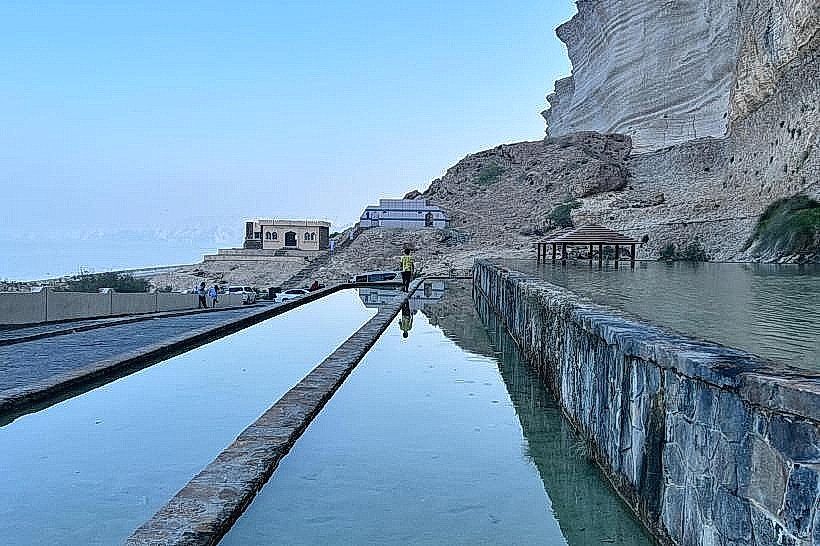
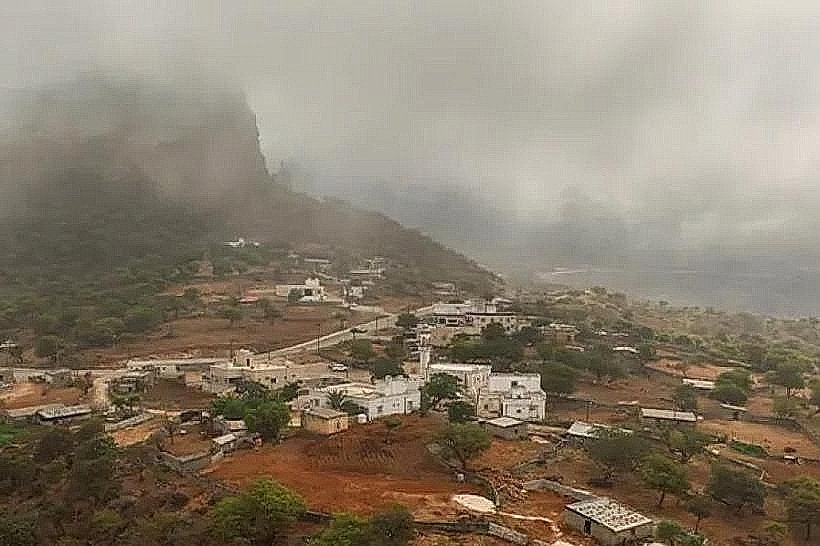
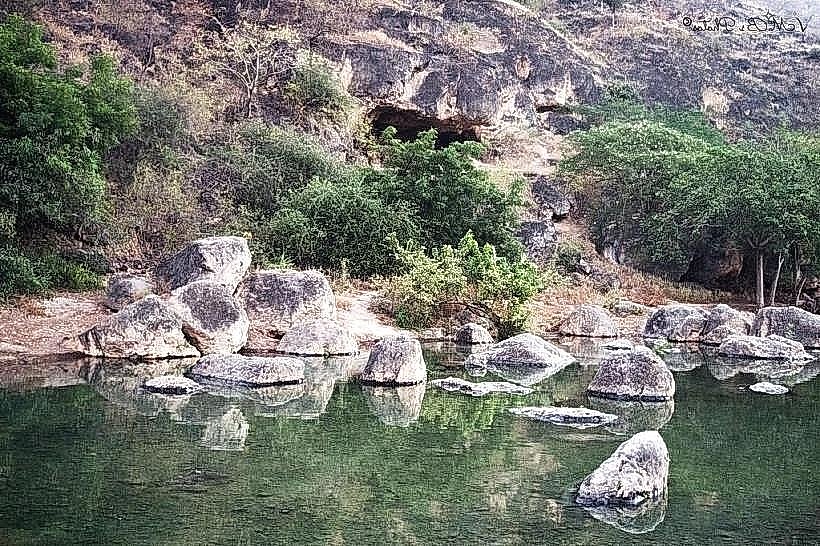
The site is defined by a lush canopy of large tropical trees, including wild figs and tamarinds, which create a shaded oasis against the limestone mountain backdrop. A small concrete channel (falaj) directs water from the mountain spring toward a central pool and nearby agricultural plots. During the dry season, the landscape remains green due to the permanent water source, while the monsoon turns the entire valley into a thick forest.
Location & Access Logistics
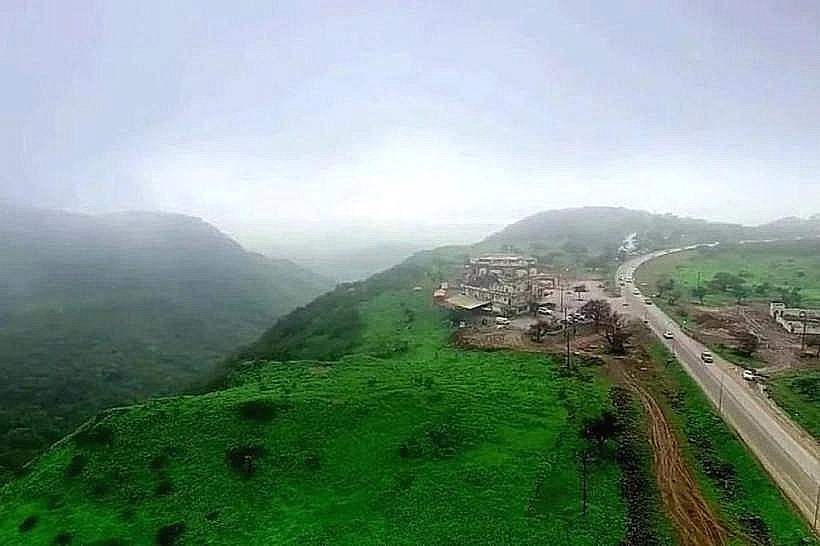
The spring is situated approximately 25km northeast of Salalah city center. Access is via the Ar Razat Road, branching off from the Salalah-Taqah Road (Route 49). The road is paved until the final approach, where it transitions to a well-maintained gravel track leading to a parking area. Private vehicles or taxis are necessary for access, as there is no public transit to this location.
Historical & Ecological Origin
Ayn Hamran is a karst spring fed by the Dhofar mountain aquifers. Historically, the area was a key gathering point for mountain tribes and a vital water station on the inland trails. It is ecologically notable for hosting a high concentration of endemic Dhofari flora and serves as a primary site for observing the region's biodiversity outside of the coastal plains.
Key Highlights & Activities
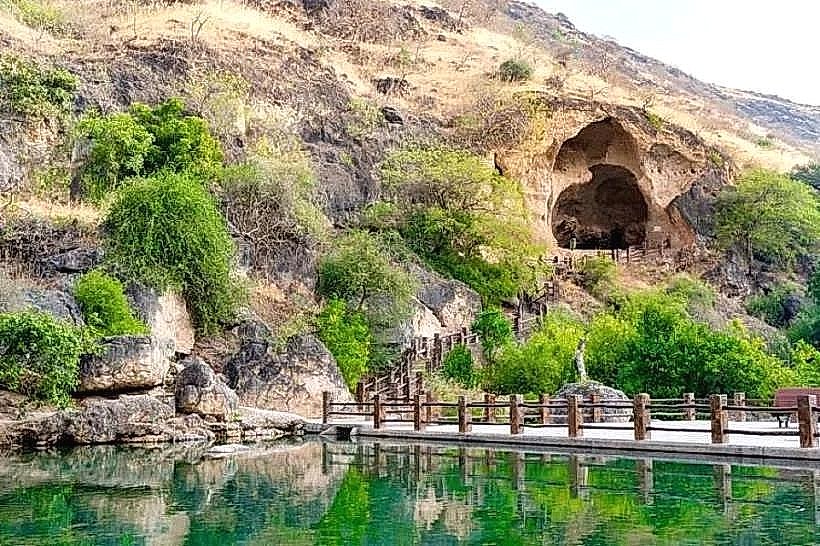
The area is a premier location for birdwatching, particularly for species attracted to the permanent water and dense foliage. Visitors can hike short, unpaved trails leading toward the source of the spring or explore the shallow caves in the adjacent cliffs. The site is frequently used for shaded picnicking away from the more crowded tourist springs like Ayn Razat.
Infrastructure & Amenities
Infrastructure at Ayn Hamran is minimal, focusing on nature preservation. There are no permanent restrooms or commercial buildings at the spring site. Shaded seating is provided naturally by the tree canopy rather than man-made structures. 4G cellular signal is generally available but can be weak near the cliff faces. The nearest services and fuel stations are located 10km away on the main highway toward Salalah.
Best Time to Visit
The site is most vibrant during the Khareef (July to September) and the subsequent "Sarb" (spring) season in October when the vegetation is at its peak. Early morning is the optimal time for birdwatching and avoiding the midday humidity. Unlike the seasonal waterfalls, Ayn Hamran provides a consistent green landscape year-round.
Facts & Legends
Ayn Hamran is known among locals for the "Hamran Cave" located in the cliffs above the spring, which local tradition suggests was used as a shelter during ancient tribal conflicts. A verified botanical fact is that the site contains some of the oldest and largest examples of the Ficus vasta (Sycamore Fig) in the Dhofar region, some with trunk diameters exceeding two meters.
Nearby Landmarks
Hamran Cave: 0.5km North
Ayn Razat: 8km West
Wadi Darbat: 18km East
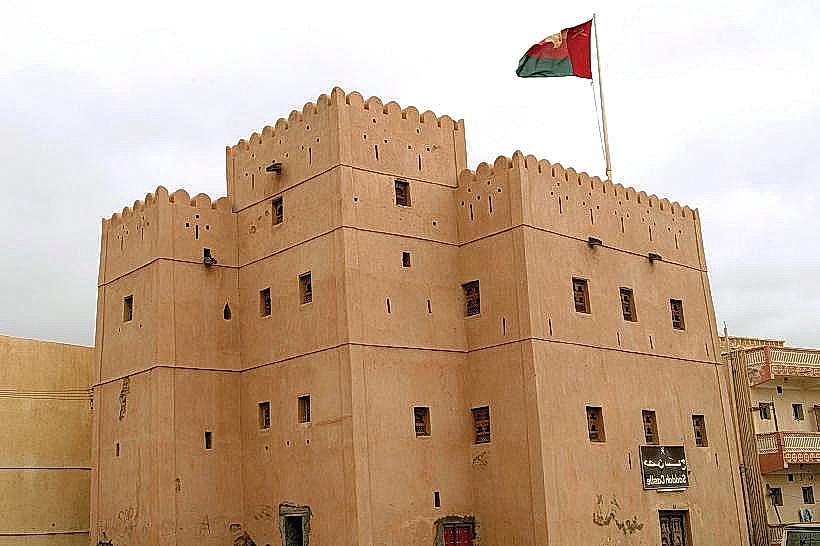
Taqah Castle: 14km Southeast
Salalah Anti-Gravity Point: 12km Northeast
Provide a new Landmark Name and City to continue.