Landmark: Cathedral of Our Lady of the Immaculate Conception
City: Huye
Country: Rwanda
Continent: Africa
Cathedral of Our Lady of the Immaculate Conception, Huye, Rwanda, Africa
The Cathedral of Our Lady of the Immaculate Conception is the principal Roman Catholic sanctuary and the seat of the Archdiocese of Kabgayi, located in the Muhanga District of southern Rwanda. It serves as the historic center of Catholicism in the country and is one of the oldest cathedral structures in the region.
Visual Characteristics
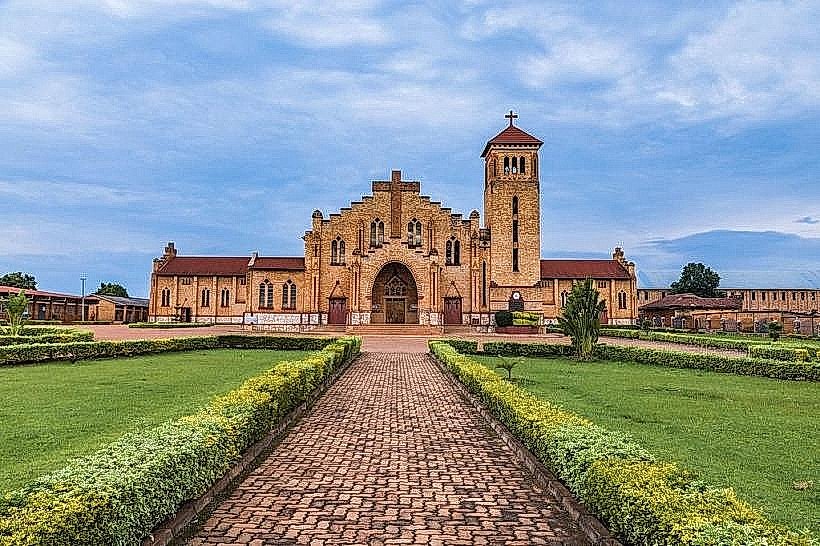
The building is a massive red-brick basilica constructed in a Romanesque-Revival style, featuring a symmetrical facade and a prominent central bell tower. The interior is characterized by high vaulted ceilings, thick masonry columns, and a series of stained-glass windows depicting biblical scenes. The surrounding grounds include paved courtyards, mature palm trees, and secondary brick administrative buildings.
Location & Access Logistics
The cathedral is situated in the Kabgayi sector, approximately 2km south of the Muhanga town center and 50km west of Kigali via the RN1 highway. Access is provided by a paved turn-off from the main road leading directly to the church plaza. Ample unpaved parking is available for private vehicles and buses. Local motorcycle taxis (motos) operate frequently between the Muhanga bus terminal and the cathedral gates.
Historical & Ecological Origin
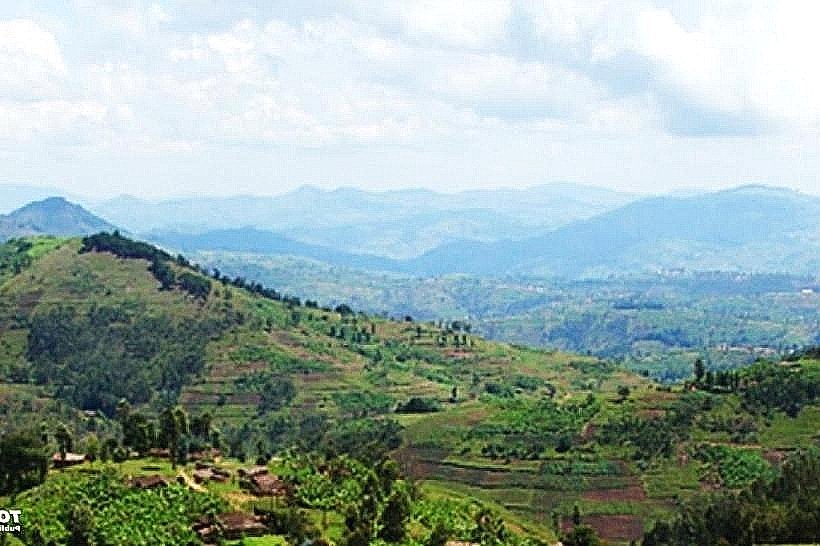
Constructed between 1923 and 1925 under the direction of the Missionaries of Africa (White Fathers), the cathedral was built using locally fired clay bricks. The site is located on a high-altitude plateau within the central highlands of Rwanda, characterized by ancient metamorphic rock and fertile latosol. Historically, Kabgayi was the first Catholic mission established in Rwanda (1900), serving as the foundational site for the nation’s colonial-era educational and medical infrastructure.
Key Highlights & Activities
Religious services and mass are conducted daily, with high-capacity liturgical celebrations occurring on Sundays at 07:00 and 10:00. Visitors can explore the historical cemetery located behind the cathedral, which contains the graves of early missionaries and bishops. The interior allows for silent reflection and observation of the colonial-era brickwork and ecclesiastical art.
Infrastructure & Amenities
The cathedral complex includes public restrooms, a small religious bookshop, and shaded benches within the garden perimeter. 4G and 5G cellular signals are stable across the grounds. Adjacent to the cathedral are the Kabgayi District Hospital and several secondary schools, providing access to basic emergency services and small local food vendors within 300 meters.
Best Time to Visit
The facility is open for visitors from 06:00 to 18:00 daily. For architectural photography, the mid-morning sun (08:30–10:30) illuminates the red-brick facade without the deep shadows cast by the bell tower in the afternoon. Visiting during weekdays ensures a quieter environment, as weekends are heavily occupied by congregants.
Facts & Legends
The cathedral was consecrated in 1925 and remains a symbol of the "Kabgayi Miracle," referring to the rapid expansion of the mission into a city-sized complex of schools and hospitals. A specific tip for visitors: the brickwork was completed entirely by local labor trained by missionaries, and the bricks were transported by hand from kilns located in the valley below the hill.
Nearby Landmarks
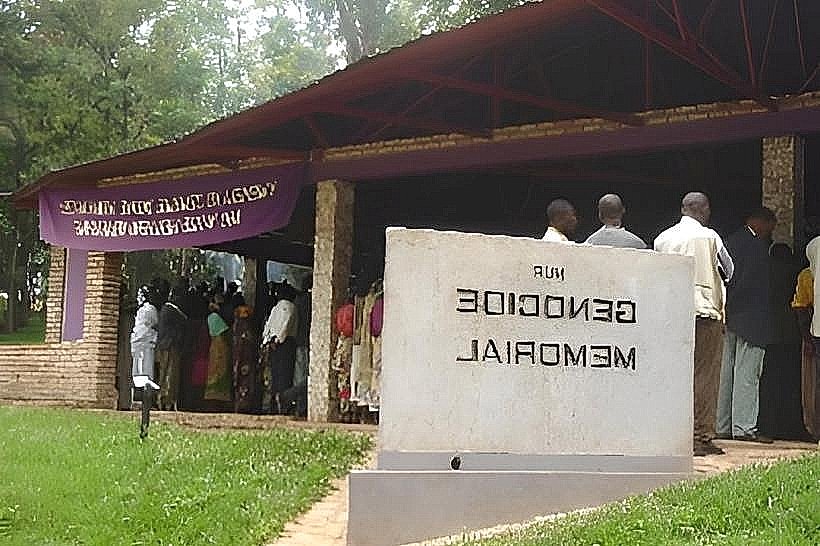
Kabgayi Genocide Memorial – 0.4km South
Museum of Kabgayi – 0.2km West
Muhanga Town Center – 2.2km North
St. Joseph's Integrated Technical College – 0.6km East
Kabgayi District Hospital – 0.3km Southwest