Landmark: Cathedral of Our Lady of the Seven Sorrows
City: Huye
Country: Rwanda
Continent: Africa
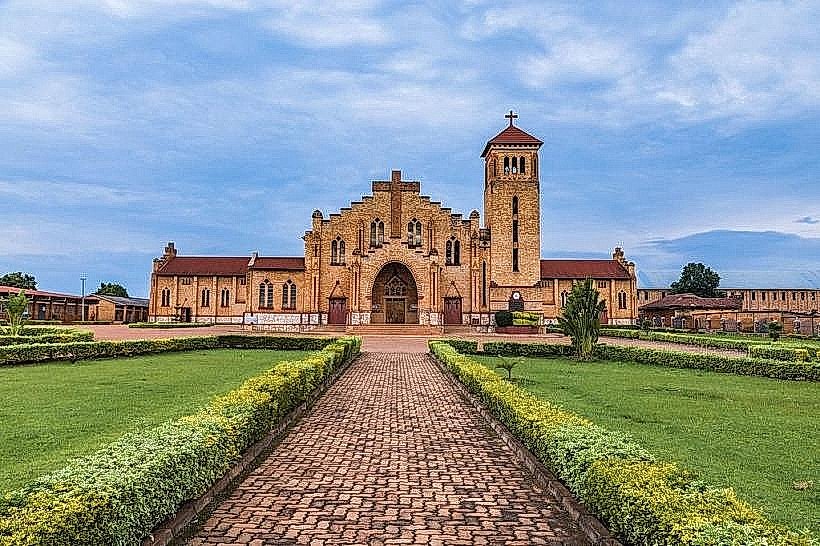
Cathedral of Our Lady of the Seven Sorrows, Huye, Rwanda, Africa
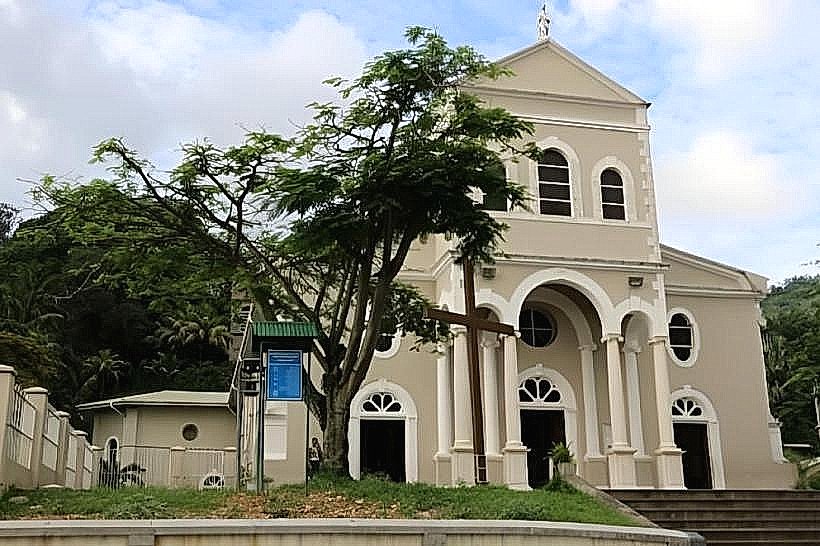
The Cathedral of Our Lady of the Seven Sorrows, commonly known as the Butare Cathedral, is the largest Roman Catholic sanctuary in the Huye District and the seat of the Diocese of Butare. It serves as a primary architectural and religious landmark within the southern urban center of Huye (formerly Butare).
Visual Characteristics
The building is a massive red-brick basilica constructed in a simplified Romanesque style with neo-Gothic elements. It features a high central nave, wide transepts, and a prominent square bell tower positioned at the facade. The interior is characterized by expansive brick arches, stained-glass windows, and a marble altar, set within a landscaped perimeter of palm trees and paved walkways.
Location & Access Logistics
The cathedral is located at the intersection of Avenue de l'Université and the RN1 highway in central Huye. It is positioned approximately 0.5km south of the main Huye Market and 1.2km north of the University of Rwanda Huye Campus. Visitors can access the site via motorcycle taxi (moto) from the Huye bus terminal or by walking from the central business district. Ample unpaved parking is available within the cathedral's walled compound.
Historical & Ecological Origin
Constructed in the late 1930s and consecrated in 1939, the cathedral was built to commemorate the life and service of Queen Mother Astrid of Belgium. The structure is composed primarily of locally fired clay bricks, a hallmark of colonial-era ecclesiastical architecture in the Southern Province. It sits on the high-altitude central plateau, characterized by ancient metamorphic rock and red volcanic soils.
Key Highlights & Activities
Liturgical services are held daily, with high-capacity masses occurring on Sundays at 07:00, 09:00, and 11:00. The cathedral's interior is open for quiet reflection and observation of the colonial-era masonry and religious iconography. The exterior grounds serve as a central gathering point for the local Catholic community during major feast days and national holidays.
Infrastructure & Amenities
The cathedral complex includes an administrative office, a small parish hall, and public restrooms for congregants. Shade is provided by the internal vaulted ceilings and the external porticos. 4G and 5G cellular signals are stable across the grounds. There are no food vendors inside the gates, but numerous cafes and "milk bars" are located within 200 meters of the main entrance.
Best Time to Visit
The facility is open to the public from 06:00 to 18:00. For architectural photography, the mid-morning hours (08:30–10:30) provide the most direct illumination of the red-brick facade. Sunday mornings offer the most active cultural experience, though non-worshiping visitors are advised to remain respectful of ongoing services.
Facts & Legends
The cathedral is noted for its exceptional acoustics, frequently utilized for regional choir competitions. A specific tip for visitors: the interior walls feature a series of "Stations of the Cross" that are considered some of the finest examples of early 20th-century religious art in Rwanda.
Nearby Landmarks
Inzozi Nziza – 0.4km East
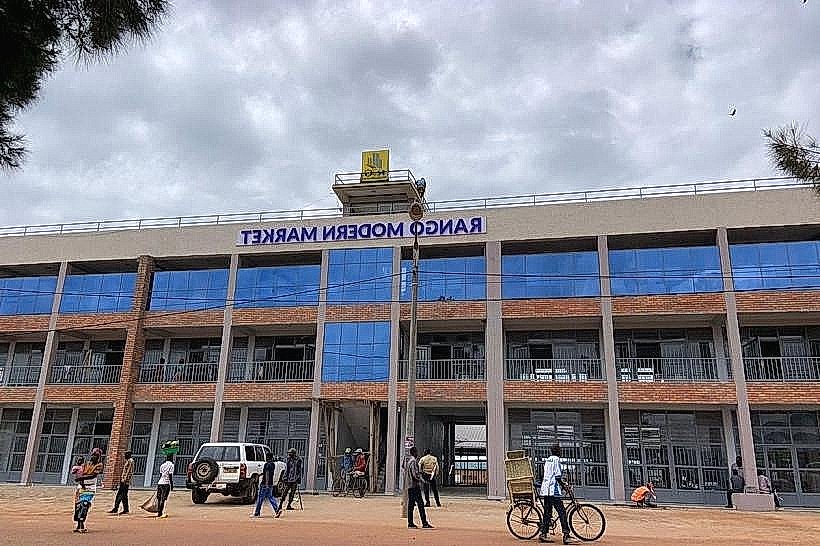
Huye Market – 0.7km East
University of Rwanda (Huye Campus) – 1.2km South
Ethnographic Museum of Rwanda – 1.8km Northeast
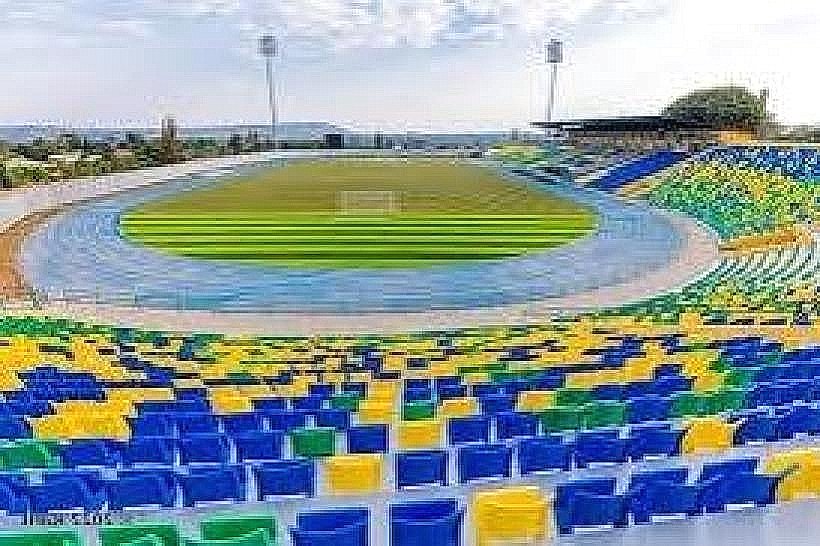
Huye Stadium – 0.9km North