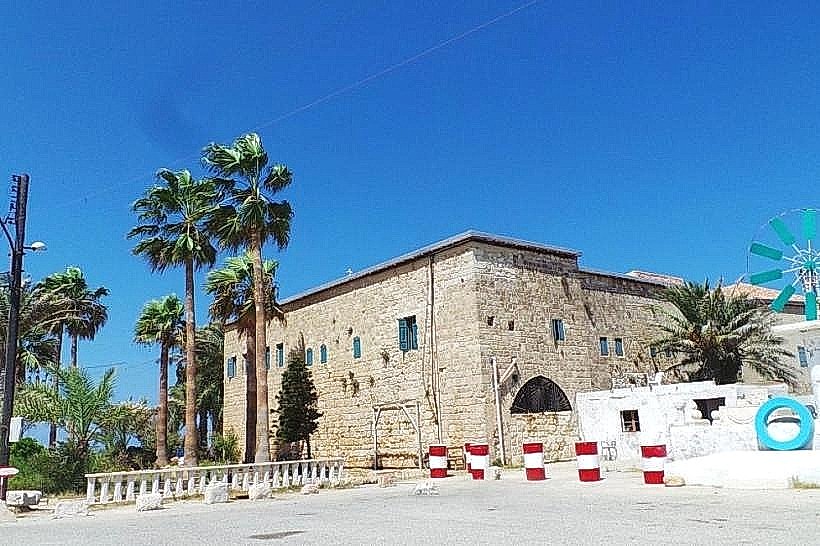
Landmark: Deir el-Natour Monastery
City: Anfeh
Country: Lebanon
Continent: Asia
Deir el-Natour Monastery, Anfeh, Lebanon, Asia
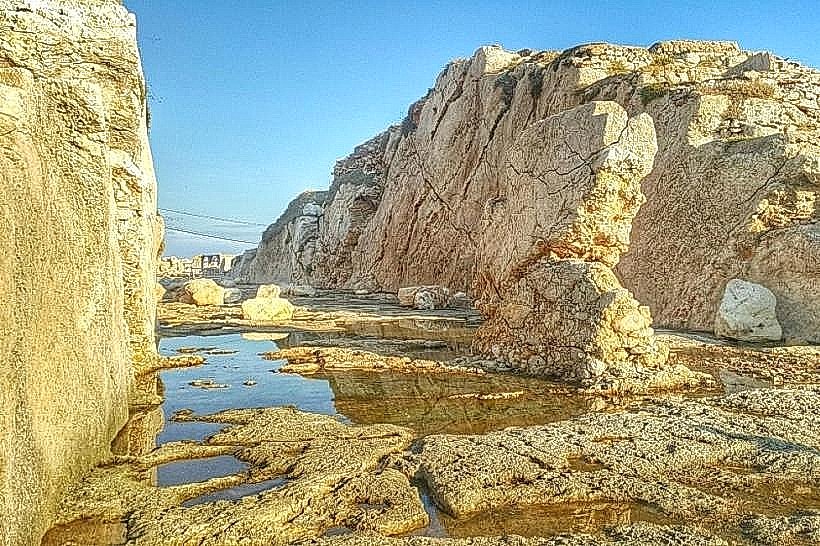
The Deir el-Natour Monastery, dedicated to Saint John the Baptist, is a historic Greek Orthodox monastic complex situated on the Cape of Natour within the El Koura District of the North Governorate, Lebanon. The complex occupies an isolated maritime position on a rocky limestone promontory directly fronting the Mediterranean Sea.
Visual Characteristics
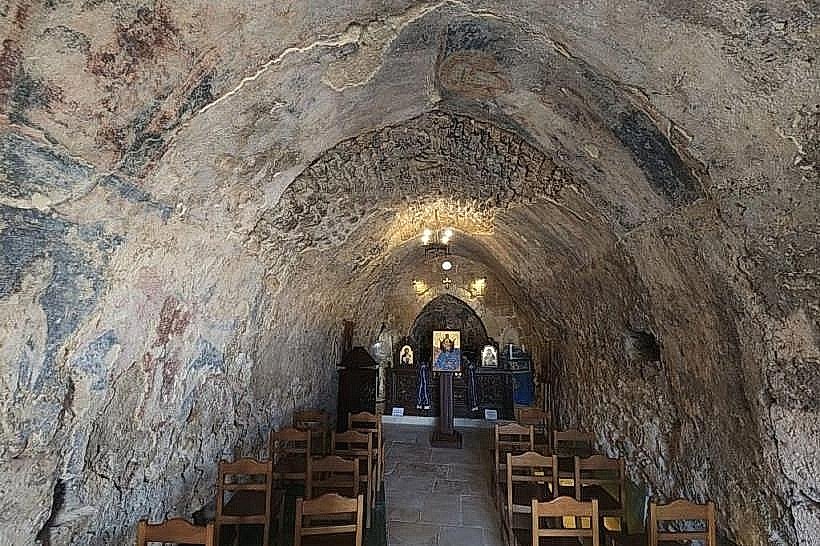
The Deir el-Natour Monastery features a defensive, fort-like architectural design constructed primarily from locally quarried sandstone and marine limestone blocks. The external facade displays thick, windowless lower walls, pointed structural arches, and a prominent stone bell tower holding a single bronze bell. The interior is organized around an open central courtyard lined with vaulted monastic cells, old olive presses, and stone arcades covered in bougainvillea. The integrated chapel contains a vaulted ceiling and a preserved wooden iconostasis, with interior walls exhibiting traditional Orthodox iconography.
Location & Access Logistics
The monastery is located 70 kilometers north of Beirut and 11 kilometers south of Tripoli. Access from the main North Coastal Highway is achieved by exiting west toward the coastal plains between the towns of Anfeh and Enfeh. The final approach involves a 2-kilometer unpaved, gravel road cutting through adjacent salt marshes and coastal fields. A designated unpaved parking area is situated directly outside the monastery's northern entrance gate. Public transport does not serve the immediate site, requiring visitors to secure private vehicles or walk the 2 kilometers from the highway transit drop-off point.
Historical & Ecological Origin
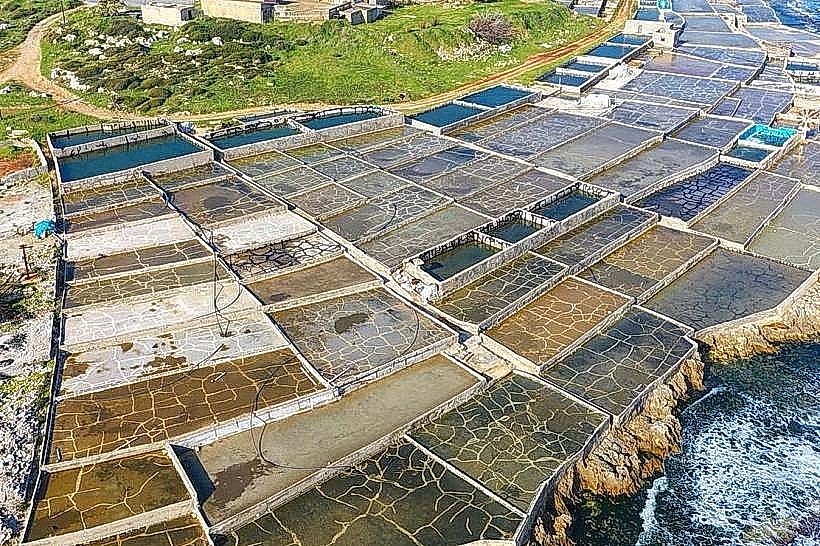
The foundation of Deir el-Natour Monastery dates back to the Crusader period in the 12th or 13th century, built upon earlier Byzantine structural foundations. It was historically managed by the Cistercian order before transitioning to the Greek Orthodox Church during the Mamluk era. Geologically, the monastery sits on a quaternary limestone platform exposed to high salinity and marine winds. The surrounding territory is ecologically classified as a semi-arid coastal scrubland that transitions directly into hypersaline coastal salt pans.
Key Highlights & Activities
Inspecting the architectural integration of the Crusader-era masonry and vaulted ceilings within the main chapel.
Viewing the historic Byzantine and post-Byzantine icons preserved inside the sanctuary.
Touring the old internal courtyard, historical cellars, and the mechanical components of the traditional stone olive press.
Walking the coastal perimeter trails along the rocky Cape of Natour to observe the marine topography and salt fields.
Infrastructure & Amenities
The Deir el-Natour Monastery is an active religious site maintained by a resident monastic community. Visitor infrastructure includes designated paths, clear informational plaques, and a small administrative reception room. Public restroom facilities are available within the internal courtyard area. Due to its flat, open coastal position, cell phone signal is strong, providing stable 4G and 5G network coverage across the property. No commercial food stalls or vendors operate within the monastic grounds, but full amenities are available in the town of Anfeh 3.5 kilometers to the south.
Best Time to Visit
The optimal months for visiting are from April to November when the unpaved coastal access roads are completely dry. Photography is most effective during the late afternoon hours, between 16:30 and 18:30, when the setting sun illuminates the western sandstone facades and colors the surrounding maritime landscape.
Facts & Legends
The name El-Natour translates from Arabic to "The Guardian" or "The Watchman." Local maritime lore attributes this title to a historic legend regarding a wealthy local merchant who, after surviving a catastrophic shipwreck off the cape, abandoned his material possessions to live as a hermit on the rocks, dedicating his remaining life to maintaining a beacon fire to guide other sailors safely to the shore.
Nearby Landmarks
Anfeh Salt Marshes: 3.5km South
Anfeh Peninsula and Crusader Trench: 3.1km South
Taht el-Rih Beach: 3.4km South
Our Lady of the Wind Church: 3.5km South