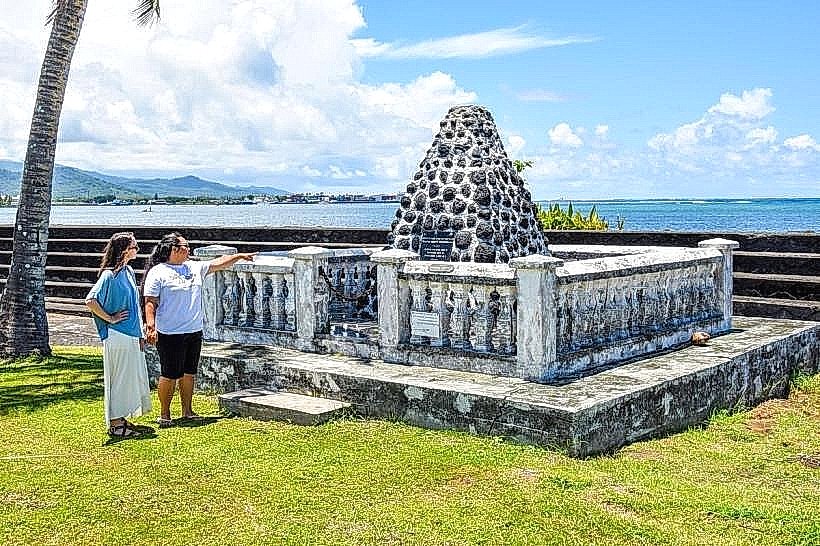
Landmark: German Monument
City: Apia
Country: Samoa
Continent: Australia
German Monument, Apia, Samoa, Australia
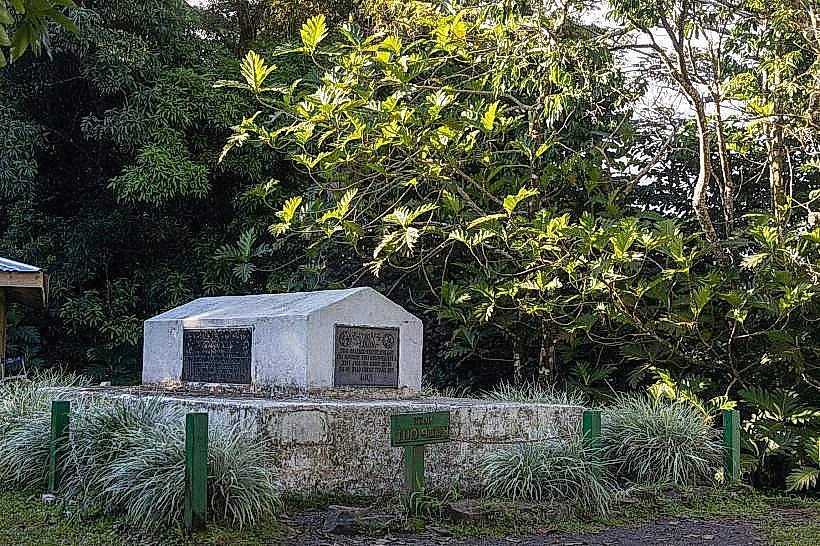
The German Monument is a commemorative stone and plaque located on the Mulinu’u Peninsula in Apia, Samoa. It marks the site where the German Imperial flag was first raised in 1900, signaling the commencement of German colonial administration over Western Samoa.
Visual Characteristics
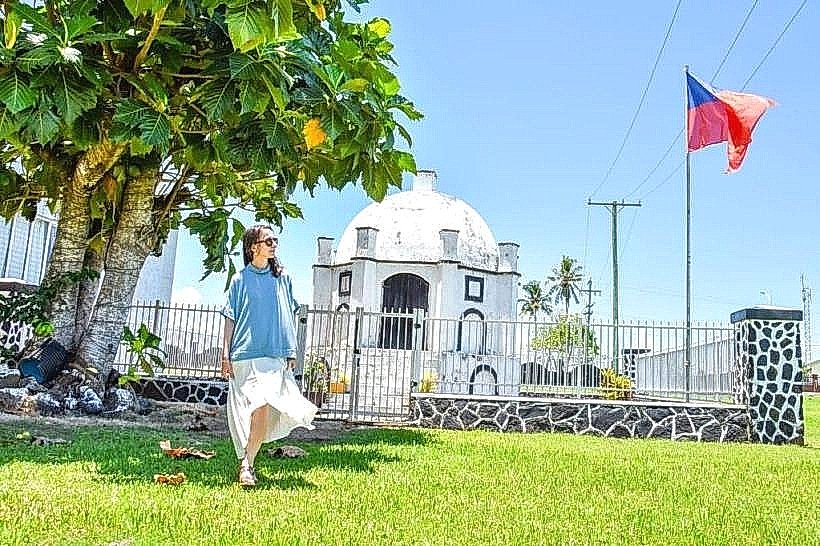
The monument is a modest, upright rectangular stone pillar set on a tiered concrete base. It features a weathered grey stone texture with an embedded bronze commemorative plaque. The surrounding area is flat, consisting of maintained grass and a low-lying stone perimeter that defines the memorial space.
Location & Access Logistics
The site is situated on Mulinu’u Road, roughly 2.5km northwest of Apia’s city center. It is positioned on the seaward side of the road, accessible via a short pedestrian path from the main thoroughfare. Limited roadside parking is available, and the "Mulinu’u" bus route from the central terminal provides direct public transport access.
Historical & Ecological Origin
The monument was erected to memorialize March 1, 1900, when Wilhelm Solf was appointed Governor. It serves as a physical record of the Tripartite Convention, which resulted in the division of the Samoan islands between Germany and the United States. The structure was intended to solidify the German Empire's presence in the Pacific.
Key Highlights & Activities
Visitors can conduct self-guided historical walks along the peninsula’s commemorative trail. The site allows for the study of colonial-era inscriptions and the viewing of the coastal landscape where the German fleet anchored. It serves as a frequent stop for educational tours focusing on Samoa’s transition from colonial rule to independence.
Infrastructure & Amenities
There are no onsite restrooms or dedicated visitor centers at this specific monument. Shade is minimal, provided only by nearby coconut palms. 5G cellular coverage is consistent throughout the area. Public facilities and convenience stores are located approximately 800m south toward the central Apia harbor area.
Best Time to Visit
The monument is accessible 24 hours a day as an open-air site. The most effective lighting for reading the plaque and taking photographs occurs during the late afternoon (Golden Hour) when the sun hits the westward-facing stone. The period from June to August provides the lowest humidity for walking the peninsula.
Facts & Legends
A historical oddity is that the monument remained largely undisturbed during the transition to New Zealand rule in 1914 and subsequent independence. It stands as a rare surviving physical vestige of the short-lived German protectorate, which lasted only fourteen years but significantly influenced Samoa's legal and land registration systems.
Nearby Landmarks
Mulinu’u Courthouse - 0.5km Southeast
Samoa Observatory - 0.1km North
Maota Fono (Parliament House) - 1.1km Southeast
Independence Monument - 0.6km South
Faleata Golf Course - 4.2km Southwest