Landmark: Kano Emir’s Palace
City: Kano
Country: Nigeria
Continent: Africa
Kano Emir’s Palace, Kano, Nigeria, Africa
The Kano Emir’s Palace is a historical administrative and residential complex located in the ancient city of Kano, Nigeria.
It serves as the seat of the Emir of Kano and is a significant cultural landmark within the city.
Visual Characteristics
The palace is constructed primarily from mud brick, a traditional building material in the region. Its walls are thick and exhibit a reddish-brown hue characteristic of the local soil. The architecture incorporates elements of traditional Hausa and Islamic styles, featuring courtyards, arched doorways, and decorative motifs. The complex consists of multiple buildings and enclosures, with varying heights, none exceeding three stories. The main entrance is marked by a substantial gateway.
Location & Access Logistics
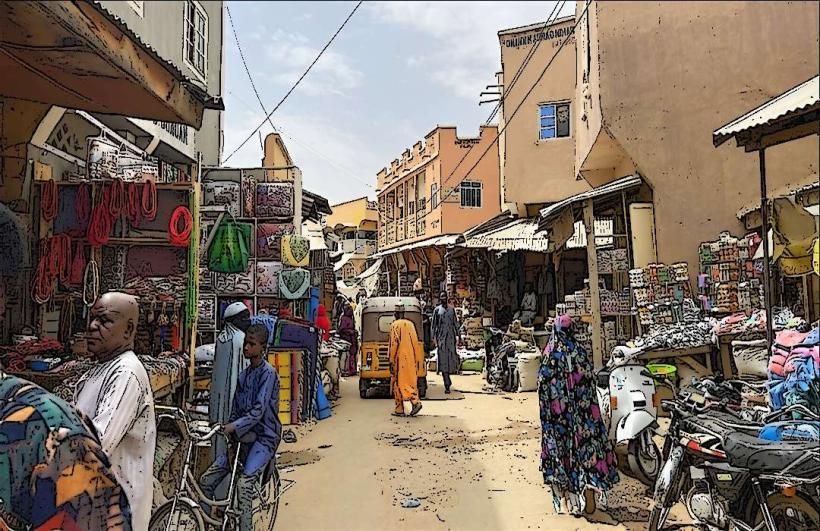
The Kano Emir’s Palace is situated in the heart of the old city of Kano, approximately 1 kilometer (0.6 miles) south of the central market (Kurmi Market). Access is via major city roads, including Emir Palace Road. Limited on-street parking is available in the vicinity, often managed by local attendants. Public transport, such as taxis and commercial motorcycles (achaba), frequently traverse the area. The nearest major bus terminal is located several kilometers outside the old city.
Historical & Ecological Origin
The origins of the palace can be traced back to the 15th century, with significant expansions and renovations occurring over subsequent centuries. It was originally built as the seat of power for the rulers of the Kano Emirate. The construction utilizes locally sourced mud and straw, reflecting traditional building techniques adapted to the semi-arid climate of the Kano region.
Key Highlights & Activities
Visitors can observe the exterior architecture of the palace. Entry into the inner courtyards and residential areas is restricted to authorized personnel and during specific, pre-arranged events. Photography of the exterior is permitted. The palace grounds are a focal point for cultural ceremonies and traditional events, which may be observable from designated public areas during specific times.
Infrastructure & Amenities
Restrooms are not publicly available within the immediate vicinity of the palace exterior. Shade is provided by the building structures themselves. Cell phone signal (4G/5G) is generally available in the area. Food vendors are typically found in the surrounding streets and markets, but not directly within the palace complex.
Best Time to Visit
The best time for exterior viewing and photography is during the late afternoon, approximately 3:00 PM to 5:00 PM, when the sunlight casts longer shadows and highlights the texture of the mud brick. The dry season, from November to March, offers more comfortable temperatures for exploration. There are no tide-dependent activities associated with the palace.
Facts & Legends
A notable historical detail is that the palace has continuously served as the residence and administrative center for the Emirs of Kano for over 500 years, making it one of the longest-standing seats of power in Nigeria. Local lore suggests that the original mud bricks used in its construction were mixed with the blood of defeated enemies, though this is unsubstantiated.
Nearby Landmarks
- Kurmi Market (0.3km North)
- Gidan Makama Museum (0.4km North-West)
- Kofar Mata Gate (0.6km East)
- Emir's Palace Mosque (0.1km North-West)