Landmark: Kurmi Market
City: Kano
Country: Nigeria
Continent: Africa
Kurmi Market, Kano, Nigeria, Africa
Kurmi Market is a historic trading center located in the ancient city of Kano, Nigeria.
It is one of the largest and oldest markets in West Africa, serving as a hub for commerce and cultural exchange for centuries.
Visual Characteristics
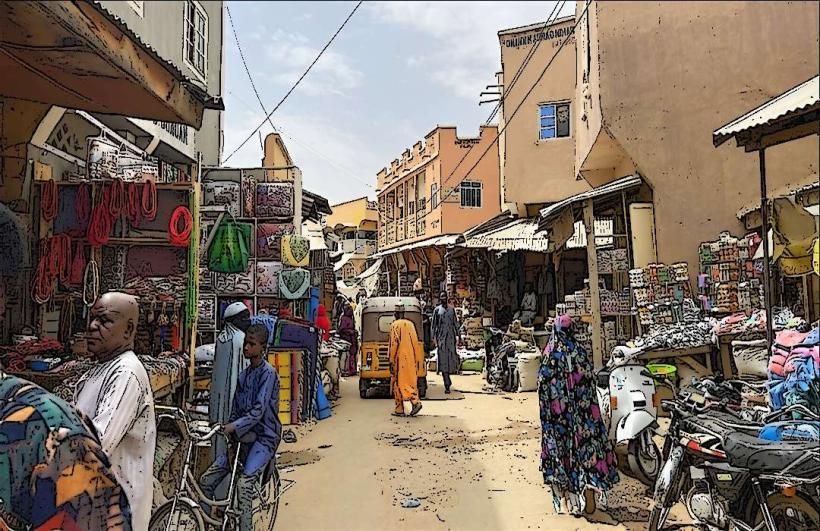
The market is an open-air complex characterized by narrow, winding alleyways lined with stalls constructed from mud brick and corrugated metal sheeting. Goods are displayed on the ground, on low tables, or hung from overhead structures. The predominant colors are earthy tones of brown and red from the mud structures, contrasted with the varied colors of textiles, spices, and crafts sold within.
Location & Access Logistics
Kurmi Market is situated in the heart of Kano's old city, approximately 1 kilometer south of the Emir's Palace. Access is primarily via the main roads leading into the city center, such as Yakubu Avenue and Murtala Mohammed Way. Parking is extremely limited and often unofficial, with vehicles typically parked along the periphery of the market area. Public transport options include various commercial buses and taxis that frequent the city center. Specific bus routes are numerous and depend on the origin point within Kano.
Historical & Ecological Origin
The market's origins date back to the 15th century, established during the reign of Emir Muhammadu Rumfa. It was conceived as a central point for the trans-Saharan trade routes, facilitating the exchange of goods like salt, textiles, slaves, and horses. The market's layout and function have evolved organically over centuries, adapting to changing trade patterns and urban development.
Key Highlights & Activities
Visitors can observe and purchase a wide array of goods including traditional textiles (like Aso Oke and Adire), leather products, pottery, metalwork, spices, and local foodstuffs. Haggling is a standard practice. Guided tours focusing on the market's history and specific crafts are available through local guides.
Infrastructure & Amenities
Basic sanitation facilities are available but are often rudimentary. Shade is provided by the overhead coverings of stalls and awnings. Cell phone signal (4G/5G) is generally available within the market area. Food vendors selling local snacks and beverages are present throughout the market.
Best Time to Visit
The market is most active from morning until late afternoon. For photography, early morning light offers softer illumination. The best months for visiting are generally during the dry season, from November to March, to avoid heavy rainfall.
Facts & Legends
A notable historical oddity is the market's role in the historical slave trade, where it was a significant point of sale for enslaved people transported from across the Sahel. Local lore suggests that the market's prosperity is tied to the blessings of ancient spirits residing within its foundations.
Nearby Landmarks
- Emir's Palace (0.5km North)
- Kano City Walls (1km North)
- Gidan Makama Museum (0.7km Northwest)
- Fagge Central Mosque (1.2km East)