Landmark: Kofar Nassarawa Gate
City: Kano
Country: Nigeria
Continent: Africa
Kofar Nassarawa Gate, Kano, Nigeria, Africa
Kofar Nassarawa Gate is a historic city gate located in Kano, Nigeria. It is one of the ancient entrances to the walled city of Kano.
Visual Characteristics
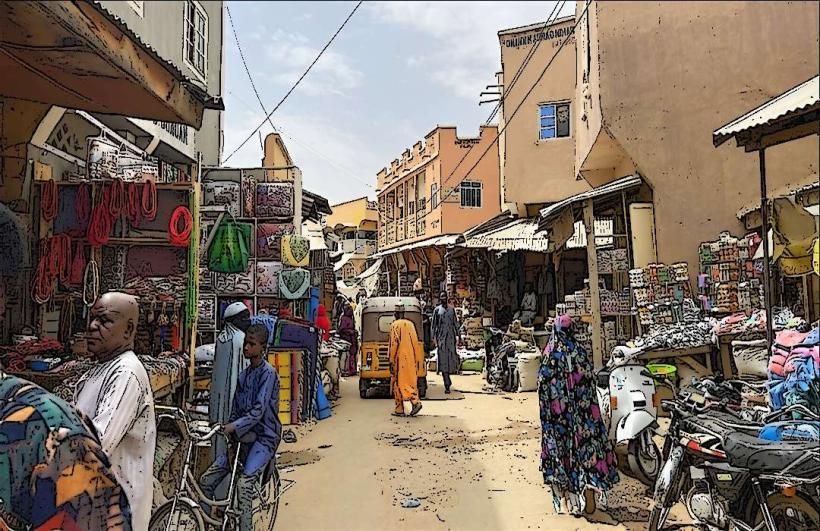
The gate is constructed from red earth and mud, typical of traditional Kano architecture. It features a rectangular opening with a reinforced archway. The structure stands at approximately 10 meters in height and exhibits a weathered, earthen texture. Its design reflects the defensive architectural styles prevalent in the region during its construction period.
Location & Access Logistics
Kofar Nassarawa Gate is situated on the eastern side of the Kano City Walls. It is approximately 2 kilometers east of the Kano city center. Access is via major city roads, including Yakubu Gowon Way. Parking is available on adjacent streets, though it can be limited during peak hours. Public transport, such as taxis and commercial motorcycles (achaba), frequently pass by the gate.
Historical & Ecological Origin
The gate was constructed in the 15th century as part of the extensive defensive walls built around Kano. The original purpose was to control entry and exit into the city, serving as a military and trade checkpoint. The construction utilizes locally sourced mud and earth, a traditional building material in the Sahel region.
Key Highlights & Activities
Visitors can observe the architectural details of the gate and its historical significance. Photography of the structure is permitted. Walking around the immediate vicinity provides context to its placement within the old city walls.
Infrastructure & Amenities
Restrooms are not directly available at the gate itself but can be found in nearby commercial areas. Shade is minimal, primarily provided by adjacent structures. Cell phone signal (4G/5G) is generally strong in this urban area. Food vendors are present along the main roads leading to and from the gate.
Best Time to Visit
The best time for photography is during the early morning or late afternoon when the sun's angle creates distinct shadows on the earthen walls. The dry season, from November to March, offers more comfortable temperatures for exploration. There are no tide-related considerations.
Facts & Legends
Local tradition suggests that the gate was named "Nassarawa" meaning "victory" or "prosperity," reflecting the hopes of the city's rulers at the time of its construction. It is one of the few remaining gates that still largely retains its original form.
Nearby Landmarks
- Kano Central Mosque (1.5km West)
- Gidan Makama Museum (1.8km West)
- Emir's Palace (2.0km West)
- Kofar Mata Dye Pit (1.2km Southwest)