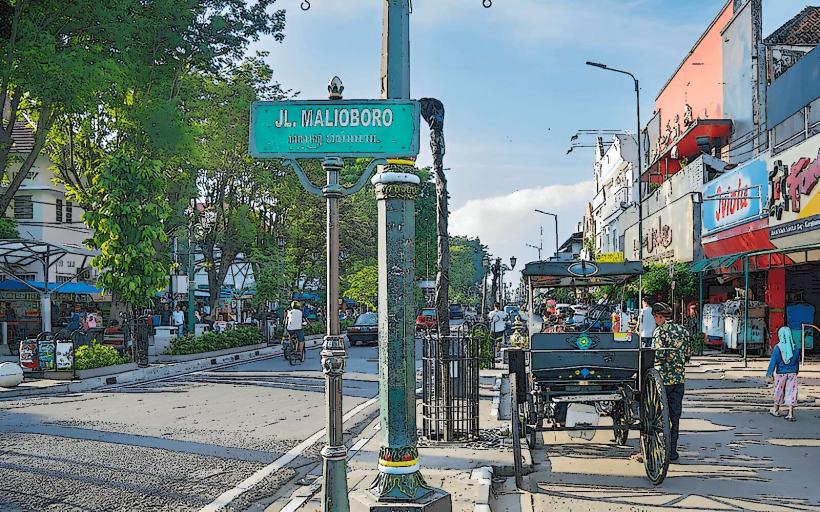
Landmark: Malioboro Street
City: Yogyakarta
Country: Indonesia
Continent: Asia
Malioboro Street, Yogyakarta, Indonesia, Asia
Malioboro Street is a primary commercial thoroughfare located in the city center of Yogyakarta, Indonesia. It functions as a significant retail and entertainment district.
Visual Characteristics
The street is characterized by a linear arrangement of two-story buildings, primarily constructed from brick and concrete. Facades display a mix of colonial-era Dutch architecture and more modern Indonesian commercial designs. Building colors range from off-white and beige to muted earth tones, with some featuring brighter signage. The street itself is paved with asphalt and measures approximately 1.2 kilometers in length. Overhead, electrical and telecommunication wires are visible. Pedestrian sidewalks line both sides of the street.
Location & Access Logistics
Malioboro Street is situated in the heart of Yogyakarta, extending north from the intersection with Jalan Abu Bakar Ali and terminating at the Tugu Pal Putih roundabout. It is directly accessible from Jalan Ahmad Yani (east-west artery) and Jalan P. Mangkubumi (north-south artery). The nearest major transportation hub is Tugu Yogyakarta railway station, located approximately 500 meters north of the street's northern end. Public parking is available in designated lots along side streets and at the Malioboro Mall complex. TransJogja bus services operate frequent routes along Jalan Malioboro, with multiple stops designated along its length.
Historical & Ecological Origin
The street was established during the Dutch colonial period, likely in the late 18th or early 19th century, as a primary access route and commercial zone connecting the Kraton (Sultan's Palace) to the Tugu Pal Putih. Its original purpose was to facilitate trade and serve as a ceremonial avenue. The area is situated on relatively flat alluvial plains formed by volcanic activity from the surrounding mountains.
Key Highlights & Activities
Visitors can engage in shopping for batik textiles, handicrafts, and souvenirs from numerous street vendors and established shops. Food stalls offer local Indonesian cuisine, including Gudeg and Nasi Goreng. Horse-drawn carriages (andong) provide short tours of the street and surrounding areas. Street performers, including musicians and dancers, are frequently present. Photography of the streetscape and architectural details is common.
Infrastructure & Amenities
Public restrooms are available at designated points, particularly within the Malioboro Mall and at some larger shop complexes. Shade is provided by building overhangs and awnings. Cell phone signal (4G/5G) is generally strong throughout the street. Numerous food vendors and small restaurants are located directly on and adjacent to the street.
Best Time to Visit
For photography, the early morning (06:00-08:00) offers softer light and fewer crowds. The late afternoon (16:00-18:00) provides warm lighting as the sun sets. The street is busiest in the evenings and on weekends. Weather is generally consistent year-round, with the dry season (May-September) offering less rainfall.
Facts & Legends
A local belief suggests that walking the length of Malioboro Street from the Tugu Pal Putih to the Kraton (or vice versa) with a pure heart and clear intention can lead to the fulfillment of wishes. However, it is also said that if one walks this path with impure thoughts, they may become lost or disoriented.
Nearby Landmarks
- Tugu Pal Putih (0.1km North)
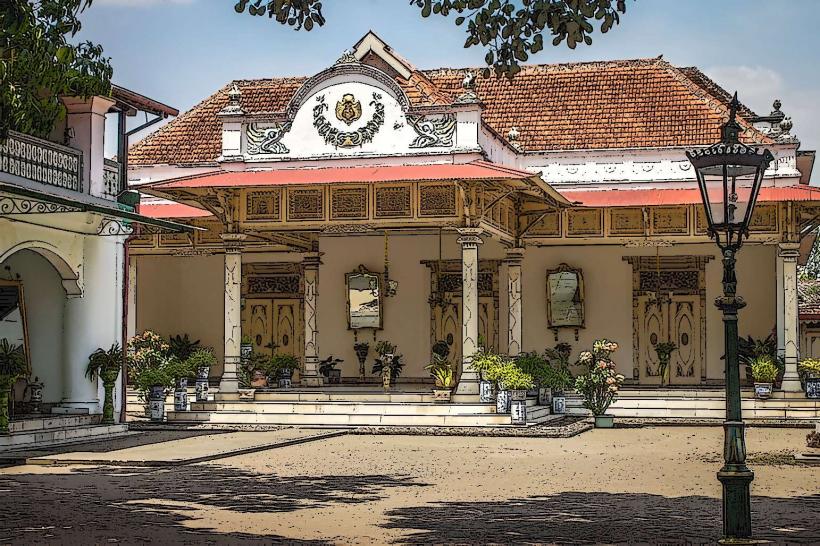
- Kraton Yogyakarta (1.0km South)
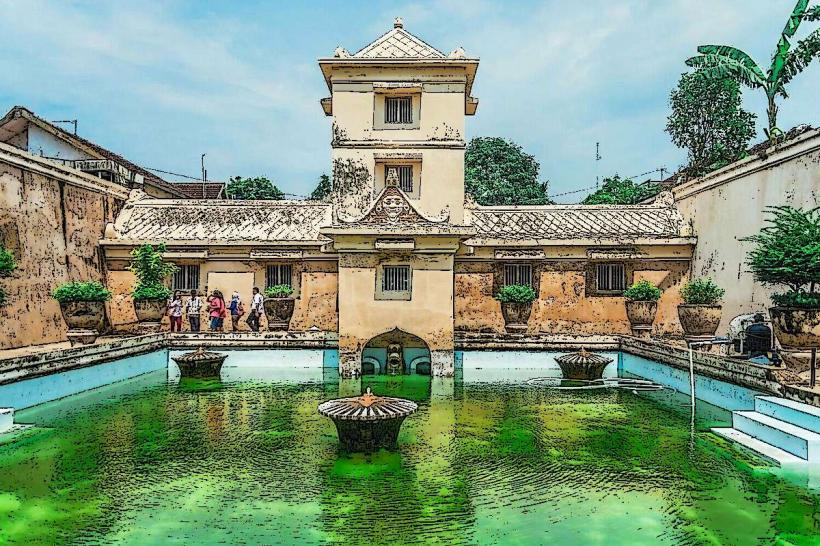
- Taman Sari Water Castle (1.2km Southwest)
- Pasar Beringharjo (0.4km Southeast)
- Fort Vredeburg Museum (0.7km South)