Landmark: Musee des Augustins
City: Toulouse
Country: France
Continent: Europe
Musee des Augustins, Toulouse, France, Europe
The Musée des Augustins is the fine arts museum of Toulouse, housed in a former Augustinian monastery. Founded in 1793, it is one of the oldest museums in France and contains over 4,000 works spanning from the Romanesque period to the early 20th century.
Visual Characteristics
The complex is a prime example of Southern Gothic architecture, built primarily in red "foraine" brick. The defining feature is the 14th-century cloister, characterized by elegant columns and lush gardens that provide a transition between the museum's various galleries. The interior ranges from austere monastic halls to the grand 19th-century "Darcy" staircase and high-ceilinged painting salons.
Location & Access Logistics
Address: 21 Rue de Metz, 31000 Toulouse.
Public Transit: Metro Line A (Esquirol) or Line B (François-Verdier). Numerous bus lines stop at the "Musée des Augustins" station.
Status (2026): Following a major €25 million renovation, the museum reopened on December 19, 2025. Access is currently progressive: the South and West wings are open, with the church and full cloister restoration expected to be completed by 2027.
Admission: Full rate €5; Reduced rate €3. Free for visitors under 18 and for all on the first Sunday of the month.
Hours: Mon, Thu, Fri: 12:00–18:00; Sat, Sun: 10:00–18:00. Closed on Tuesdays and Wednesdays.
Historical & Ecological Origin
The site originated as an Augustinian convent in the 14th century. During the French Revolution, the building was secularized, and the museum was established to house artworks confiscated from local churches and religious orders. Significant structural additions were made in the 19th century by architects Viollet-le-Duc and Denis Darcy to adapt the monastery for public exhibition use.
Key Highlights & Activities
Romanesque Sculpture Collection: One of the most important in the world, featuring capitals and sculptures salvaged from destroyed local monasteries like La Daurade and Saint-Sernin.
Nostre-Dame-de-Grasse: A 15th-century Gothic masterpiece of a polychrome stone Virgin and Child.
Painting Galleries: Includes works by Perugino, Rubens, Murillo, Delacroix, and the regional artist Henri de Toulouse-Lautrec.
The Cloister: A central hub for quiet reflection, featuring a garden of medicinal plants and sculptures.
Contemporary Dialogue: The current layout features installations by contemporary artists like Jorge Pardo to highlight the historical collections.
Infrastructure & Amenities
The 2025 renovation introduced a new reception pavilion (222 m²) to improve visitor flow.
Accessibility: The new entrance is fully accessible; elevators and ramps now connect the first-floor salons and Gothic rooms, eliminating barriers for mobility-impaired visitors.
Amenities: On-site shop, locker rooms (required for bags over 40cm), and children's activity kits ("Let's Go to the Museum").
Connectivity: High-speed 5G is available throughout the central districts.
Best Time to Visit
Weekends between 10:00 and 12:00 offer the quietest experience. The first Sunday of each month is popular due to free admission. One evening per month, the museum remains open until 21:00 for "Nocturnes."
Facts & Legends
The museum was created only four months after the Louvre, making it the second-largest and second-oldest fine arts museum in France at the time. A local "fact": many of the Romanesque capitals were saved from the trash by 19th-century archaeologist Alexandre Du Mège, who personally hauled them from demolition sites to the museum to prevent their destruction.
Nearby Landmarks
Cathédrale Saint-Étienne – 0.4km East
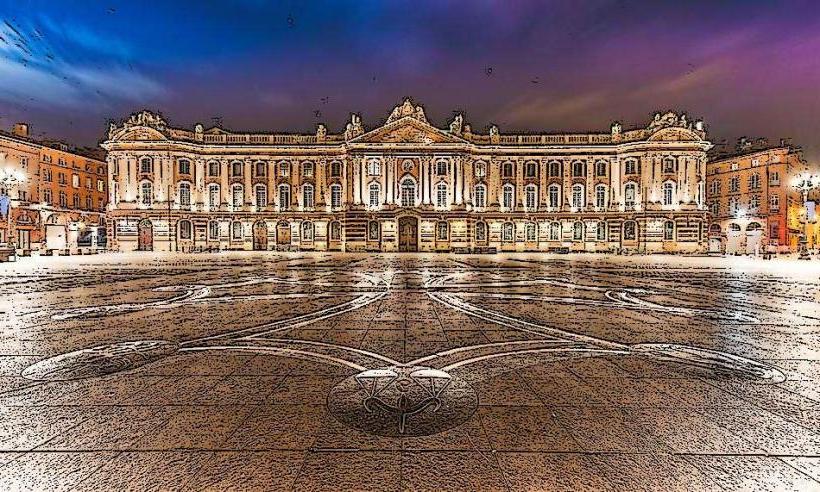
Place du Capitole – 0.5km Northwest
Fondation Bemberg (Hôtel d'Assézat) – 0.5km West
Musée Paul-Dupuy (Applied Arts) – 0.2km South
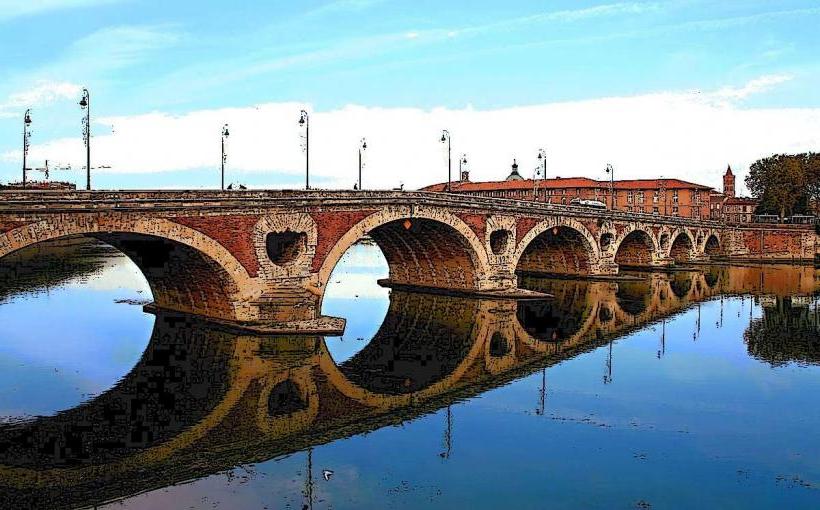
Pont Neuf – 0.6km West