Landmark: Panguna Mine
City: East New Britain
Country: Papua New Guinea
Continent: Australia
Panguna Mine, East New Britain, Papua New Guinea, Australia
The Panguna Mine is an open-pit copper and gold mine located on Bougainville Island, within the Autonomous Region of Bougainville, Papua New Guinea.
Visual Characteristics
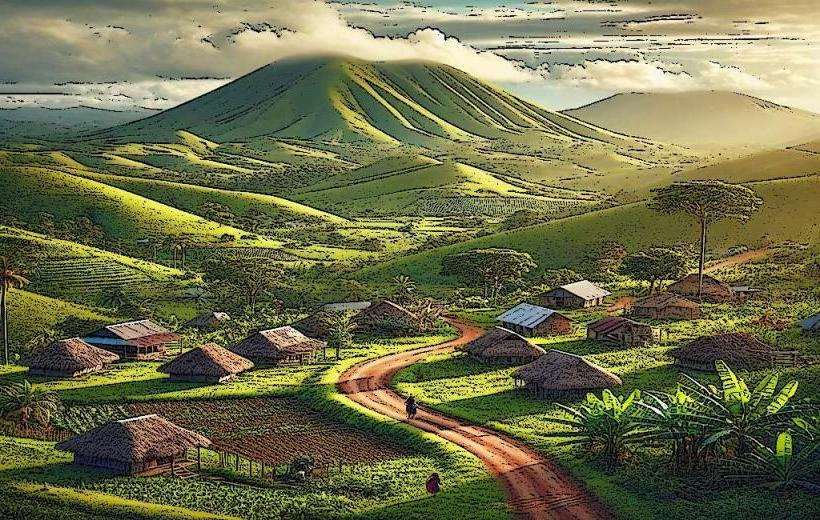
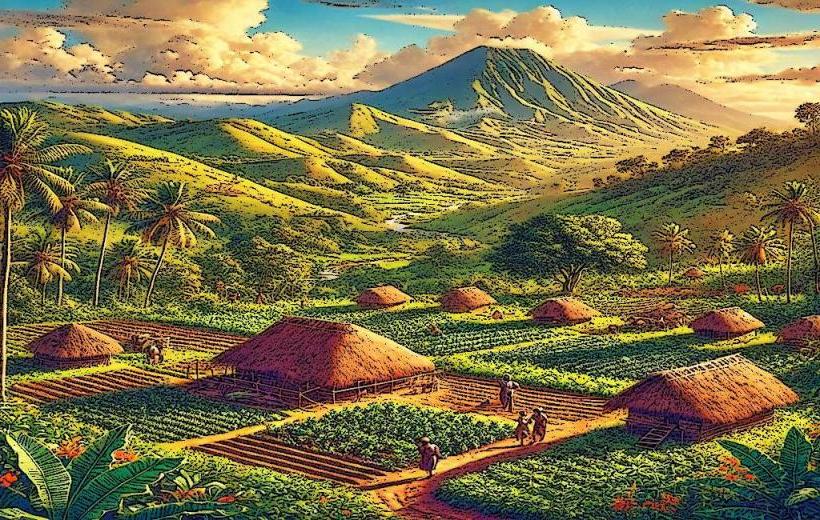
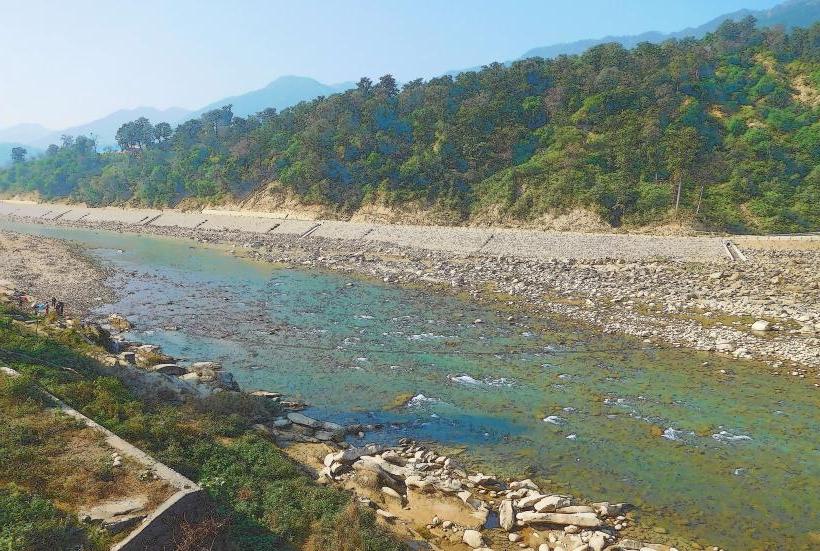
The mine site is characterized by a large, excavated pit, approximately 1.5 kilometers in diameter and 500 meters deep. The exposed rock faces display stratified layers of varying colors, primarily browns, grays, and reds, indicative of mineralized ore bodies and surrounding geological strata. The surrounding landscape is a mix of cleared mining areas and dense tropical rainforest. Tailings ponds, containing processed mine waste, are also a prominent feature, often appearing as large, muddy expanses.
Location & Access Logistics
Panguna Mine is situated inland on Bougainville Island. Access is primarily via unpaved roads originating from Arawa, the regional capital. The journey from Arawa to Panguna covers approximately 30 kilometers and can take 1-2 hours depending on road conditions. Historically, access was managed by the mine operator, but post-conflict, road conditions are often poor and require 4x4 vehicles. Public transport is not available to the mine site. There is no designated parking; vehicles park in cleared areas near the pit rim or former operational zones.
Historical & Ecological Origin
Construction of the Panguna Mine began in the late 1960s, with commercial production commencing in 1972. It was operated by Bougainville Copper Limited (BCL), a subsidiary of Rio Tinto. The mine's original purpose was the extraction of significant copper and gold deposits. Geologically, the site is associated with the Pliocene-Pleistocene volcanic arc of Bougainville, characterized by porphyry copper-gold mineralization.
Key Highlights & Activities
Observation of the scale of the open-pit excavation is the primary activity. Visitors can view the pit from designated vantage points. Exploration of the abandoned infrastructure, such as the processing plant and haul roads, is possible but requires caution due to structural instability and environmental hazards. The surrounding rainforest offers opportunities for observing local flora and fauna, though trails are not maintained.
Infrastructure & Amenities
There are no public amenities at the Panguna Mine site. Restrooms, shade structures, and food vendors are absent. Cell phone signal is unreliable and generally unavailable within the immediate mine area. The site is largely undeveloped and unmaintained.
Best Time to Visit
The dry season, typically from June to September, offers the most favorable conditions for access, as unpaved roads are less prone to becoming impassable due to rain. Mid-morning provides adequate daylight for observing the pit's dimensions and geological features. There are no tidal considerations.
Facts & Legends
The Panguna Mine was the site of a major civil conflict that lasted from 1988 to 1998, significantly impacting the region and leading to the mine's closure. A local legend suggests that the spirits of the mountain are angered by the mine's disruption, contributing to the ongoing challenges in the area.
Nearby Landmarks
- Arawa Town (15km Southeast)
- Kieta Port (25km East)
- Mount Balbi (40km Northwest)
- Lake Loloru (30km North)