Landmark: Qoubayat Old Churches
City: Akkar
Country: Lebanon
Continent: Asia
Qoubayat Old Churches, Akkar, Lebanon, Asia
The Qoubayat Old Churches constitute a dense concentration of historical Christian sanctuaries located throughout the municipality of Al-Qoubaiyat within the Akkar Governorate of Northern Lebanon. This collection of places of worship preserves a continuous sequence of ecclesiastical architecture spanning from the Byzantine era through the late Ottoman period.
Visual Characteristics
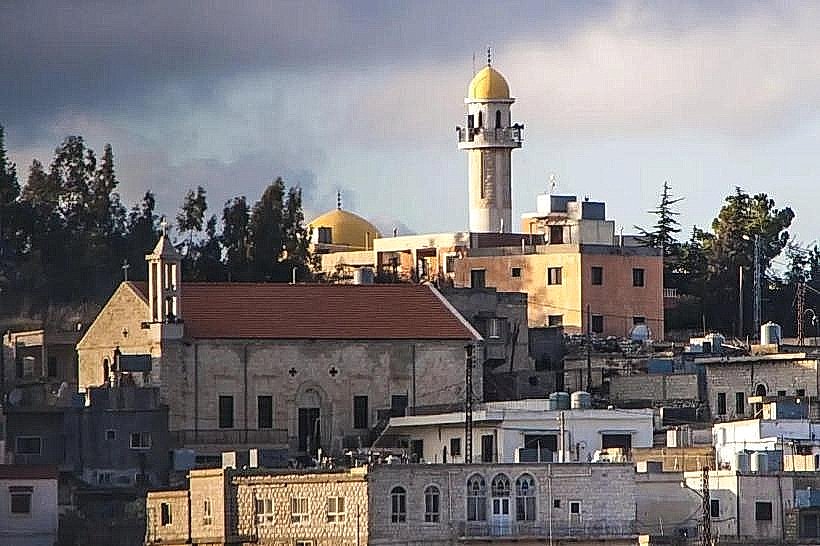
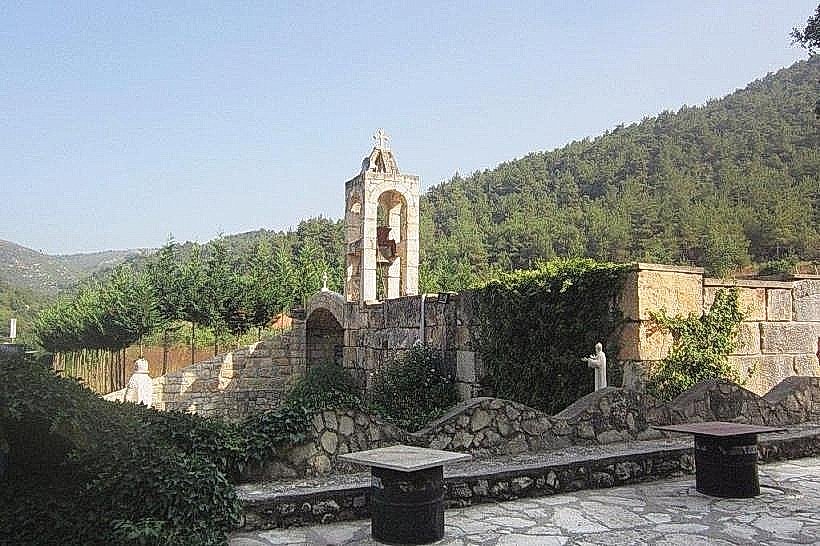
The Qoubayat Old Churches exhibit distinct regional structural features variations depending on their construction dates. Older structures, such as the Church of the Forty Martyrs, are constructed using dark, locally quarried volcanic basalt stone block masonry, featuring a single nave layout with a semi-circular eastern apse. Other sites, like Saydet el-Ghassalet (Our Lady of the Laundry), feature whitewashed lime-plastered interiors completely decorated with intricate structural frescoes and painted stucco details. Architectural elements include low vaulted ceilings, thick protective outer wall footprints, pointed and rounded arches, and modest exterior stone bell towers holding cast bronze bells.
Location & Access Logistics
The Qoubayat Old Churches are distributed across different quarters of Al-Qoubaiyat town, which is positioned 140 kilometers north of Beirut and roughly 30 kilometers northeast of the district capital of Halba. Access from Tripoli is via the main Northern Coastal Highway to the Abdeh intersection, continuing inland along the regional highway through Halba directly into the center of Al-Qoubaiyat. Individual churches, such as Mar Challita in the Helsban Valley or Saydet Chahlo in Martmoura, are reached via paved but narrow municipal streets branching from the main town center. Street-side parking asphalt zones are available adjacent to most village church locations. Public transit options include regular regional minibuses connecting Tripoli's main transit terminals to the Al-Qoubaiyat municipal center, where individual chapels are accessible on foot or via short local taxi transfers.
Historical & Ecological Origin
The foundation tracks of the Qoubayat Old Churches trace back to the first centuries of Christianity, with several chapels erected directly over older Phoenician, Greek, and Roman pagan altar sites. For example, the foundations of the Mar Challita Church originated as a Roman temple dedicated to the deity Ban before being transformed into a Christian monastery during the Byzantine period. The valley location historically served as an agricultural and silk-producing trade hub along the interior mountain corridors linking the Mediterranean coast to inland Syria. Geologically, the sanctuaries sit within an undulating limestone and basalt valley system characterized by abundant natural springs and dense perennial water sources.
Key Highlights & Activities
Inspecting the medieval fresco layers and decorative stucco designs inside the nave of Saydet el-Ghassalet.
Examining the basalt masonry techniques and 16th-century historical architectural transitions of the Church of the Forty Martyrs.
Exploring the rock-cut Roman tomb networks and ancient pagan altar foundations preserved around Saydet Chahlo.
Documenting the architectural ruins of the ancient Temple of Ban integrated into the structural layout of the Mar Challita Church complex.
Infrastructure & Amenities
The Qoubayat Old Churches are integrated directly into the municipal infrastructure of the town. Most active sanctuaries feature stone-paved courtyards, wooden interior seating, and adjacent public square facilities. Restrooms are accessible at the larger parish locations, including the Mar Doumit Carmelite Monastery complex. The entire urban and suburban valley layout provides stable 4G and 5G mobile cellular network coverage across all domestic telecommunication providers. While no dedicated commercial installations operate inside the immediate church properties, local grocery shops, pharmacies, cafes, and restaurants are continuously operational within a 500-meter radius of each town quarter site.
Best Time to Visit
The ideal months for exploring the complete circuit of churches are from April to November when regional mountain tracks are clear of winter snow and ice. Photography is most effective during the early morning hours between 07:30 and 09:30 to utilize soft directional lighting on the external stone reliefs, or between 15:00 and 17:00 when internal light penetrating the narrow arched windows highlights the interior wall frescoes without causing excessive contrast.
Facts & Legends
The unusual naming of the Saydet el-Ghassalet Church derives from a centuries-old local practice where village women gathered to wash family laundry at an ancient stone aqueduct running directly adjacent to the original chapel site. Local historical accounts document that ancient currency pieces bearing Phoenician, Hellenistic, and Roman profiles have been systematically excavated from beneath the floor layers of these sanctuaries during structural restorations, verifying the continuous religious reuse of the specific geographical plots across multiple imperial administrations.
Nearby Landmarks
Mar Doumit Carmelite Monastery: 0.4km East
Helsban Valley Roman Temple Ruins: 2.2km Southwest
Akkar el-Atiqa Fortress: 4.8km West
Qarm Shbat Nature Reserve: 4.5km Southeast