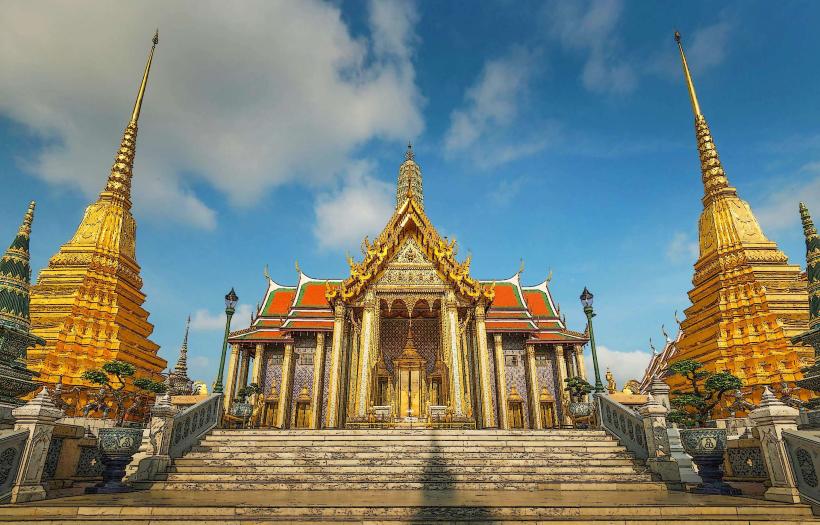
Landmark: Wat Phra Kaew
City: Bangkok
Country: Thailand
Continent: Asia
Wat Phra Kaew, Bangkok, Thailand, Asia
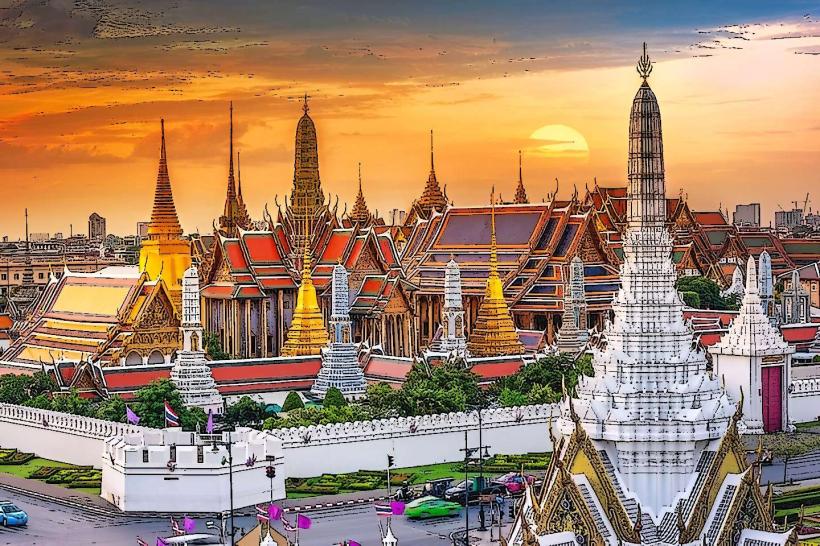
Wat Phra Kaew, officially known as Wat Phra Si Rattana Satsadaram, is a royal temple located within the grounds of the Grand Palace in Bangkok, Thailand.
It houses the Emerald Buddha, a highly revered Buddha image carved from a single block of jade.
Visual Characteristics
The temple complex comprises multiple structures, including the main chapel (Ubosot), the royal pantheon (Prasat Phra Thep Bidon), and various chedis and stupas. The architecture is predominantly Thai, characterized by multi-tiered roofs with ornate finials, intricate gilded carvings, and colorful mosaics. The main chapel's facade is adorned with mirrored tiles and stucco work. The Emerald Buddha itself is small, measuring approximately 45 cm (18 inches) in height, and is housed in a gilded shrine.
Location & Access Logistics
Wat Phra Kaew is situated on the eastern side of the Chao Phraya River, within the historic heart of Bangkok. Access is via the Grand Palace entrance. The nearest public transport is the Chao Phraya Express Boat, with the Tha Chang (N9) pier being the closest, approximately a 10-minute walk away. Taxis and tuk-tuks are also common. Parking is limited and generally reserved for official vehicles; visitors are advised to use public transport or arrange drop-off.
Historical & Ecological Origin
Construction of Wat Phra Kaew began in 1782, coinciding with the establishment of Bangkok as the new capital of Siam by King Rama I. The temple was built to enshrine the Emerald Buddha, which had been moved from Vientiane. The architectural style reflects the Khmer influence prevalent during that period, blended with traditional Thai elements. The site itself is a flat, urban area.
Key Highlights & Activities
Observation of the Emerald Buddha is the primary activity. Visitors can walk through the temple grounds, examining the various architectural features and decorative elements. The murals depicting the Ramakien (Thai version of the Ramayana) that line the cloister walls are also a significant point of interest. Photography of the Emerald Buddha is prohibited.
Infrastructure & Amenities
Restrooms are available within the Grand Palace complex. Shade is provided by the numerous covered walkways and the roofs of the temple buildings. Cell phone signal (4G/5G) is generally available. Food vendors and restaurants are located outside the Grand Palace complex, not within the temple grounds.
Best Time to Visit
The best time of day for visiting is early morning, shortly after opening, to avoid the largest crowds and the midday heat. The driest months are generally from November to February, offering more comfortable temperatures. There are no tide-related considerations for visiting this inland temple.
Facts & Legends
The Emerald Buddha is believed to have been carved in the 15th century. Its origins are subject to various legends, with some accounts suggesting it was discovered in a stupa in Chiang Rai after a lightning strike. The Buddha's robes are changed three times a year by the King of Thailand, marking the transition between the hot, rainy, and cool seasons.
Nearby Landmarks
- Grand Palace (0km, within complex)
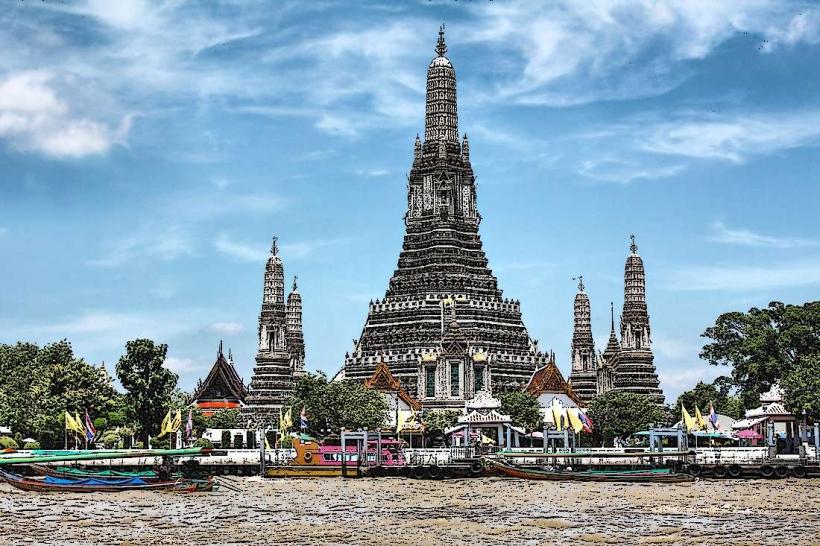
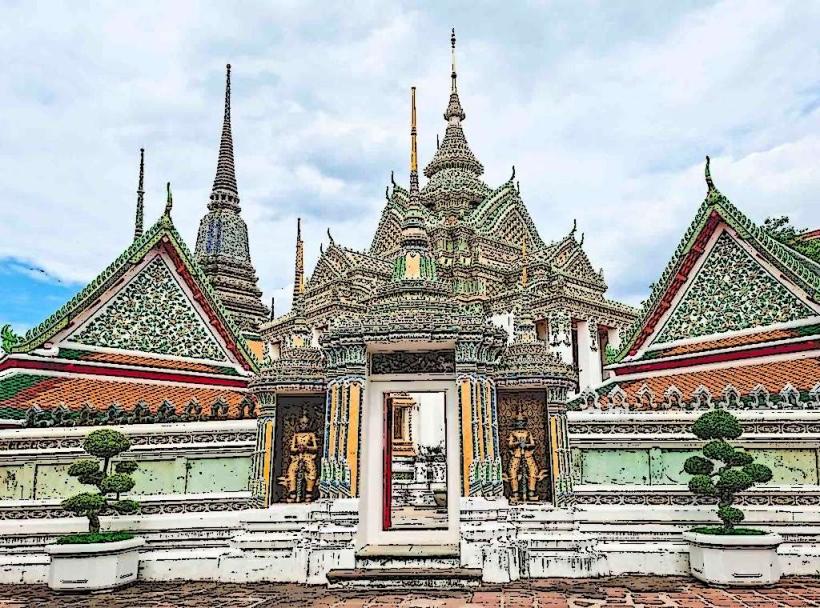
- Wat Pho (0.5km Southwest)
- Museum of Siam (0.8km West)
- Chao Phraya River (0.3km West)
- Pak Khlong Talat (Flower Market) (1km Southwest)