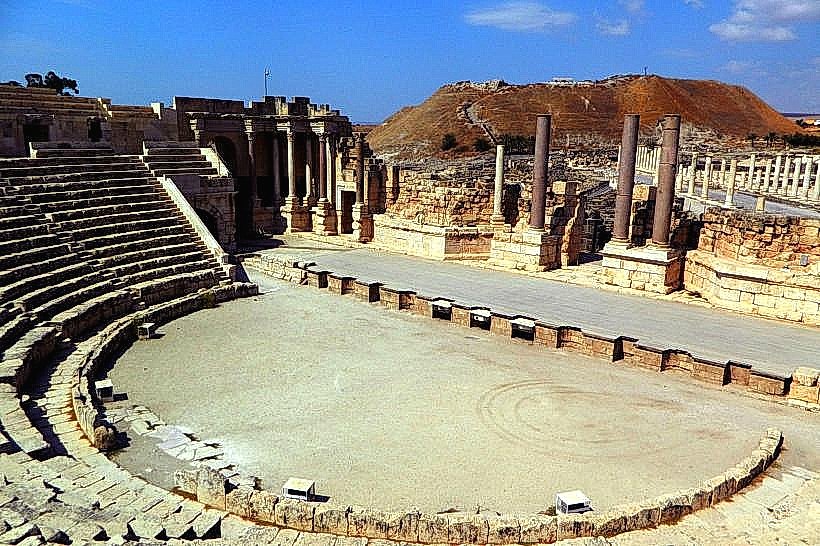
Landmark: Beit She'an Roman Theatre
City: Beit Shean
Country: Israel
Continent: Asia
Beit She'an Roman Theatre, Beit Shean, Israel, Asia
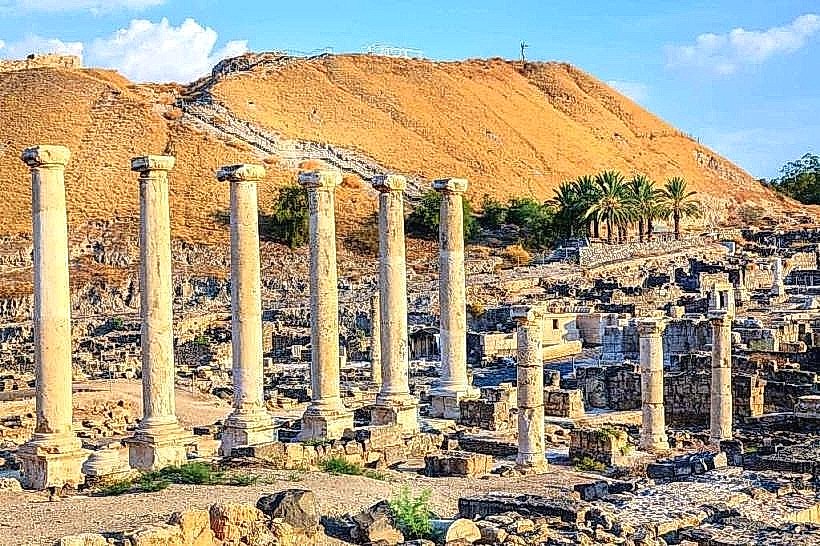
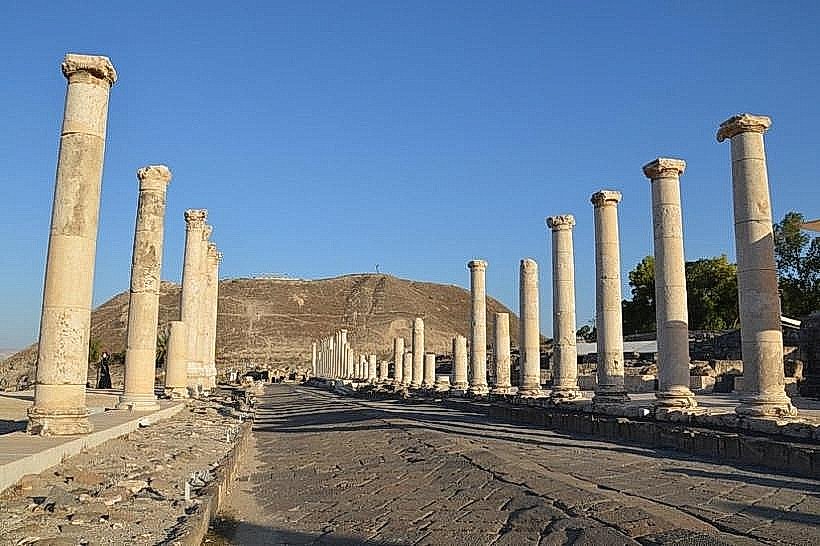
The Roman Theatre of Beit She'an is one of the most complete and well-preserved ancient performance venues in the Levant. It is situated at the southern end of the Beit She'an National Park, serving as a primary focal point of the ancient city of Scythopolis.
Visual Characteristics
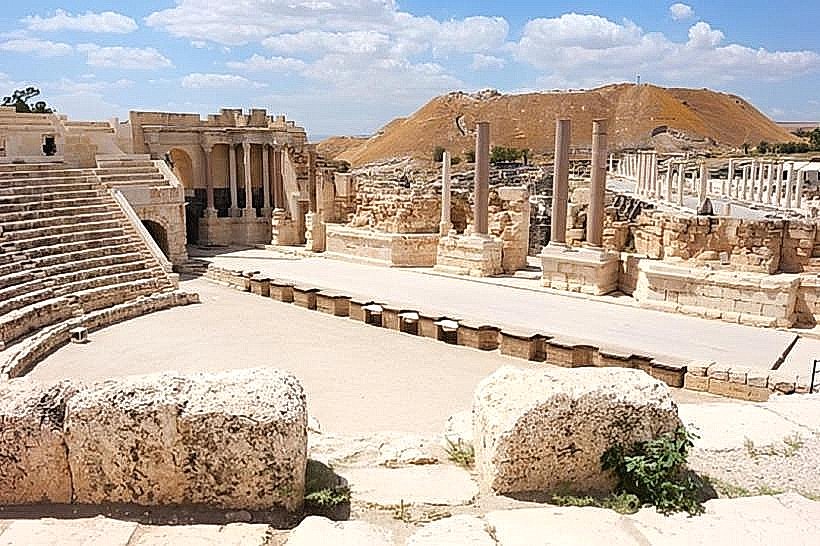
The theatre is a massive semi-circular structure constructed primarily from dark basalt and white limestone. It consists of a tiered auditorium (cavea) originally designed to hold approximately 7,000 spectators. The stage building (scaenae frons) features reconstructed segments of ornate marble columns and niches that once housed statues. The contrast between the dark volcanic stone of the seating and the lighter imported marble of the decorative elements is a defining visual trait.
Location & Access Logistics
The structure is located within the central archaeological precinct of Beit She'an in northern Israel. Access is through the main National Park entrance on Highway 71. From the visitor center, a paved, level path leads directly to the theatre’s lower entrances (vomitoria). Public transport is available via bus line 1 from the Beit She'an railway station. A large, paved parking lot is situated 400 meters from the theatre at the park gate.
Historical & Ecological Origin
Built at the end of the 2nd century CE during the reign of Septimius Severus, the theatre was the cultural heart of Roman Scythopolis. It was designed to withstand the region's seismic activity, yet the upper tiers of the seating were lost during the massive 749 CE earthquake. Geologically, the use of basalt reflects the volcanic history of the eastern Galilee and the Jordan Rift Valley, while the limestone and marble were transported via maritime and overland trade routes.
Key Highlights & Activities
Specific actions include exploring the inner corridors and tunnels (praecinctiones) used by ancient crowds to reach their seats. The central stage area allows visitors to test the venue's natural acoustics, which remain functional today. The theatre occasionally hosts modern musical performances and a nighttime audiovisual show that utilizes the stone walls as a projection screen to recreate the site’s Roman-era appearance.
Infrastructure & Amenities
The theatre area includes specialized shaded seating for tour groups and drinking water fountains located near the entrances. Public restrooms are situated at the nearby park service center. The structure is fully equipped with 5G cellular coverage. While the lower tiers and orchestra are wheelchair accessible via flat ramps, the upper viewing areas require climbing original stone steps.
Best Time to Visit
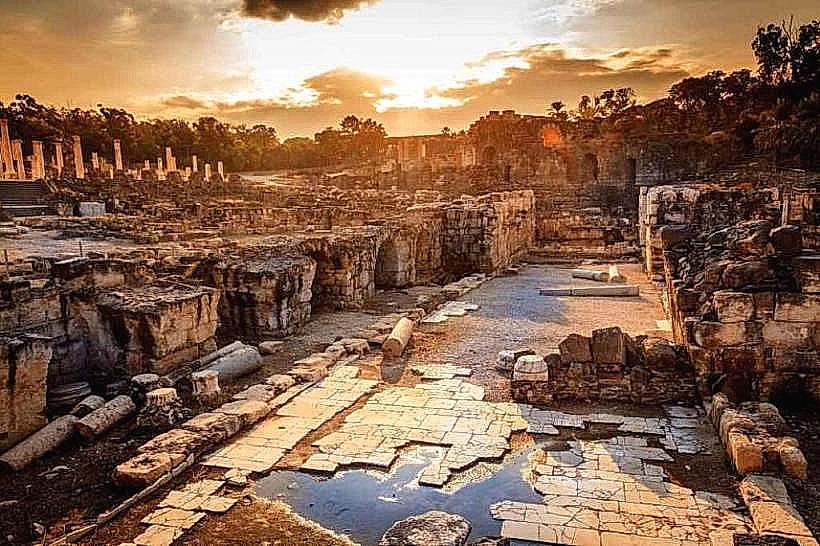
The best time for photography is during the "golden hour" before sunset, when the sun illuminates the stage facade and casts deep shadows across the seating tiers. Due to the Jordan Valley's desert climate, visiting between October and April is recommended to avoid temperatures that frequently exceed 38°C in the summer.
Facts & Legends
A verified technical detail is that the theatre's stage was equipped with an advanced drainage system and "hyposcaenium" (under-stage area) used for theatrical machinery and effects. Local guides often highlight the acoustic "sweet spot" at the center of the orchestra where even a whisper can be heard in the highest remaining rows.
Nearby Landmarks
Palladius Street – 0.2km North
Western Bathhouse – 0.3km Northwest
Tel Beit She'an – 0.5km North
Modern Beit She'an Center – 1.2km South
Jordan River – 5.5km East