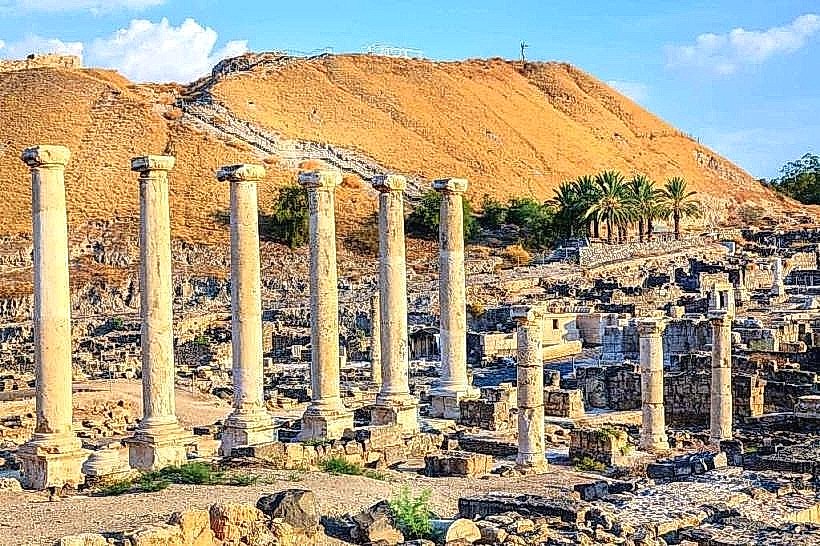
Landmark: Bet She'an National Park
City: Beit Shean
Country: Israel
Continent: Asia
Bet She'an National Park, Beit Shean, Israel, Asia
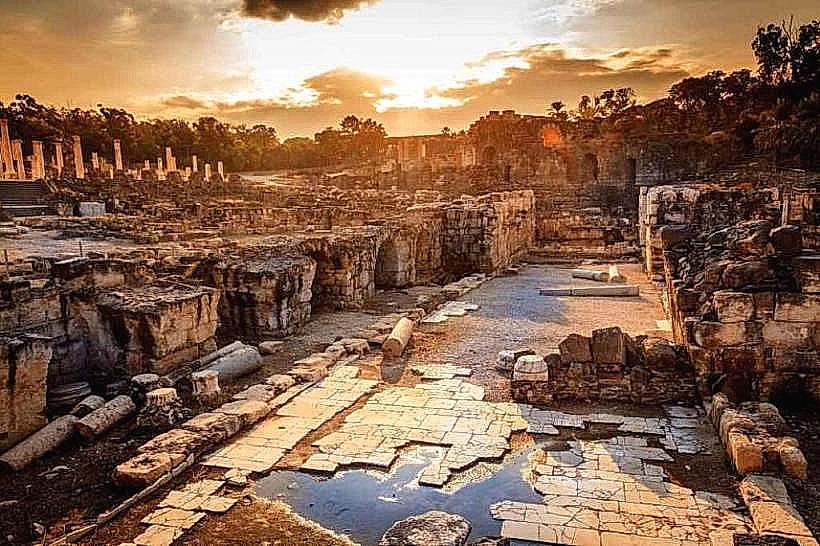
The Beit She'an National Park is a major archaeological site in northern Israel containing the expansive remains of the Roman and Byzantine city of Scythopolis. It is situated at the junction of the Jordan River Valley and the Jezreel Valley.
Visual Characteristics
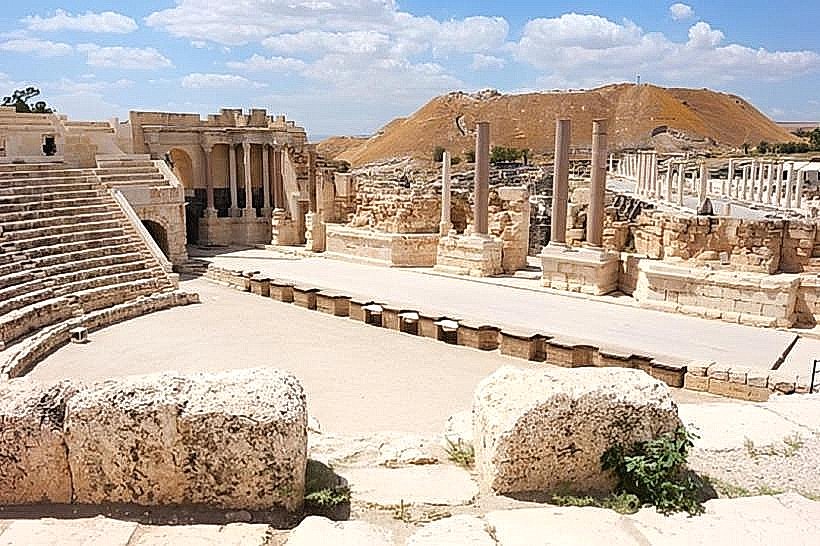
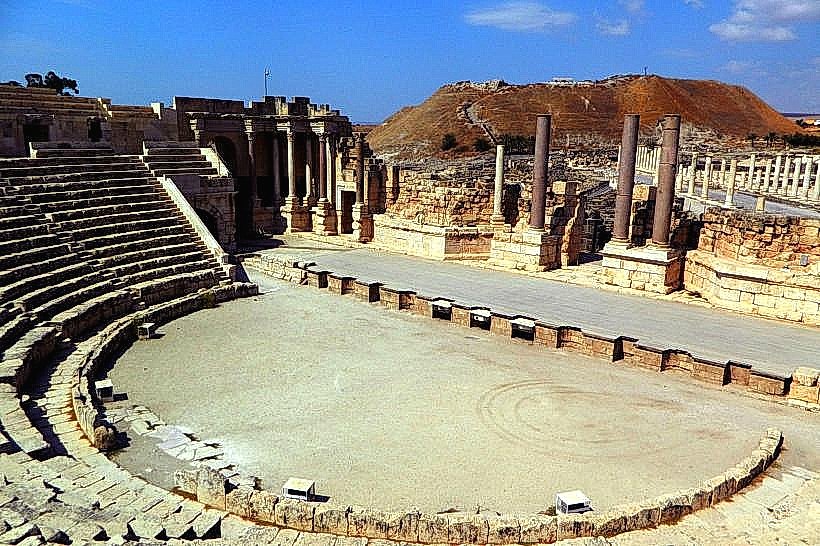
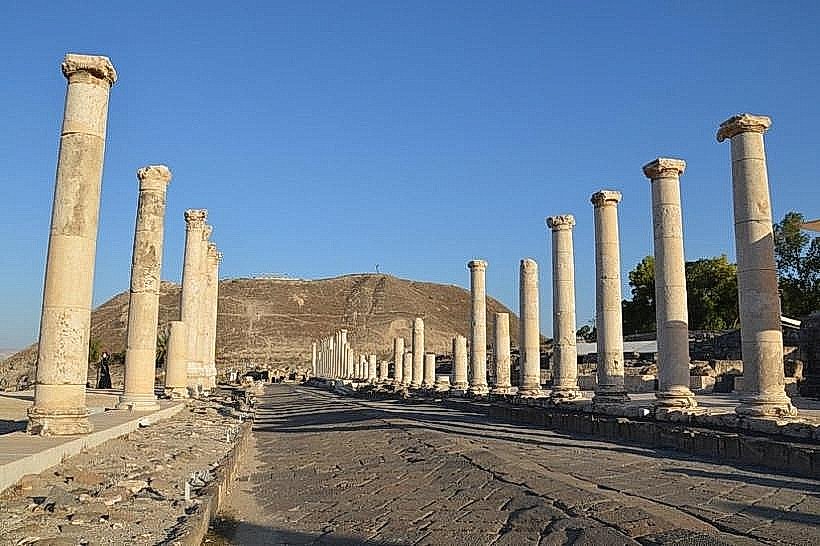
The park features exceptionally well-preserved stone architecture, including a massive basalt-and-limestone theater, colonnaded streets such as Palladius Street, and a sprawling bathhouse complex. The site is overlooked by a high tel (archaeological mound) that reveals layers of occupation from the Bronze and Iron Ages. Black basalt and white limestone are the dominant materials, reflecting the local geology of the Jordan Rift Valley.
Location & Access Logistics
The park is located at the northern edge of the modern city of Beit She'an. It is accessible via Highway 90 from the north or south, and Highway 71 from the west. From the Beit She'an railway station, the site is reachable via local bus lines or a short taxi ride. A large, paved parking lot is situated directly at the park entrance, which includes a visitor center and ticket office.
Historical & Ecological Origin
The site has been inhabited for over 6,000 years, serving as an Egyptian administrative center in the Bronze Age and later as the capital of the Decapolis during the Roman period. Scythopolis was destroyed by a massive earthquake in 749 CE, which toppled the heavy stone columns and buildings, effectively preserving them under layers of debris until modern excavations. The park sits in a semi-arid region characterized by natural springs that historically supported the city's extensive water systems.
Key Highlights & Activities
Specific features include the 7,000-seat Roman theater, which is still used for occasional performances, and the "Nymphaeum," an elaborate public fountain. Visitors can walk the entire length of the cardo (main north-south street) and view reconstructed shopfronts and mosaic floors. Climbing the steep steps to the top of the tel provides a panoramic view of the entire archaeological site and the surrounding Gilboa and Gilead mountains.
Infrastructure & Amenities
The visitor center at the entrance provides public restrooms, a souvenir shop, and a small cafeteria. Shaded rest areas are distributed throughout the ruins, and drinking water fountains are available at major intersections. The park is equipped with strong cellular coverage and offers a nighttime audiovisual show ("She’an Nights") that uses lighting effects to project 3D imagery onto the ruins. The main paths are paved and accessible for wheelchairs, though the climb to the tel requires physical exertion.
Best Time to Visit
The optimal period for a visit is from October to April to avoid the extreme heat of the Jordan Valley, where temperatures regularly exceed 40°C in summer. Photography is best in the early morning or late afternoon when the low sun emphasizes the carvings on the Roman columns and the shadows of the theater tiers.
Facts & Legends
A verified historical detail is that Beit She'an is mentioned in the Bible as the site where the body of King Saul was hung on the city walls after his defeat on Mount Gilboa. Modern excavations have uncovered a rare evidence of the city's ancient sanitary systems, including a well-preserved public latrine with marble seating.
Nearby Landmarks
Mount Gilboa – 7.0km West
Gan HaShlosha (Sahne) National Park – 6.5km West
Belvoir Fortress – 14.0km North
Beit Alpha Synagogue – 7.2km West
Jordan River Crossing – 5.0km East