Landmark: Scythopolis
City: Beit Shean
Country: Israel
Continent: Asia
Scythopolis, Beit Shean, Israel, Asia
The Scythopolis archaeological site, located within Beit She'an, is the excavated remains of a premier Roman-Byzantine city. It is situated at the strategically significant junction of the Harod and Jordan valleys in northern Israel.
Visual Characteristics
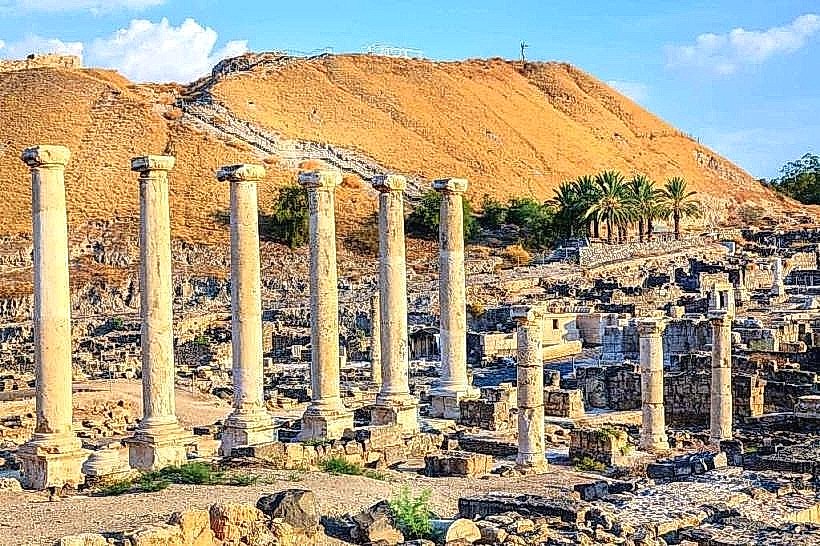
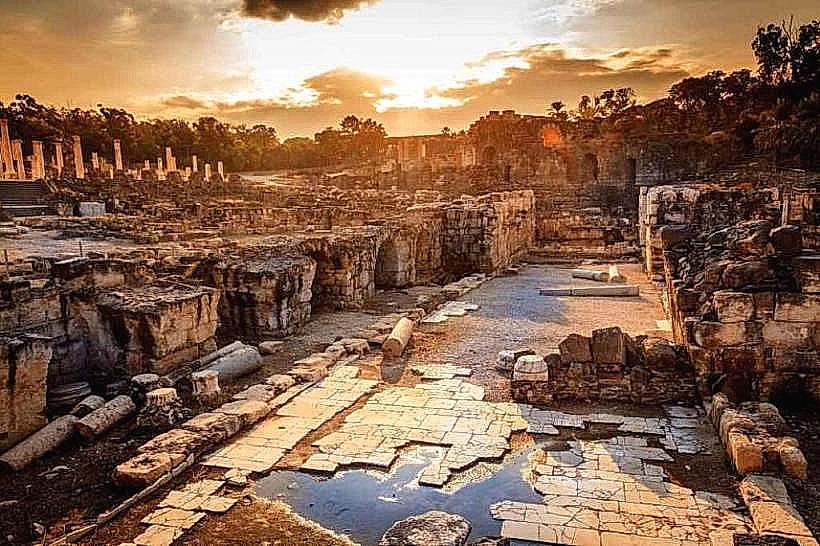
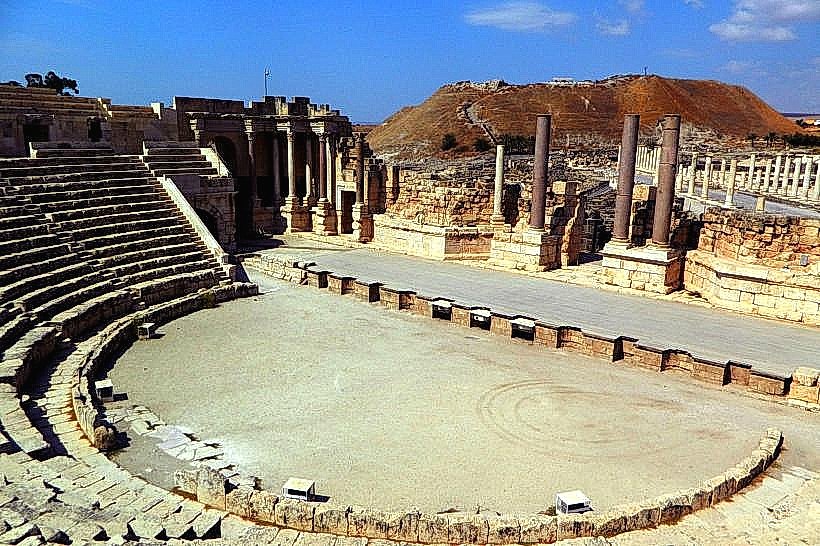
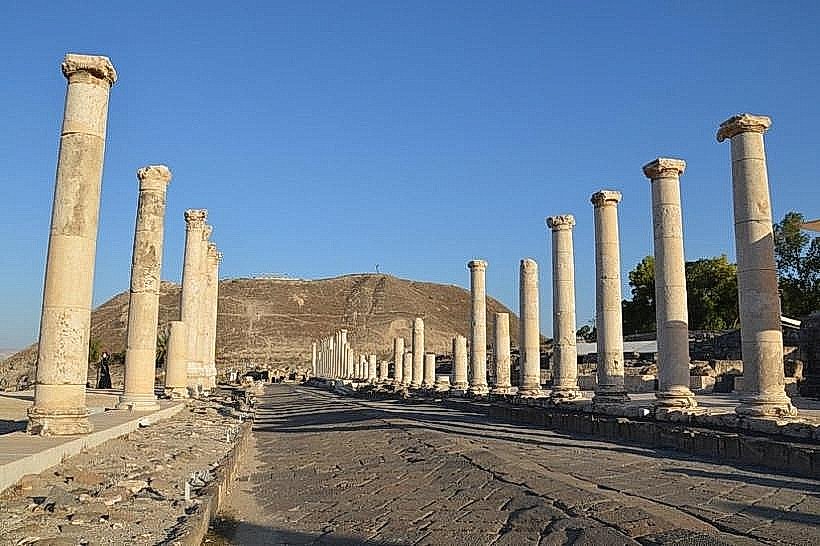
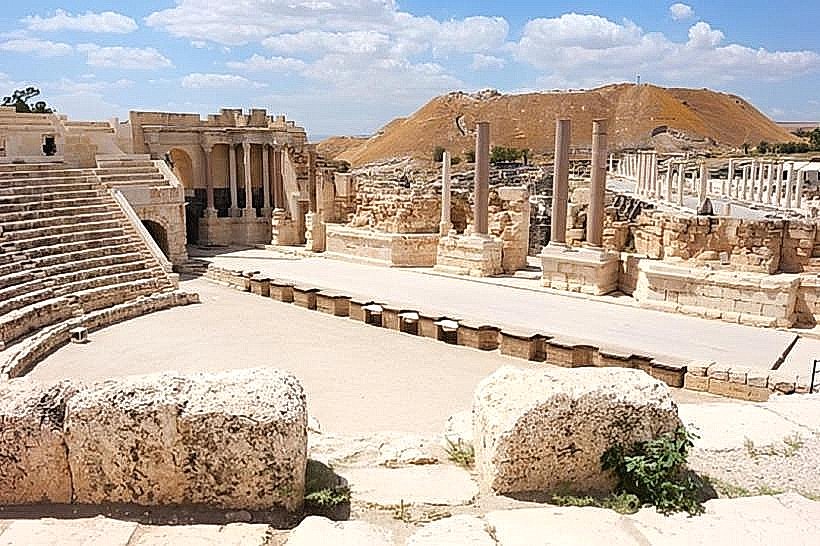
The site is defined by monumental stone architecture, primarily constructed from dark local basalt and imported white marble. Key structures include a 7,000-seat semi-circular theater, wide colonnaded streets with intact stone paving, and a massive bathhouse complex covering 1.5 acres. Prostrate columns, toppled by a historical earthquake, remain in their original fallen positions along the main thoroughfares, showcasing the sheer scale of the Roman masonry.
Location & Access Logistics
Scythopolis is located at the northern edge of modern Beit She'an. It is accessible via Highway 71 from the west and Highway 90 from the north or south. The site is a 5-minute drive from the Beit She'an railway station, with local bus lines 1 and 2 providing transit to the park entrance. A large, paved parking area with designated bus bays is located at the visitor center.
Historical & Ecological Origin
The city reached its zenith during the Roman and Byzantine periods (2nd–7th centuries CE) as the capital of the Decapolis, a league of ten Hellenistic cities. Geologically, the site sits on a tectonic fault line in the Jordan Rift Valley; this location led to its total destruction during the massive Galilee earthquake of 749 CE. The presence of the nearby Harod Spring provided the consistent water supply required for the city’s elaborate public fountains and bathhouses.
Key Highlights & Activities
Visitors can walk the length of Palladius Street, a 150-meter colonnaded road featuring mosaic-floored shops. The Roman theater remains functional for modern acoustic performances and offers tiered seating with views of the stage. Climbing the adjacent Tel Beit She'an mound provides a vertical perspective of the city's grid layout and the surrounding valley.
Infrastructure & Amenities
The site includes a modern visitor center with a ticket office, public restrooms, and a cafeteria. The archaeological paths are paved and wide, facilitating wheelchair and stroller access to the lower city. The park is equipped with 5G cellular signal and features a nighttime audiovisual show using advanced projection technology. Shaded pergolas are situated at intervals along the main walking routes.
Best Time to Visit
The best months for a visit are October through April to avoid the intense heat of the Jordan Valley. For photography, the late afternoon light emphasizes the carvings on the Corinthian capitals and creates dramatic shadows across the theater’s limestone tiers. The site is open daily from 8:00 AM to 5:00 PM (closing at 4:00 PM in winter).
Facts & Legends
A specific historical oddity is the "Nymphaeum," an ornate public fountain where water once flowed through the mouths of carved stone lions. Local history notes that after the 749 CE earthquake, the city was never fully rebuilt, leaving the fallen columns exactly where they landed over 1,200 years ago, serving as a "time capsule" of Roman urban life.
Nearby Landmarks
Tel Beit She'an – 0.2km North
Beit She'an Museum – 1.2km South
Gan HaShlosha (Sahne) – 6.5km West
Belvoir Fortress – 14.0km North
Beit Alpha Synagogue – 7.5km West