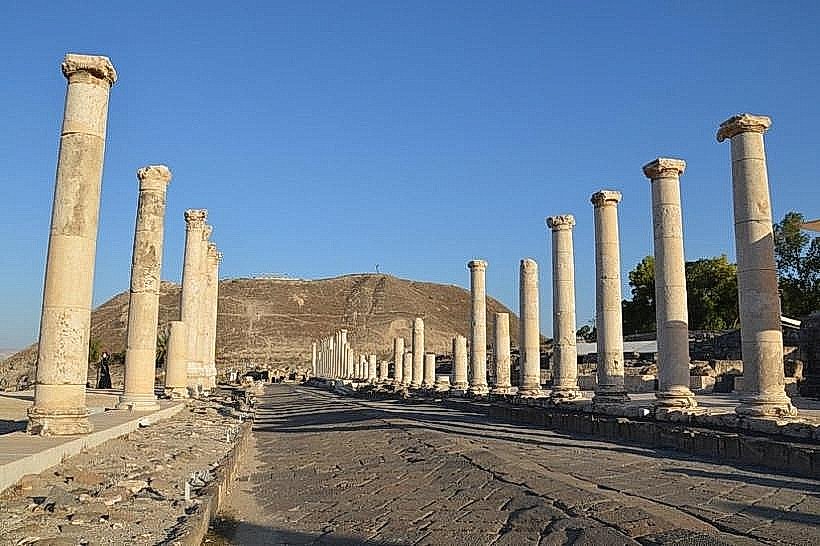
Landmark: Palladius Street
City: Beit Shean
Country: Israel
Continent: Asia
Palladius Street, Beit Shean, Israel, Asia
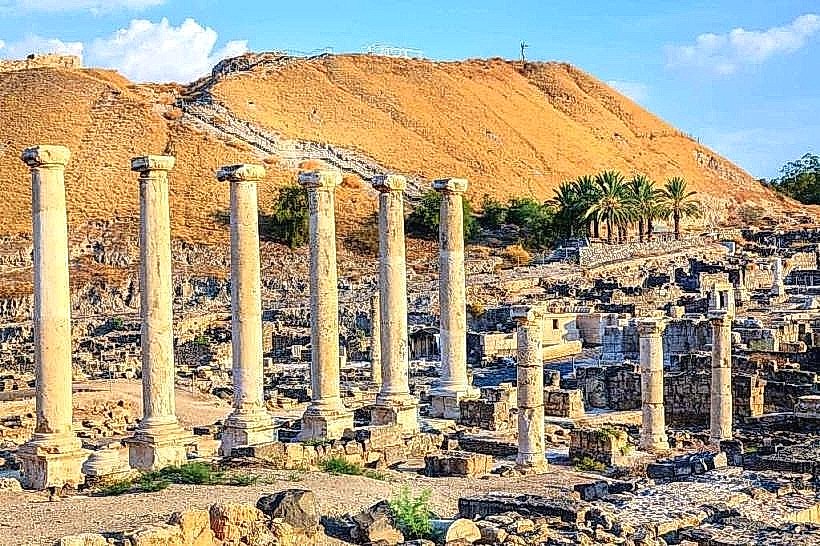
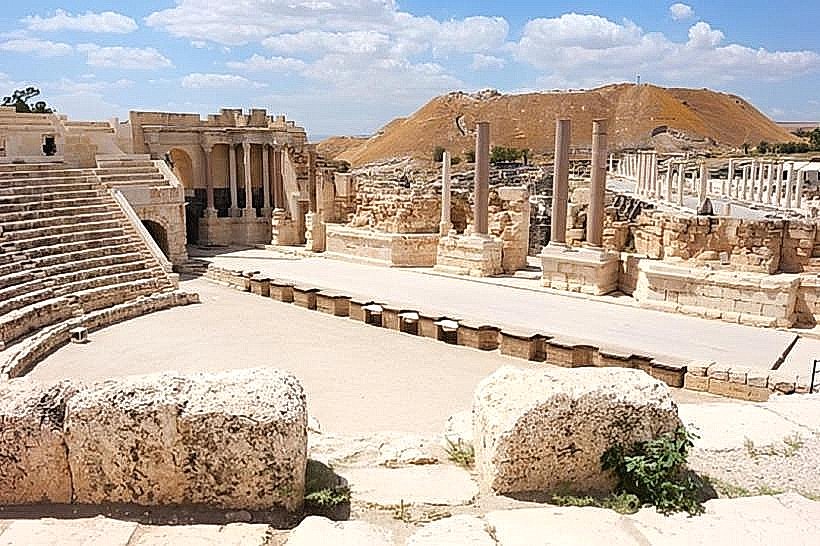
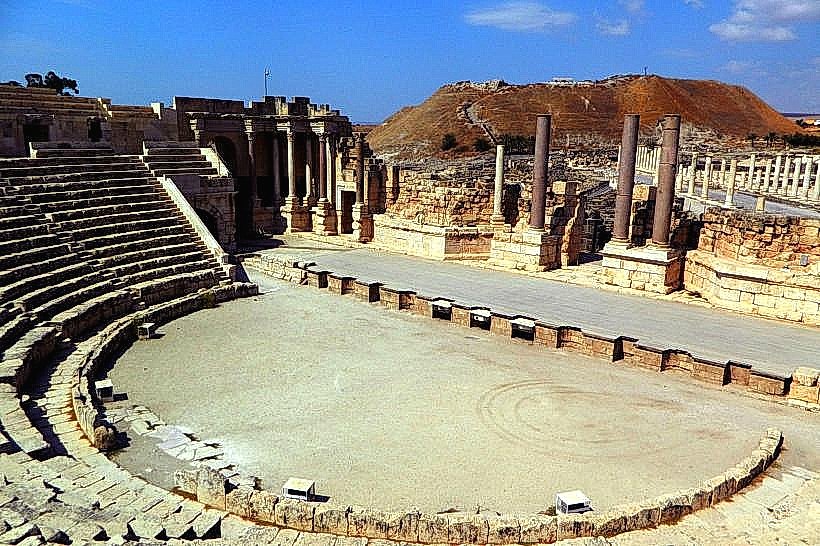
Palladius Street is a major colonnaded thoroughfare in Beit She'an National Park, serving as one of the primary commercial and civic arteries of ancient Scythopolis. It extends approximately 150 meters from the theatre area toward the slopes of the central archaeological mound.
Visual Characteristics
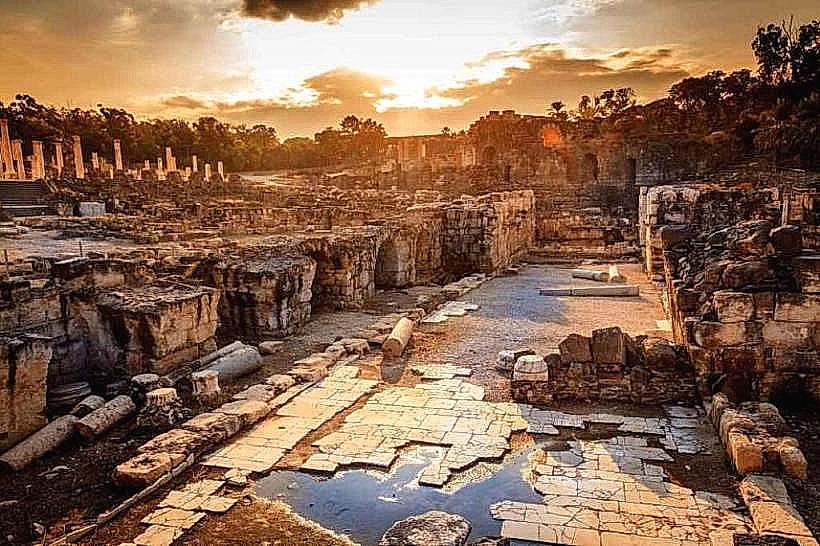
The street is defined by a wide central passage paved with heavy black basalt stones laid in a diagonal pattern to reduce wear from chariot wheels. It is flanked by a row of soaring white limestone columns with Corinthian capitals that once supported a covered roof over the sidewalks. Along the western side, a series of shop units remains visible, many featuring intricate mosaic floors with geometric and floral patterns.
Location & Access Logistics
Situated within the central lower city of the Beit She'an National Park in northern Israel, the street is positioned between the Roman Theatre and the city’s northern bathhouse. Visitors enter via the main park entrance on Highway 71 and follow the main paved path past the visitor center. The street is a 5-minute walk from the park entrance. Ample parking is available at the main gate, and the site is accessible from the Beit She'an railway station via local bus line 1.
Historical & Ecological Origin
Constructed during the Roman period and significantly renovated in the 4th century CE, the street is named after a local governor mentioned in a Greek inscription found on-site. The use of basalt for paving and limestone for columns reflects the regional transition between the volcanic terrain of the eastern Galilee and the sedimentary rock of the Jordan Valley. The street was catastrophically damaged during the 749 CE earthquake, which caused the massive colonnades to collapse in a uniform direction.
Key Highlights & Activities
Specific features include the "Sigma," a semi-circular plaza located at the northern end of the street that likely served as a specialized marketplace or entertainment area. Visitors can walk the length of the basalt paving and examine the drainage channels built into the curbs. The mosaic floors in the adjacent shops are exceptionally preserved and offer a detailed view of Byzantine-era craftsmanship.
Infrastructure & Amenities
The street is an outdoor archaeological feature with no immediate interior facilities. Public restrooms, drinking water, and a cafeteria are located at the park's main visitor center. The site is equipped with 5G cellular coverage and features high-intensity lighting for nighttime tours. The basalt paving is relatively flat and wide, allowing for wheelchair and stroller access, though the surface can be uneven in sections.
Best Time to Visit
The optimal period for photography is during the late afternoon when the sun highlights the texture of the basalt stones and the intricate carvings on the fallen columns. Due to the high temperatures in the Beit She'an area, visiting during the cooler months of October through April is recommended.
Facts & Legends
A verified historical detail is the presence of an inscription in the "Sigma" area that mentions the street’s renovation, providing archaeologists with a precise timeline for the city's late-antique development. Local tradition often notes that the diagonal placement of the basalt paving stones was a deliberate Roman engineering feat designed to provide better grip for horses and carts during winter rains.
Nearby Landmarks
Tel Beit She'an – 0.2km North
Western Bathhouse – 0.1km West
Roman Theatre – 0.2km South
Nymphaeum – 0.1km East
Beit She'an National Park – 0.1km South (Main Axis)