Landmark: Château d'If
City: Marseille
Country: France
Continent: Europe
Château d'If, Marseille, France, Europe
The Château d'If is a 16th-century fortress and former prison situated on the smallest island of the Frioul Archipelago in the Bay of Marseille. It is internationally famous as the primary setting for Alexandre Dumas’s 1844 novel, The Count of Monte Cristo.
Visual Characteristics
The fortress is a square, three-story structure measuring 28 meters on each side, flanked by three cylindrical towers with wide embrasures. Built from white limestone, the castle occupies the entire summit of the limestone islet. The interior features a central courtyard surrounded by vaulted cells, while the exterior is marked by high, sheer cliff walls that drop directly into the Mediterranean.
Location & Access Logistics
The island is located approximately 1.5 nautical miles from the Vieux-Port of Marseille. Access is exclusively via the Frioul If Express ferry, which departs regularly from the Quai de la Fraternité. The crossing takes approximately 20 minutes. Visitors must pay both for the ferry transit and a separate admission fee for the monument (managed by the Centre des monuments nationaux). Note: Ferry service is frequently canceled during periods of high "Mistral" winds for safety reasons.
Historical Origin
Commissioned by King Francis I, the fortress was built between 1524 and 1531 to defend Marseille’s coast from naval attack and to provide a base for the French galley fleet. Its strategic location made it a formidable deterrent. However, it quickly transitioned into a state prison. Due to the island's isolation and dangerous surrounding currents, it became one of the most feared detention centers in France, particularly for political and religious prisoners (including thousands of Huguenots).
Key Highlights & Activities
The Cells: Visitors can explore the stark contrast between the "dungeons" (ground-floor windowless pits for poor prisoners) and the "pistoles" (upper-level cells with windows and fireplaces for wealthy inmates).
Edmond Dantès' Cell: A specific cell is traditionally identified as that of the fictional protagonist of The Count of Monte Cristo, complete with a hole in the wall.
The Ramparts: Walkways offering unobstructed 360-degree views of the Marseille coastline and the open sea.
Permanent Exhibition: Displays detailing the history of the fortress and the literary impact of Dumas’s work.
Infrastructure & Amenities
The island has a small cafe/snack bar and a gift shop located near the dock. Public restrooms are available. Mobile signal (5G/4G) is strong on the island due to its proximity to the city. The site is not easily accessible for mobility-impaired visitors; the paths from the dock to the castle are steep and uneven, and the interior of the fortress contains many narrow stone staircases.
Best Time to Visit
The best time to visit is on a calm, clear day with low wind to ensure the ferry is operational. Morning departures are recommended to avoid the midday heat and the largest tourist crowds. The island offers very little natural shade.
Facts & Legends
While Edmond Dantès is fictional, many real figures were imprisoned here, including the revolutionary hero Mirabeau. A notable historical event occurred in 1516 when a rhinoceros (a gift from the King of Portugal to the Pope) stopped at the island, marking the first time the animal was seen in Europe; this event is commemorated by a statue on the island.
Nearby Landmarks
Frioul Islands (Pomègues and Ratonneau): 1.0km West
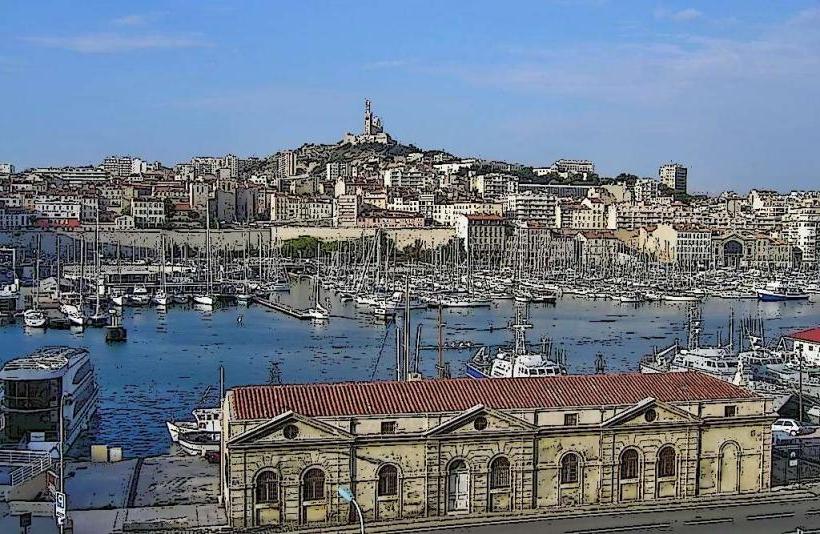
Vieux-Port (Old Port): 3.5km East
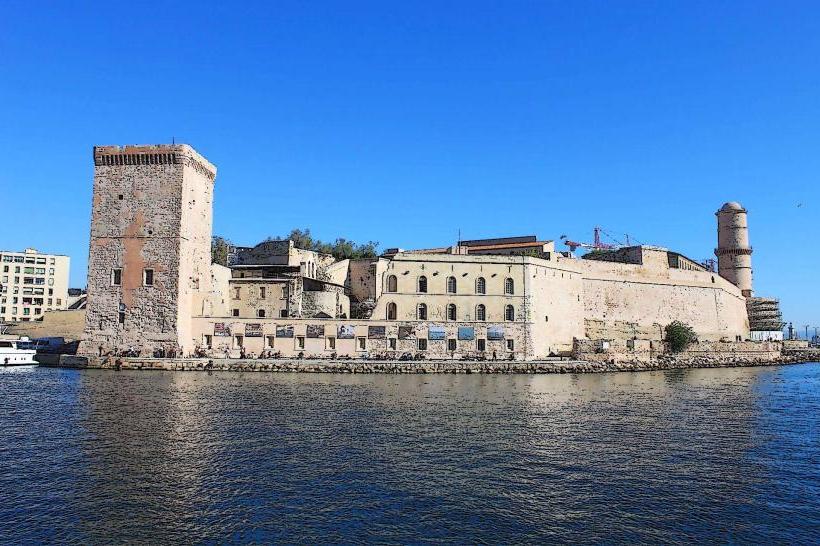
Fort Saint-Jean: 3.0km East
Notre-Dame de la Garde: 4.0km East (visible from the ramparts)